Not every hydrostatic level transmitter is designed to sit in the liquid. Hydrostatic describes how pressure is used to infer height, while submersible describes where the sensing probe is installed; by the end, you can match the instrument type, pressure reference, installation method and specification to your tank.
Key takeaways
- A hydrostatic transmitter measures pressure; a submersible sensor describes probe installation.
- Correct level readings depend on liquid density, not pressure alone.
- Use a vented probe with protected cable and a dry, accessible installation point.
- Choose an external transmitter when immersion, access or venting creates problems.
Hydrostatic describes the measurement; submersible describes the installation
No. Hydrostatic describes the measurement principle, while submersible describes where the instrument operates. A hydrostatic level transmitter measures pressure created by the liquid head; a submersible level sensor has a probe designed for immersion.
A submersible hydrostatic instrument combines both attributes. Its probe places a pressure diaphragm at the tip, with a cable carrying power and the measured signal. A vented cable brings atmospheric pressure to the reference side, while a sealed reference arrangement isolates that side from the liquid. Signal electronics then condition the measurement.
Purchasing terms create confusion. Sensor can mean only the pressure element or probe, while transmitter usually includes signal conditioning and an output such as 4–20 mA, HART or a digital interface. Confirm whether the quotation includes the electronics, cable, calibration and engineering units.
A hydrostatic level transmitter can instead mount outside the vessel through a lower connection or impulse line. It still measures liquid-head pressure, but the sensing element does not enter the tank. That arrangement keeps the probe out of the liquid and suits installations where immersion would damage the instrument or complicate maintenance.
A submersible level sensor is therefore commonly hydrostatic, but a hydrostatic level transmitter is submersible only when its complete design specifies immersion.
How pressure becomes level—and when density makes the answer wrong
A hydrostatic level transmitter calculates liquid height from pressure at a known elevation; it does not measure height directly. For an open tank, the relationship is p = ρgh, where p is pressure, ρ is liquid density, g is gravitational acceleration, and h is the vertical distance from the liquid surface to the sensing diaphragm.
One metre of water head produces about 9.81 kPa, or 0.098 bar. Ten metres produces about 98.1 kPa. The hydrostatic level transmitter explained in practical terms is therefore a pressure instrument whose level output is correct only for the density used during calibration or configuration.
A water-ranged instrument over-reads a denser liquid and under-reads a lighter one at the same physical height. Temperature, concentration and solids content can change density, so the indicated level can change without the liquid surface moving.
Choose the pressure reference before interpreting the result:
- Gauge pressure references the atmosphere.
- Absolute pressure uses a sealed vacuum reference.
- Differential pressure compares vessel-bottom pressure with headspace pressure.
A sealed or pressurised vessel normally needs differential pressure: the high side senses the liquid head and the low side cancels headspace pressure. A vented hydrostatic level sensor alone treats that changing headspace pressure as liquid head and gives a false reading.
Select the range from maximum liquid head and density, not tank height alone:
- Maximum head sets the vertical distance.
- Maximum density sets the pressure per metre.
- Excessive range reduces signal per unit of level and worsens resolution.
What the vented probe and its installation need to work
A vented probe works only when its reference side can breathe atmospheric pressure and its diaphragm sits in a stable, representative location. The vented cable carries atmospheric pressure to the reference side, so barometric changes cancel instead of appearing as level changes.
1. Confirm the tank is open or vented, then place the diaphragm near the lowest required measurement point. Keep it away from the wall, floor, inlet jet, agitator and settled solids; deposits can add pressure and create a false level.
2. Hold the probe in a vertical sensing position. A tilted diaphragm can collect sludge or grease and produce a slow, inconsistent response.
3. Support the cable with a clamp, hanger or dedicated strain relief independent of the electrical termination. Do not let the termination carry the probe’s weight, and do not pull or twist the cable during lowering.
4. Route the cable without sharp bends, crushing or a sealed vent path. Keep the vent tube dry and clean: blockage, wetting or contamination causes drift, zero offset or false level response.
5. Inspect the complete assembly before commissioning. Verify the selected submersible level sensor’s IEC 60529 IP rating or equivalent immersion rating, maximum immersion depth, cable-joint construction and water-ingress protection in the model instructions. An instrument called submersible is not automatically suitable for permanent immersion.
These checks protect the atmospheric reference used by a vented hydrostatic level sensor. The rating must apply to the installed probe, cable and joint—not just the probe body.
When an external hydrostatic transmitter is the better architecture
Avoid a submerged probe when the liquid is corrosive, hot, abrasive, heavily solids-laden, or difficult to access for cleaning. An external hydrostatic level transmitter connects through a bottom vessel nozzle, diaphragm seal, or impulse line, keeping electronics, cable, and vulnerable seals away from the liquid.
| Arrangement | Strength | Main failure or limitation |
|---|---|---|
| Submersible probe | Simple installation in an open tank | Sludge, grease, biological growth, or crystallisation on the diaphragm adds apparent pressure and slows response |
| External transmitter | Keeps the instrument outside harsh liquid | Impulse lines can plug, freeze, or trap gas; a diaphragm seal adds cost and response lag |
| Non-contact radar or ultrasonic | No wetted probe | Radar can be affected by buildup or vapour; ultrasonic loses reliability with foam, vapour, turbulence, or temperature gradients |
| Bubbler or stilling well | Moves the sensing point away from electronics or turbulence | Bubblers need purge air and clean tubing; stilling wells can clog and alter response |
Keep a submerged probe clear of tank inlets, agitators, walls, and settled solids, but do not choose it if retrieval itself is unsafe or infrequent. A pressure line also needs slope, heat tracing, or gas removal where the process demands it.
Check stainless steel, diaphragm coating, elastomers, and cable jacket against concentration, temperature, cleaning chemicals, and exposure duration—not merely the liquid’s name. Chlorides, acids, solvents, and biological fluids can attack materials that appear suitable.
When comparing suppliers, ask Filpro Sensors Pvt Ltd whether the quoted item is a submerged probe, external transmitter, or complete calibrated assembly, including the diaphragm seal or impulse connection.
Related product
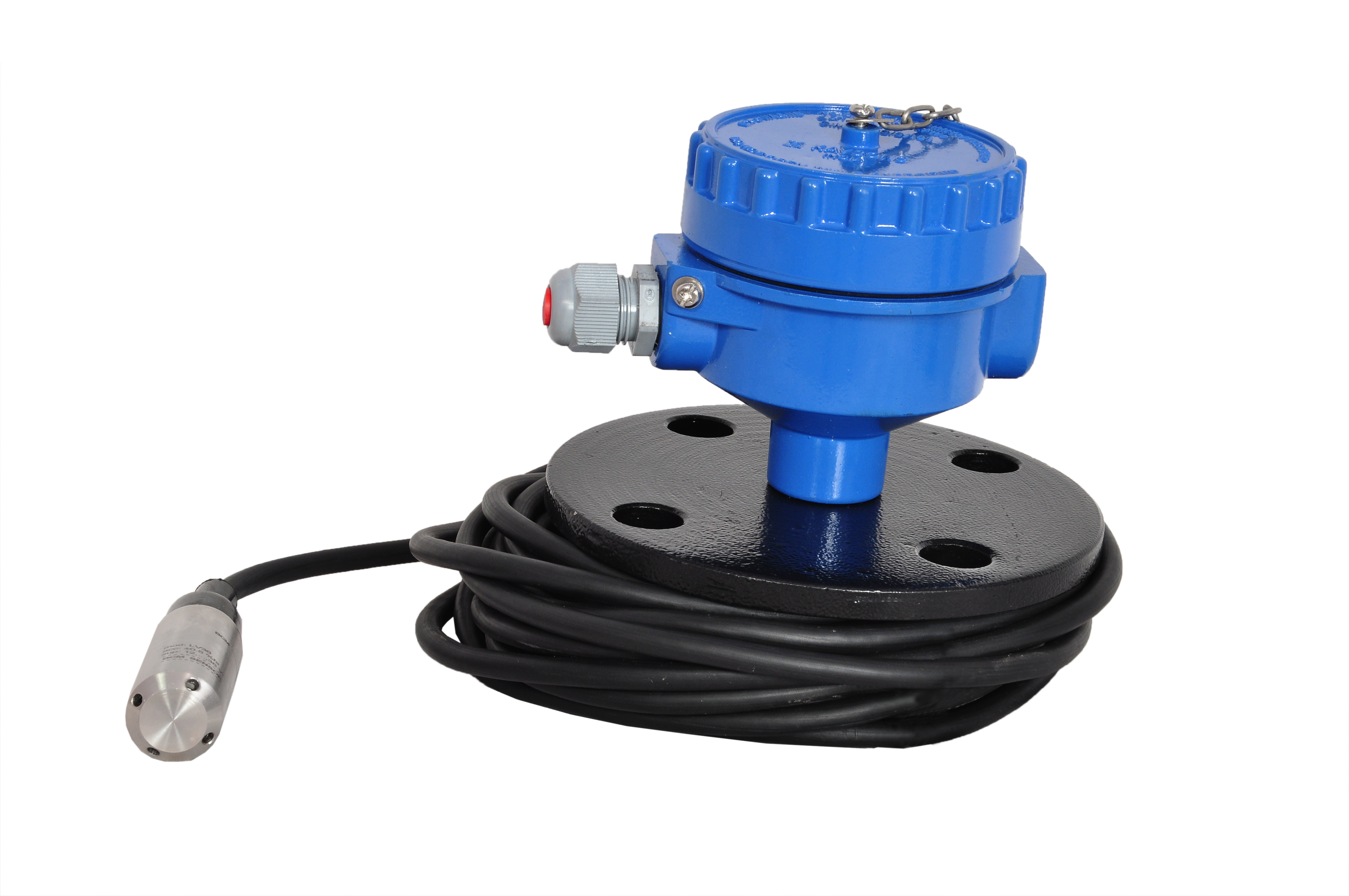 | Level Transmitter Hydrostatic liquid level transducers and transmitters with flush diaphragm is designed fora wide variety of level measurement applications. View product → |
The specification checklist that settles the choice
Before ordering, make the supplier define the complete assembly, not just a pressure element. The hydrostatic level transmitter explained in the datasheet must match the vessel, liquid and installation.
1. State whether the vessel is open or sealed; give liquid density and its temperature or concentration range, maximum liquid head, sensing elevation, and level datum.
2. Specify gauge, absolute or differential reference, output type, loop power, calibration units, and whether electronics, cable and surge protection are included.
3. Require wetted materials, diaphragm coating, seal and cable-jacket compatibility, immersion depth, cable-joint construction, and the complete assembly’s ingress rating under IEC 60529.
4. Confirm hazardous-area approval, barrier or isolator requirements, and cable-capacitance limits. A submersible label alone does not prove permanent-immersion suitability.
5. Moving the probe changes the zero relationship to the stated datum. An excessive pressure range reduces signal per unit of level, so size the span for maximum head and density.
6. At commissioning, verify zero level, independent cable support, an open and dry vent tube, grounding, and transient protection on long outdoor runs near pumps or variable-frequency drives.
A submersible level sensor is commonly hydrostatic, but a hydrostatic level transmitter is submersible only when its complete design and installation instructions say so.
Frequently asked questions
Is a hydrostatic level transmitter a submersible level sensor?
Not necessarily. Hydrostatic describes the pressure-based measurement principle, while submersible describes an instrument designed to operate while immersed.
How does a hydrostatic level transmitter measure liquid level?
It measures pressure from the liquid column above the sensing diaphragm and converts that pressure into level. The calculation is accurate only when liquid density is known and stable.
Why does a submersible hydrostatic sensor need a vented cable?
A vented cable lets the sensor reference atmospheric pressure above the liquid. Without that reference, changing atmospheric pressure can appear as a level change.
When is an external hydrostatic transmitter a better choice?
Choose an external transmitter when the process connection allows it and you need easier access, less exposure to immersion, or simpler maintenance.