A magnetic gauge earns its place when you need a continuous local reading that remains visible without electrical power, especially for opaque liquids and process vessels where exposed glass is undesirable. The decision depends on fluid properties, vessel connections, operating hazards, remote-signal requirements and whether you need indication, control or overfill protection.
Key takeaways
- Choose a magnetic gauge for power-free, sealed visual level indication.
- Compare float range, pressure, temperature and materials before specifying one.
- Add a transmitter or switch when operators need remote alarms or control.
- Reject the gauge when coating, solids or turbulent flow can trap the float.
What a Magnetic Gauge Actually Measures—and Why Power-Free Indication Matters
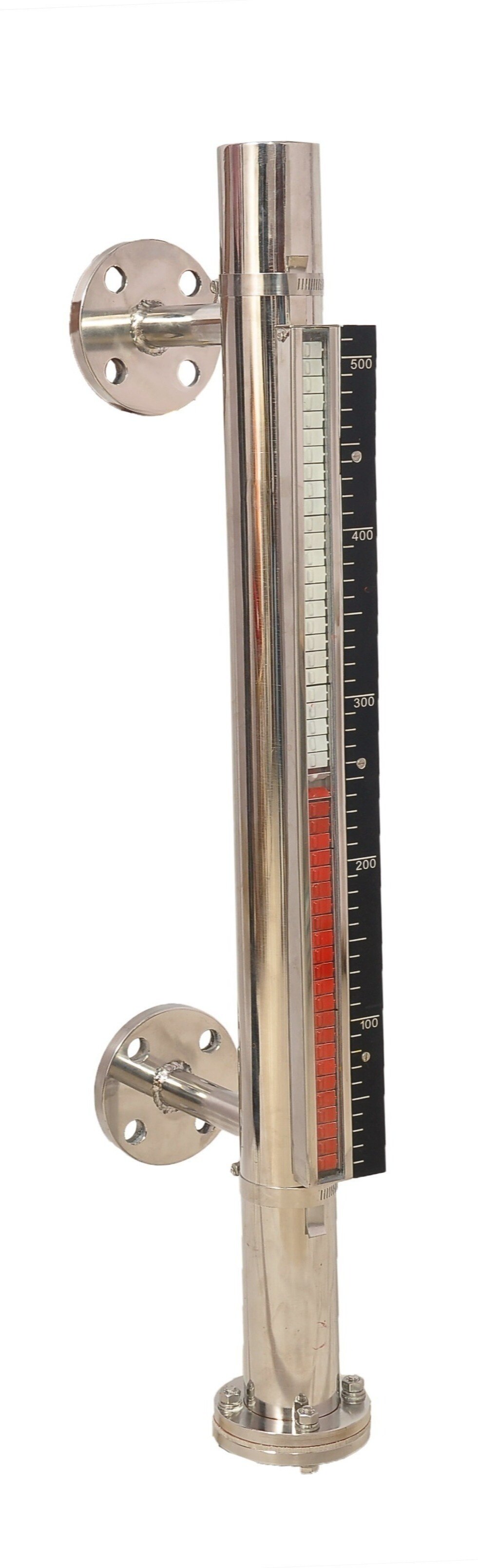
A magnetic level gauge measures float position, not the liquid through a window. A float inside a sealed chamber follows the liquid level; its permanent magnet couples through the chamber wall to rotating flags, a capsule or another external display. The process boundary stays closed.
The magnetic level gauge value is continuous local indication without electrical power. That matters during power loss, in utility areas and wherever an operator needs a visual cross-check. The display remains mechanical, so it works even when a transmitter, control system or remote screen is unavailable.
The reading is not a direct optical view of the vessel. It shows the float position inside the chamber, so blocked nozzles, incorrect isolation-valve positions, undersized connections or vapour locking can create a stable but false reading. Confirm that the chamber communicates freely with the tank.
Do not assume the display is a volume, mass or remote measurement. The scale must match the tank geometry and the intended reference points. Request:
- Scale direction, units, zero reference and span reference.
- Resolution, specified accuracy and the flag colour convention.
- Readable viewing distance and confirmation that the display suits the operator’s normal position.
- A clear statement that the indication represents chamber level, plus the connection arrangement needed to keep that level representative of the vessel.
How It Compares with Other Level Measuring Instruments
A magnetic gauge level for measuring instruments is preferable when you need continuous local reading without exposed glass or electrical power. It suits opaque liquids and gives operators a visible indication during power loss, but it is not automatically the best remote-control instrument.
| Option | Practical trade-off | Best fit |
|---|---|---|
| Magnetic gauge | Sealed process boundary, passive local indication; needs accessible connections and a suitable float | Opaque liquid, local cross-check, power-loss visibility |
| Sight glass, reflex or transparent gauge | Direct visual contact; glass can break or foul, and isolation valves need careful management | Clean liquids where direct viewing matters |
| Float-and-board indicator | Simple and inexpensive; exposed cable, pulley and board need clear mechanical travel | Outdoor storage tanks |
| Hydrostatic transmitter | Remote continuous signal; depends on pressure, liquid density and an unobstructed impulse path | Stable-density liquids with suitable pressure connections |
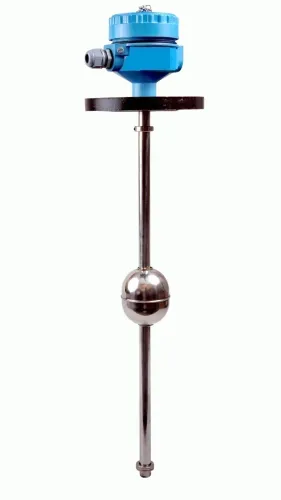
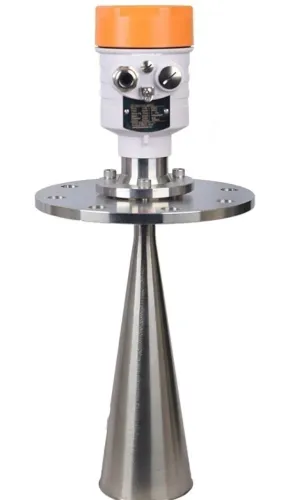
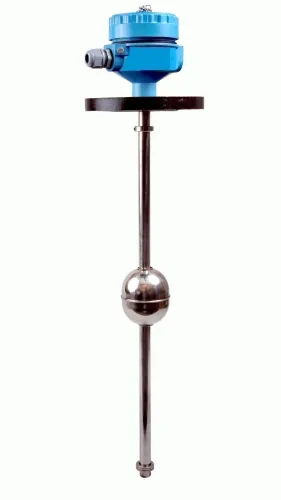
| Radar or guided-wave radar | Remote continuous measurement without vessel contact or, for guided-wave types, with a probe; installation, signal conditions and configuration matter | Top-mounted measurement, remote monitoring |
| Ultrasonic instrument | Non-contact and externally powered; vapour, foam and temperature can distort the echo | Open or compatible vessels with clear acoustic conditions |
| Point-level switch | Alarm or control at one level, not continuous indication | High, low or pump-control actions |
Choose among these level measuring instruments by weighing local versus remote reading, contact versus non-contact measurement, vapour and foam, buildup, nozzle access, diagnostics and response time. A magnetic gauge handles local indication well; pair it with a transmitter for trending or control, and a separate high-high switch for overfill protection.
Where a Magnetic Gauge Fits—and How Process Conditions Decide
Choose magnetic level gauge applications when the liquid is opaque, operators need power-free local indication, and the vessel has accessible upper and lower connections. Storage tanks, process vessels, boiler feed systems and fuel tanks fit when a compatible chamber and float can withstand the service.
Corrosive-liquid service fits only with confirmed wetted materials, seals and chamber construction.
| Application | Conditions that justify selection | Main check |
|---|---|---|
| Storage tank | Opaque liquid and a visible local reading | Tank height, nozzle alignment and outdoor temperature |
| Process vessel | Continuous indication beside the vessel | Pressure, temperature, turbulence and vapour |
| Boiler feed system | Local cross-check during power loss | Hot-water rating, flashing risk and response time |
| Fuel tank | Closed process boundary without exposed glass | Fuel compatibility, hazardous-area certification and fire requirements |
| Corrosive service | Non-glass indication with selected wetted materials | Corrosion data for chamber, float, seals and connections |
Give the supplier minimum and maximum specific gravity, viscosity, solids, polymerising material, deposits, crystallisation tendency, corrosiveness, design pressure and temperature, tank height, connection size and required wetted materials. A float that is too dense can fail to float; deposits can make it stick, and an unsuitable float can display inaccurately.
Specify orientation, venting, draining, cleaning access and isolation valves. Turbulence, sloshing, foam, vapour, sludge and internal obstructions can destabilise or falsify the reading. A stilling arrangement or chamber can steady movement, but it can plug, delay indication or misrepresent a rapidly changing level.
Hot or toxic media require safe isolation and maintenance access; hazardous locations require the correct certification. These checks determine magnetic level gauge value, not the label alone.
When the Gauge Needs a Transmitter, Switch or Separate Protection Layer
A magnetic gauge alone provides local visual indication, not remote monitoring, alarms, pump control or overfill protection. The display does not automatically generate a 4-20 mA signal, remote display, high-high or low-low alarm, pump interlock or trend data. That limit matters when comparing level measuring instruments for a control system.
Add the required function explicitly:
- Attach a magnetic switch for one discrete level point, such as a pump start, low-level alarm or high-level alarm.
- Specify a separate continuous transmitter for remote measurement; it needs its own power, wiring, calibration, diagnostics and hazardous-area approval.
- Treat interface measurement as a special magnetic level gauge application requiring a suitable dual-density float, enough density difference and a defined operating range.
- Use radar or guided-wave radar for top-mounted remote measurement when nozzle access, vapour, foam, dielectric properties, buildup or diagnostics favour that installation.
A magnetic gauge can remain an independent local cross-check beside radar or guided-wave radar, including during power loss. A high-level switch is not automatically an independent safety layer: the safety assessment must address proof-test interval, fail-safe behaviour, diagnostics and separation from the basic control loop.
Without that assessment, one magnetic device is being asked to provide indication, control and protection simultaneously.
The Ownership Test: Specification, Maintenance and Supplier Questions
A magnetic gauge earns its installation and maintenance effort when passive, continuous local indication matters more than the lowest purchase price. Its magnetic level gauge value is reduced wiring and no power requirement, but ownership includes compatible isolation valves, chamber cleaning, inspection access, spare parts and safe maintenance downtime.
| Option | Ownership advantage | Ownership burden |
|---|---|---|
| Magnetic gauge | Power-free local reading | Chamber, float and display maintenance |
| Sight glass | Direct visual confirmation | Glass fouling, breakage and isolation |
| Transmitter | Remote control, trending and alarms | Power, wiring, calibration and diagnostics |
| Point switch | Simple alarm or interlock point | No continuous level measurement |
For magnetic gauge level for measuring instruments, inspect the complete installation, not just the indicator. Isolate and depressurise the process, flush the chamber where the procedure permits, check drain and isolation valves, confirm float movement, inspect the display rail for damaged or stuck flags, and verify the reading against a known level.
Ask any supplier, including Filpro Sensors Pvt Ltd, to document:
- Accuracy, repeatability and response time
- Pressure and temperature limits
- Chamber dimensions, float range and connection standard
- Wetted materials and scale length
- Display convention, units and reference points
- Certification and installation requirements
A chamber pressure rating does not prove that the float or indicator assembly suits the service. Choose the gauge for passive local continuous indication; specify a transmitter and independent protection when remote control, trending or overfill prevention is required.
Related product
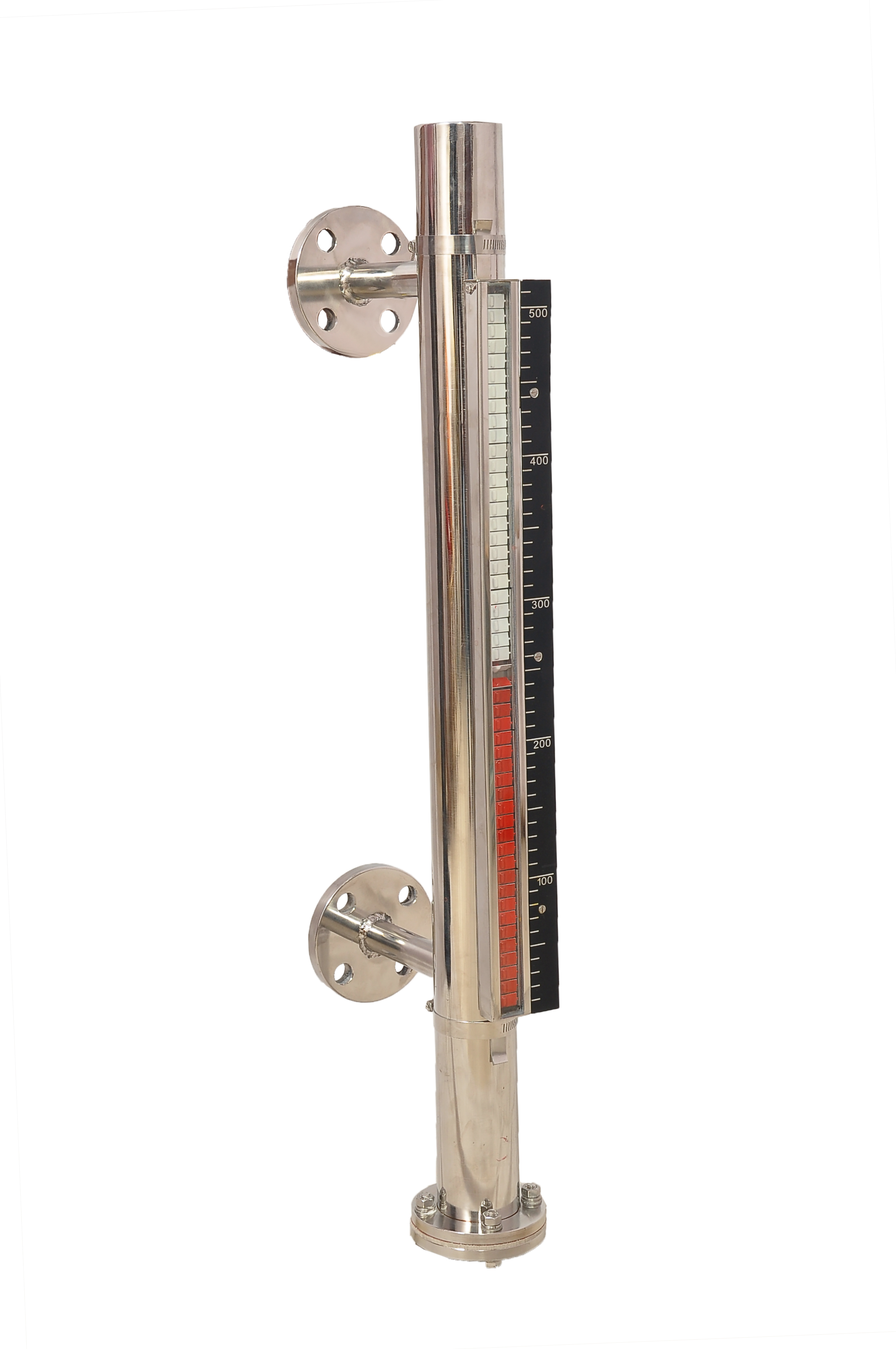 | Level Gauge FILPRO offers Magnetic Level Indicator provides clear, high clarity indication of liquid level. View product → |
Frequently asked questions
What does a magnetic level gauge actually measure?
It measures the position of a float inside a sealed chamber. A permanent magnet transfers that position through the chamber wall to an external display.
How does a magnetic gauge compare with other level measuring instruments?
It provides direct, power-free local indication without exposing process liquid through a sight window. Radar, ultrasonic and differential-pressure instruments suit different requirements, including remote measurement and challenging installation conditions.
When is a magnetic level gauge a good choice?
Choose one when you need closed-chamber visual indication and the liquid is compatible with the chamber, float and seals. Confirm pressure, temperature, density, viscosity, solids and turbulence before selection.
When does a magnetic gauge need a transmitter or switch?
Add a transmitter for control-room level data and a switch for alarms, pump control or trip signals. The external display alone does not provide those electrical outputs.
What should you ask a magnetic gauge supplier before buying?
Ask for the measurement range, design pressure and temperature, process connection, wetted materials, float density, calibration details, transmitter or switch specifications and maintenance requirements.