A sensor that survives water service can fail quickly in hot acid, concentrated alkali or contaminated process liquid. You will be able to match materials to the real process, choose between non-contact and wetted technologies, calculate hydrostatic level correctly and define checks that reveal damage before a false reading affects production.
Key takeaways
- Record concentration, impurities, temperature, pressure, and exposure time before choosing a sensor.
- Use radar or ultrasonic measurement when corrosive vapours make contact sensors risky.
- Select wetted materials against the chemical and its specific failure mode.
- Verify hydrostatic assumptions with density data, calibration checks, and inspection records.
Start with the chemical, not the sensor catalogue
Start with the liquid, not the sensor catalogue. For level measurement for corrosive liquids, record the exact chemical composition, concentration, impurities, temperature range, pressure, and exposure time. A trade name or pH value is not enough: hot, concentrated, contaminated liquid can cause pitting, erosion-corrosion, or stress-corrosion cracking.
Collect these process facts before comparing instruments:
- Liquid name, concentration, density or specific gravity
- Normal and maximum temperature
- Tank pressure, vacuum, and vapour composition
- Minimum and maximum level
- Foam, agitation, solids, and crystallisation
- Cleaning chemicals, temperature, and cleaning frequency
- Required accuracy and response time
- Material restrictions for the diaphragm, probe, float, stem, flange, gasket, seal, and cable entry
| Option | Process facts that decide it | Failure to check |
|---|---|---|
| Non-contact radar or ultrasonic | Vapour, condensation, foam, agitation | Antenna, seal, flange, purge connection, or condensed vapour can remain exposed; vapour can obscure the signal |
| Hydrostatic transmitter | Density changes and pressure range | Concentration or temperature shifts can create level error even when the transmitter remains intact |
| Capacitance probe | Dielectric constant and coating risk | Product buildup can shift the apparent level |
| Float transmitter | Density, viscosity, solids, and crystals | A restricted or flooded float can show a stable but false level |
| Side-mounted conductive switch | Liquid conductivity and deposits | Nonconductive solvents will not complete the circuit; leakage across deposits can cause false switching |
| Guided-wave radar | Probe coating, solids, and seal compatibility | A conductive coating can create a false level near the probe’s upper section |
Choose radar or ultrasonic when the vapour space allows it
A non-contact radar or ultrasonic sensor is safer than a wetted sensor when the liquid is highly corrosive, the tank has usable vapour space, and no probe, diaphragm, float or stem needs to enter the process. Removing wetted parts eliminates the most common attack points, but it does not remove all compatibility checks.
| Option | Main exposure | Best fit | Main failure risk |
|---|---|---|---|
| Radar | Antenna, seal, flange, purge connection and condensate | Dense vapour, changing vapour conditions and long service intervals | Foam, obstructions, condensation, low-reflectivity liquid or multiple reflections weaken the echo |
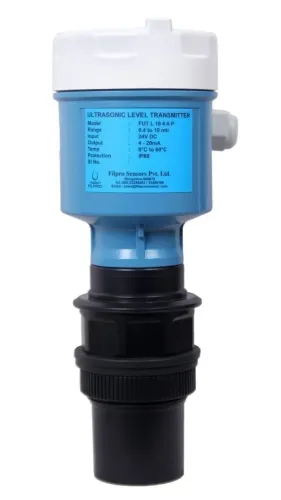
| Ultrasonic | Sensor face and vapour path | Clean vapour space with stable temperature and little foam | Vapour absorption, temperature gradients, agitation or condensation distort the acoustic echo |
| Wetted sensor | Probe, diaphragm, float, stem, gasket and process connection | Clear chemical-compatibility data and controlled maintenance access | Corrosion, coating, crystallisation or seal failure changes the reading |
Choose radar over ultrasonic when corrosive vapour is dense or its temperature changes quickly. Ultrasonic signals lose energy in those conditions, while radar usually retains more signal margin.
A level sensor for corrosive liquids still needs a materials review. Confirm the antenna or sensor face, seal, flange, gasket and cable entry against the exact chemical, concentration, temperature and vapour exposure. A chemically resistant antenna does not compensate for an obstructed vessel, heavy foam or a liquid that reflects radar poorly.
- Prefer non-contact measurement when probe replacement would require draining, neutralising or entering the tank.
- Reject ultrasonic if condensation forms on the sensor face or foam regularly covers the surface.
- Check the vessel drawing for ladders, agitators, heating coils and fill streams before approving radar.
Match the wetted technology to the liquid and the failure mode
Hydrostatic transmitters, capacitance probes, float gauges and side-mounted point switches fail for different reasons in corrosive service. Choose by the liquid’s physical behaviour and the failure you can detect safely, not by corrosion resistance alone.
| Option | Main failure mode | When it applies |
|---|---|---|
| Hydrostatic transmitter | Density changes alter the indicated level even when the diaphragm and connections remain intact. | Use when density is stable and you can match the diaphragm, impulse path and process connection to the chemical. |
| Capacitance probe | A changed dielectric constant, conductive coating or sticky deposit creates false high-level switching. | Use when concentration, temperature and coating conditions remain controlled; insulated probes reduce leakage but add insulation-integrity risks. |
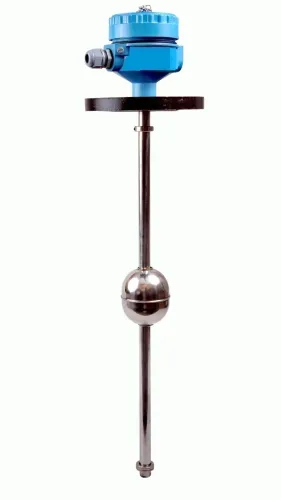
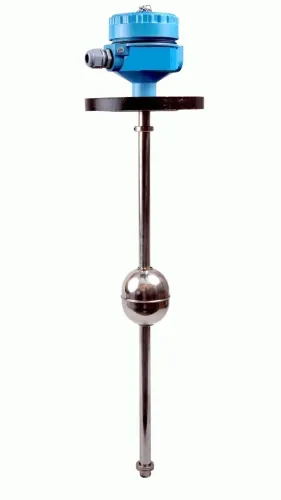
| Float or magnetic level gauge | Crystals, solids, high viscosity or a damaged float restrict movement; a flooded float can hold the indicator at the wrong level. | Use when the float stays buoyant at the process density and the chamber, float, stem, seals and connections suit the chemical. |
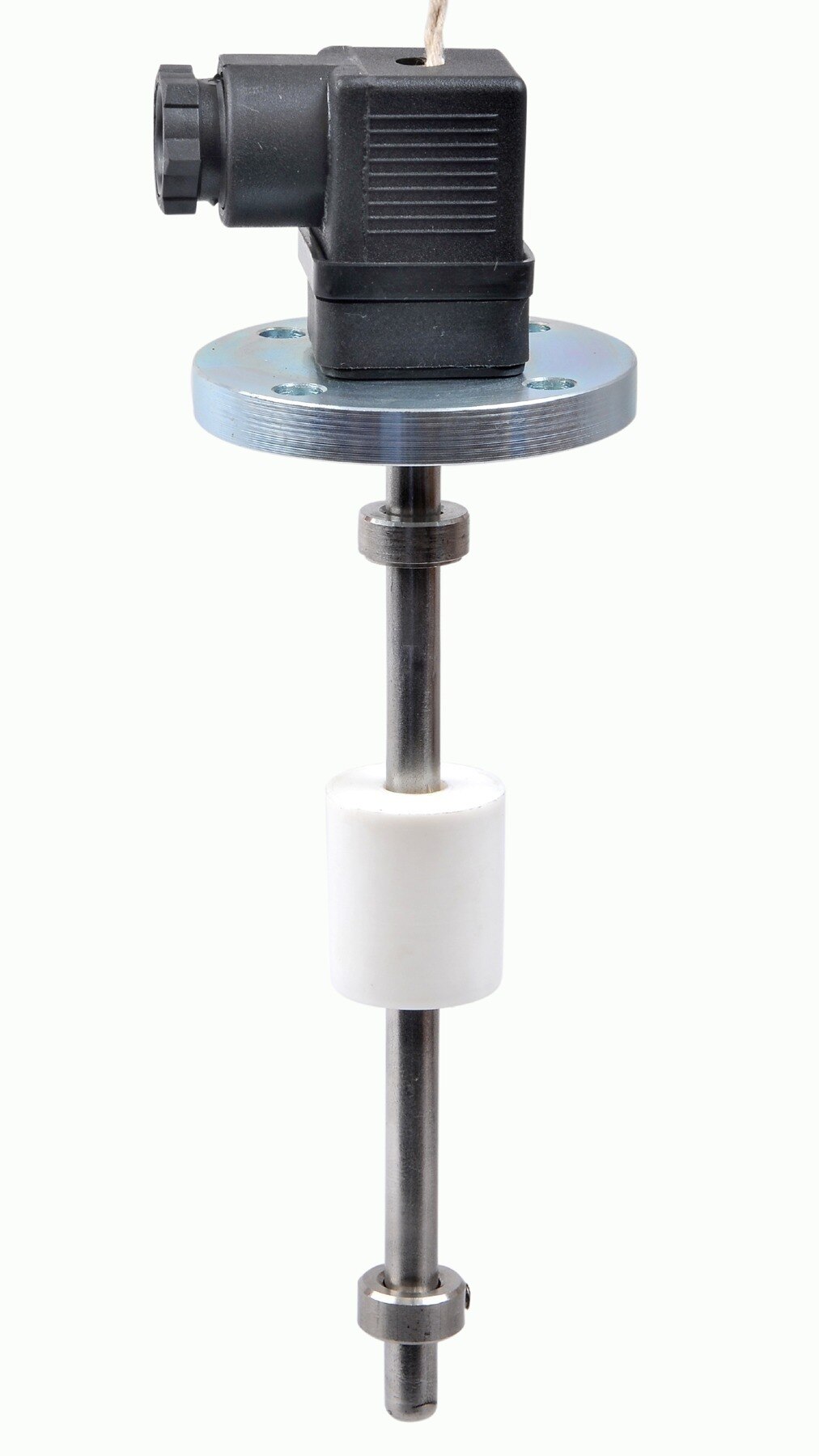
| Side-mounted point sensor | A conductive sensor will not detect nonconductive solvents; deposits or leakage across insulation can cause false switching. | Use for a simple high- or low-level alarm when conductivity is sufficient and the wetted probe and mounting remain clean. |
A level gauge for corrosive liquids still exposes its chamber, float and process connections to the chemical. Check the exact concentration, temperature, pressure, impurities and exposure time for every wetted part, including gaskets and cable entries; pH or a trade name cannot predict pitting, cracking or localized attack.
Calculate hydrostatic level and test whether the assumptions hold
Convert differential pressure to level with the hydrostatic equation: h = ΔP/(ρg). Here, h is liquid height in metres, ΔP is pressure difference in pascals, ρ is liquid density in kg/m³, and g is 9.81 m/s². For specific gravity, use h = ΔP/(SG × 9,810).
In an open tank, the low-side connection references atmosphere; in a sealed tank, a differential-pressure transmitter cancels vapour-space pressure.
Test the assumptions before trusting the reading:
- Measure density at operating temperature, then repeat at the minimum and maximum concentration.
- Compare the calculated level with a sight glass, dip measurement or known fill volume at several heights.
- Check whether agitation, heating or feed streams create density stratification across the lower and upper pressure taps.
- Inspect impulse lines or remote seals for plugging, crystallisation, gas pockets and temperature-driven zero shift.
Hydrostatic level measurement for corrosive liquids becomes a poor choice when density changes enough to create unacceptable error. A transmitter calibrated for 1,200 kg/m³ but exposed to 1,000 kg/m³ will indicate 20% too little height for the same pressure. Avoid it when concentration varies unpredictably, two liquid layers form, or solids block the pressure connections.
It also demands careful diaphragm, fill-fluid, gasket and flange selection; corrosion or permeation at any wetted boundary can invalidate an otherwise accurate pressure calculation.
Specify materials, prove the installation and plan inspection
Require a corrosion-service data sheet, not a nominal accuracy figure. It must identify every wetted material, its traceability, seal compound, lining or corrosion allowance, maximum temperature and pressure, vacuum rating, calibration range, enclosure rating, and inspection or proof-test interval.
Ask Filpro Sensors Pvt Ltd, or any supplier, to state whether the recommendation covers the exact concentration, impurities, vapour and cleaning cycle.
Use this acceptance checklist:
- Match the diaphragm, probe, float, stem, antenna, antenna seal, flange, gasket, valve and cable entry to the documented chemical conditions; reject “stainless steel” as a complete material specification.
- Obtain material certificates and review the supplier’s corrosion basis for pitting, crevice corrosion, erosion-corrosion, stress-corrosion cracking and galvanic contact.
- For a level gauge for corrosive liquids, verify glass or mica, gaskets, chamber, valves, guards, drain and vent materials; confirm isolation valves are operable and the gauge has no impact damage or thermal-shock exposure.
- Record the installed elevation, reference point, nozzle dimensions, probe insertion, grounding, cable glands and process seal orientation against the approved drawing.
- Test the configured range and alarm outputs with a safe simulation; verify blocked-echo, lost-echo and sensor-fault diagnostics produce the intended plant response.
- Set an inspection interval based on corrosion rate and consequence of failure, then record baseline photographs, thickness readings or signal checks.
Reinspect after the first cleaning cycle and after any chemical change. Condensate, deposits and coating can damage exposed radar parts or create false guided-wave or conductive readings.
Related products
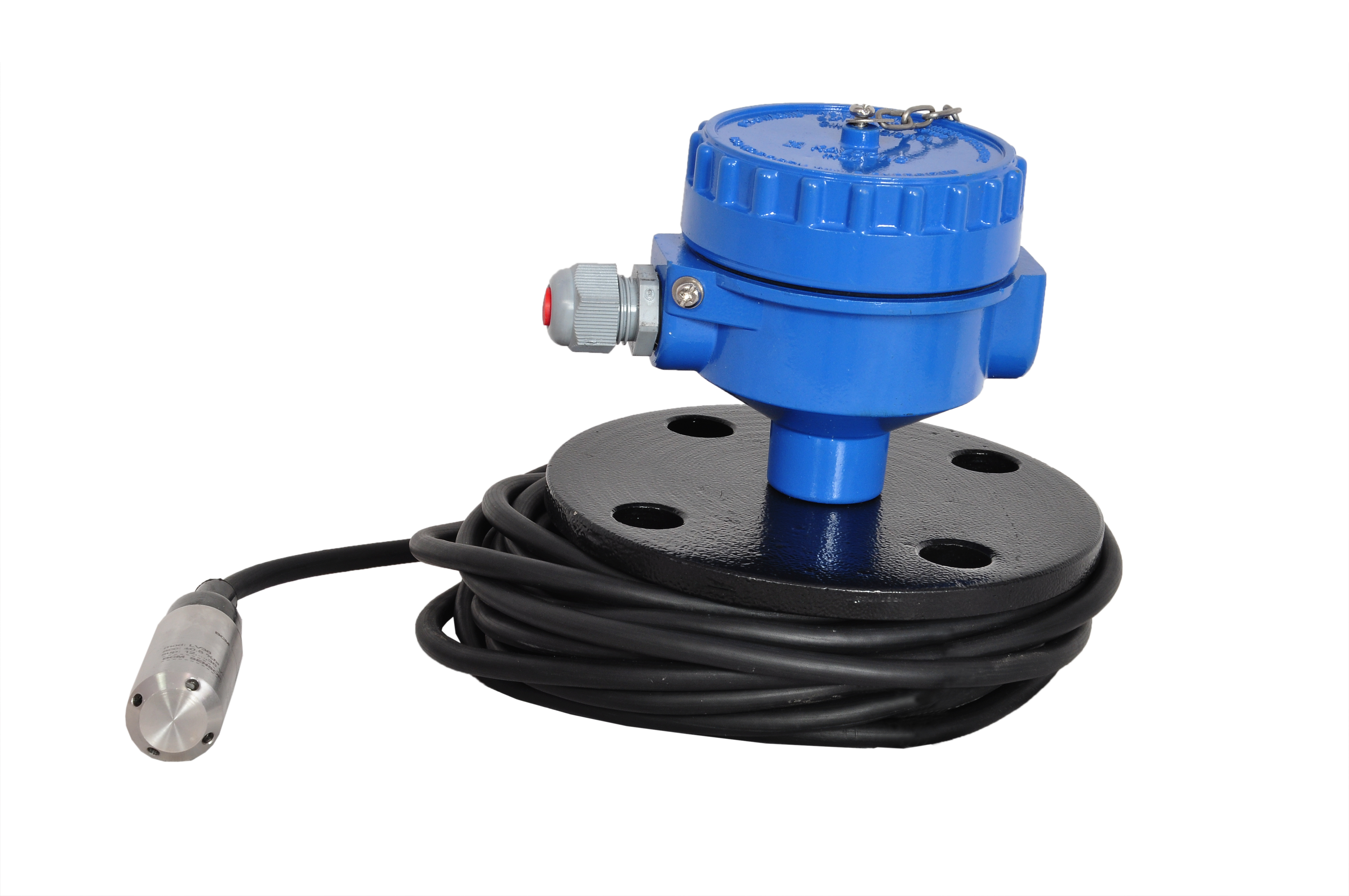 | Level Transmitter Hydrostatic liquid level transducers and transmitters with flush diaphragm is designed fora wide variety of level measurement applications. View product → |
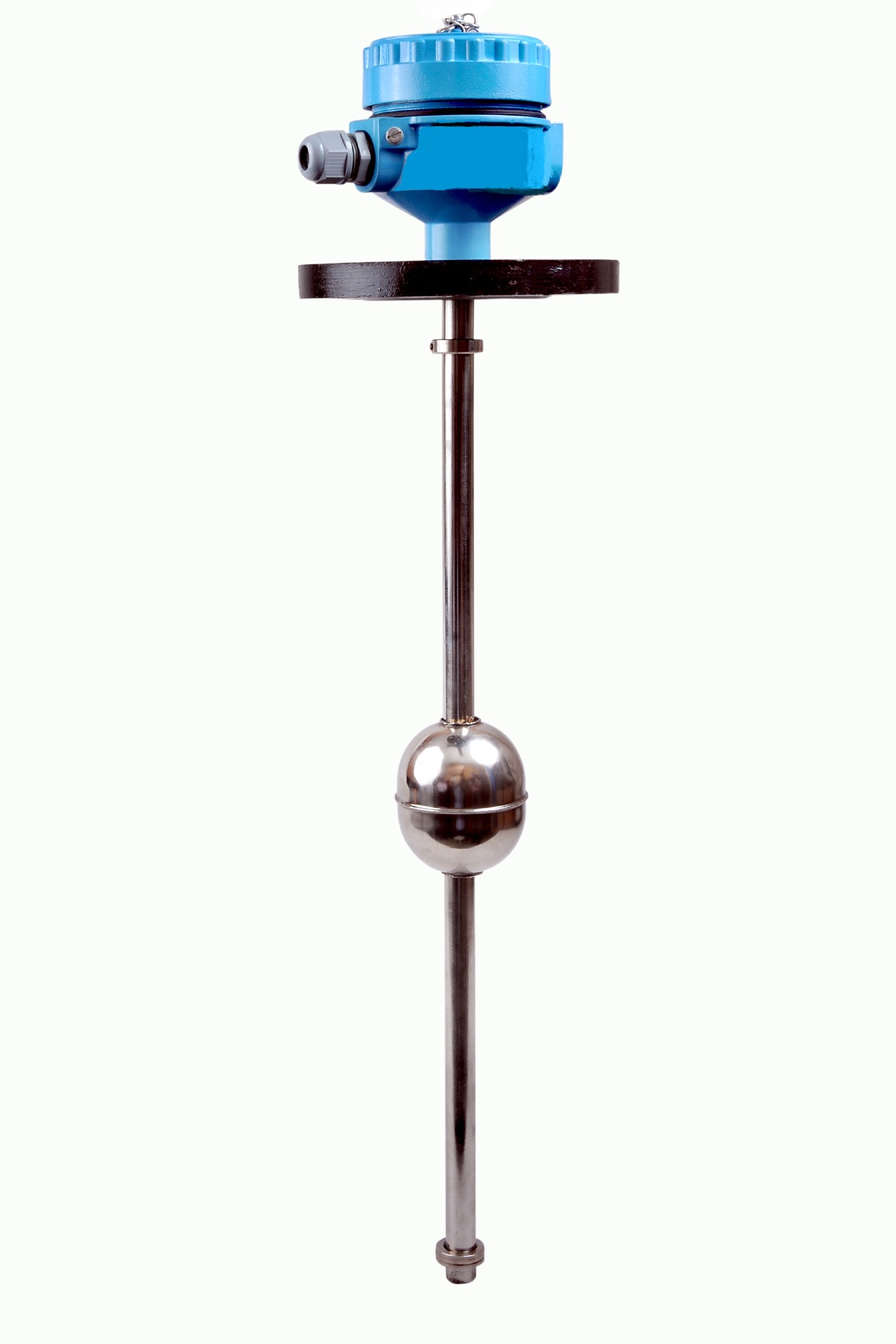 | Level Sensor Atex approved Float Level Transmitter : Over All Length: 300mm to 5000mm Input: 16V DC to 30V DC Output: 4-20mA / 0-10V DC Resolution: 5mm / 10mm... View product → |
Frequently asked questions
What information should you collect before selecting a level sensor for corrosive liquids?
Record the exact chemical composition, concentration, impurities, temperature range, pressure, and exposure time. A trade name or pH value alone cannot define material compatibility.
When should you use radar or ultrasonic measurement for corrosive liquids?
Choose non-contact radar or ultrasonic measurement when the vapour space allows a clear signal path and the vapour, foam, condensation, temperature, and tank geometry remain within the instrument’s operating limits.
How do you choose a wetted level sensor for corrosive service?
Match every wetted part, including probes, floats, diaphragms, seals, flanges, and welds, to the chemical concentration and temperature. Check whether the dominant risk is pitting, erosion-corrosion, swelling, embrittlement, or stress-corrosion cracking.
How do you verify hydrostatic level measurement?
Calculate level from pressure, density, and gravity, then test the density and temperature assumptions against operating data. Confirm zero, span, impulse connections, mounting height, and calibration during commissioning and inspection.
Related products
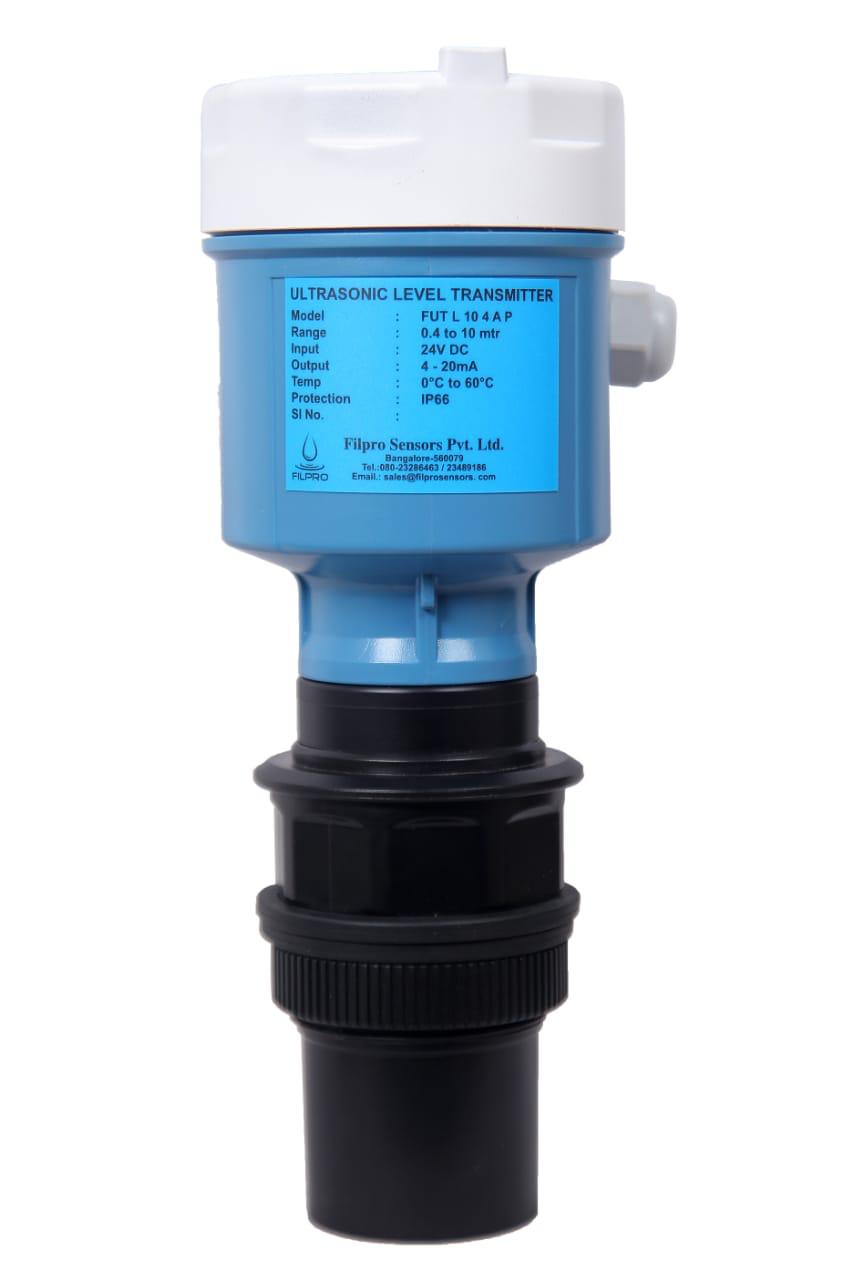 | Level Transmitter Ultrasonic Level Sensor is a non-contact ultrasonic continuous level measurement product based on sound technology. View product → |
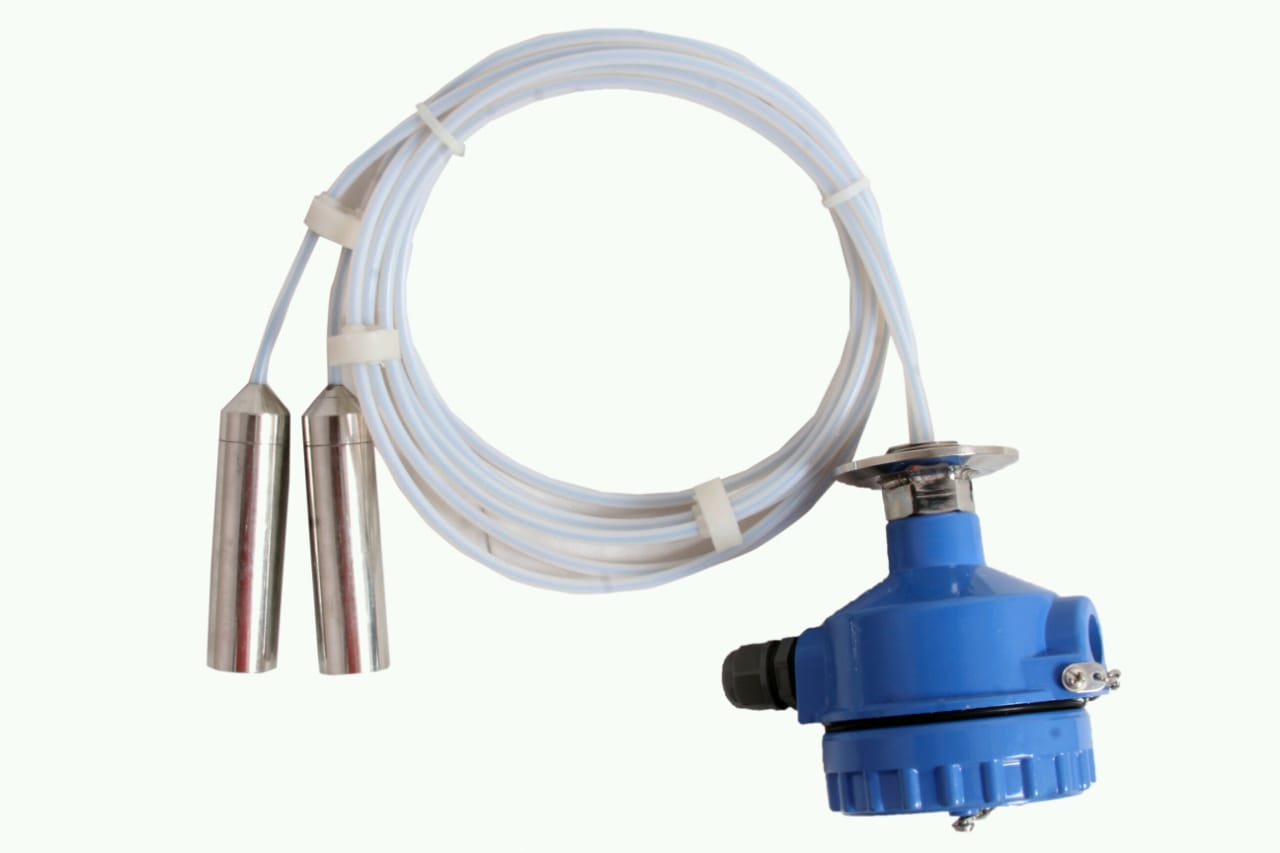 | Level Transmitter can be used for conductive as well as non conductive liquids. View product → |
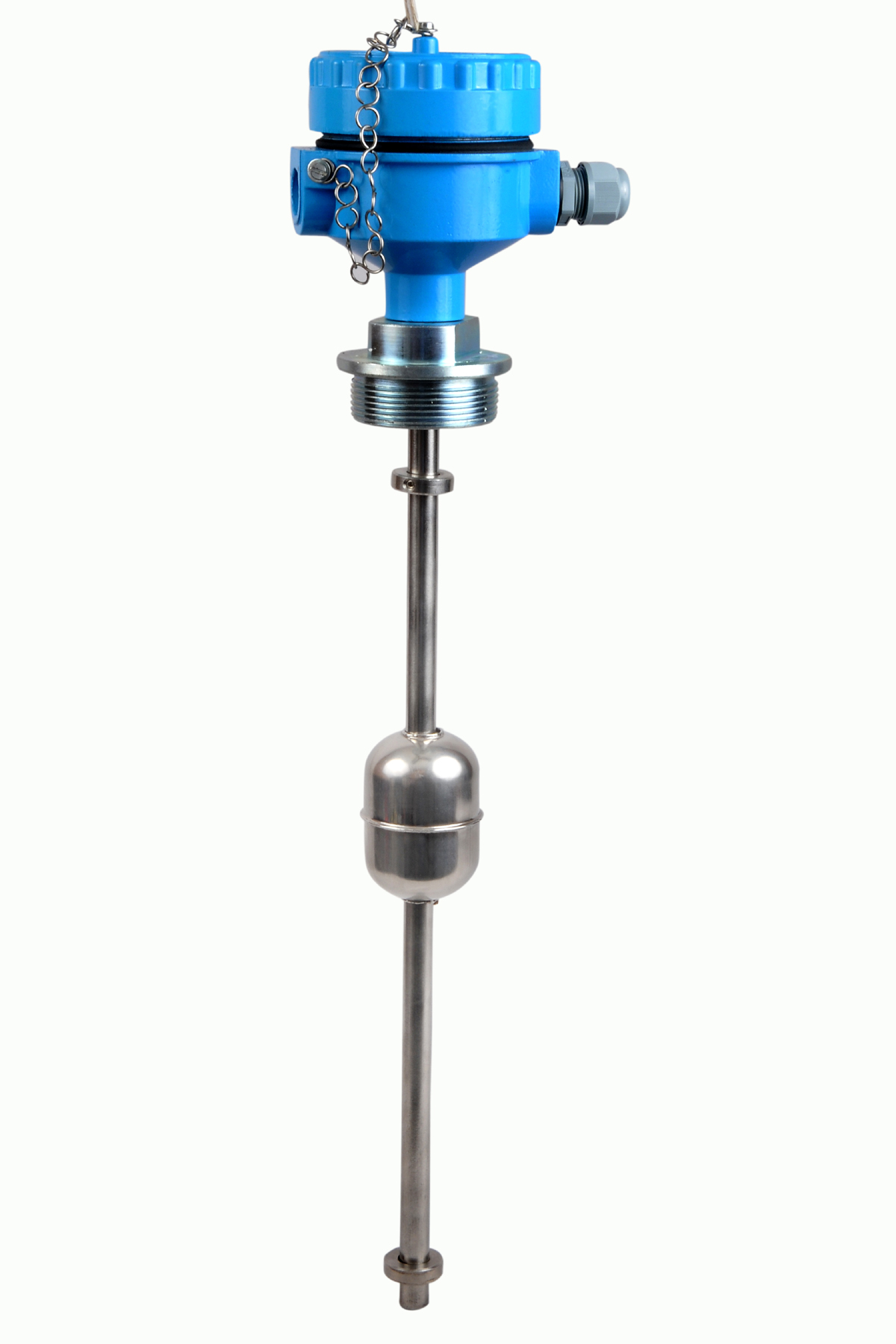 | Level Transmitter Float Level Transmitters Are Ideal For Continuous Level Monitoring In Water, Diesel, Chemical And Oils For Accurate Level Measurement. View product → |
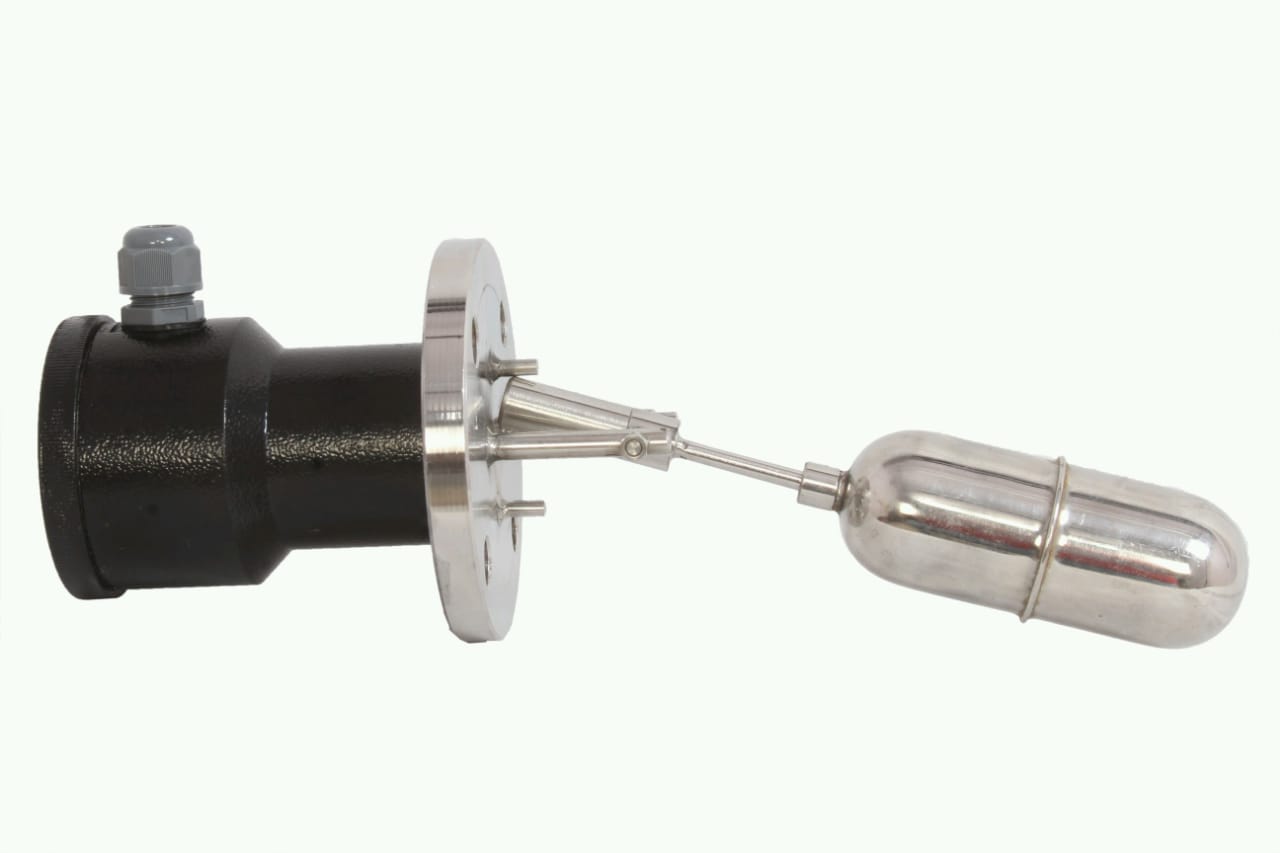 | Level Switch Filpro offers most reliable, cost effective Side Mounted Level Switch for point level sensing. View product → |