Foam can make a sensor respond to the wrong surface, stick in place, or lose contact with the liquid entirely. You will be able to match the sensing principle to your foam, choose a safer mounting position, and write a specification that separates true-liquid detection from foam detection.
Key takeaways
- Define whether foam is the target before choosing a switch.
- Test capacitance, ultrasonic and radar sensors against your actual foam sample.
- Use a stilling tube or repositioned mounting to reduce false switching.
- Specify foam density, thickness, coating, conductivity and dielectric constant.
Start by deciding whether foam is the target or the interference
Decide whether you need to detect the foam layer or ignore it and switch when the underlying liquid reaches its high or low level. There is no universal best level switch for foam applications: foam density, bubble size, thickness, liquid carryover, stability, viscosity, coating tendency, conductivity and dielectric constant all change the response.
| Requirement | What the instrument must do | Typical use |
|---|---|---|
| Detect foam | Respond to the foam crest, including changes in foam thickness | Foam-layer monitoring or a foam alarm |
| Ignore foam | Remain inactive in dry foam and respond to the liquid beneath it | High-level shutdown or low-level pump protection |
| Measure continuously | Report level trends rather than only a switch point | Inventory, control loops or foam-layer thickness |
A false high trip can stop a process unnecessarily; a missed high-high signal can create an overfill hazard. Specify the foam’s minimum and maximum density, bubble size, thickness, conductivity, dielectric constant, viscosity and coating rate, then request a test using the real material. Include pressure, temperature, clean-in-place conditions and the required failure state.
A point switch cannot replace a transmitter when operators need trend information. Set the trip from the actual liquid elevation that protects the vessel or pump—not the vessel roof and not the visible foam crest. For high-high protection, use an independently wired switch where a missed signal has serious consequences.
How each sensing principle behaves under a foam blanket
Under a foam blanket, a vibrating-fork switch is often the strongest starting point for detecting liquid below relatively dry, low-density foam: many models specify minimum liquid density around 0.5–0.7 g/cm³, so dry foam may not load the tines enough to change resonance.
Dense, wet or collapsing foam can still actuate it, while coating between the tines can prevent dry reset.
| Principle | Behaviour under foam | Practical limit |
|---|---|---|
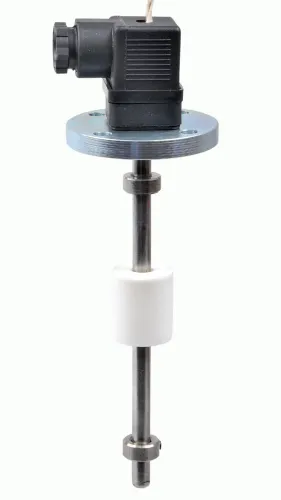
| Float or displacer | Foam can support or surround the buoyant element; deposits restrict movement, and viscous product can make it stick. | More defensible in clean, low-viscosity service or a properly designed external chamber. |
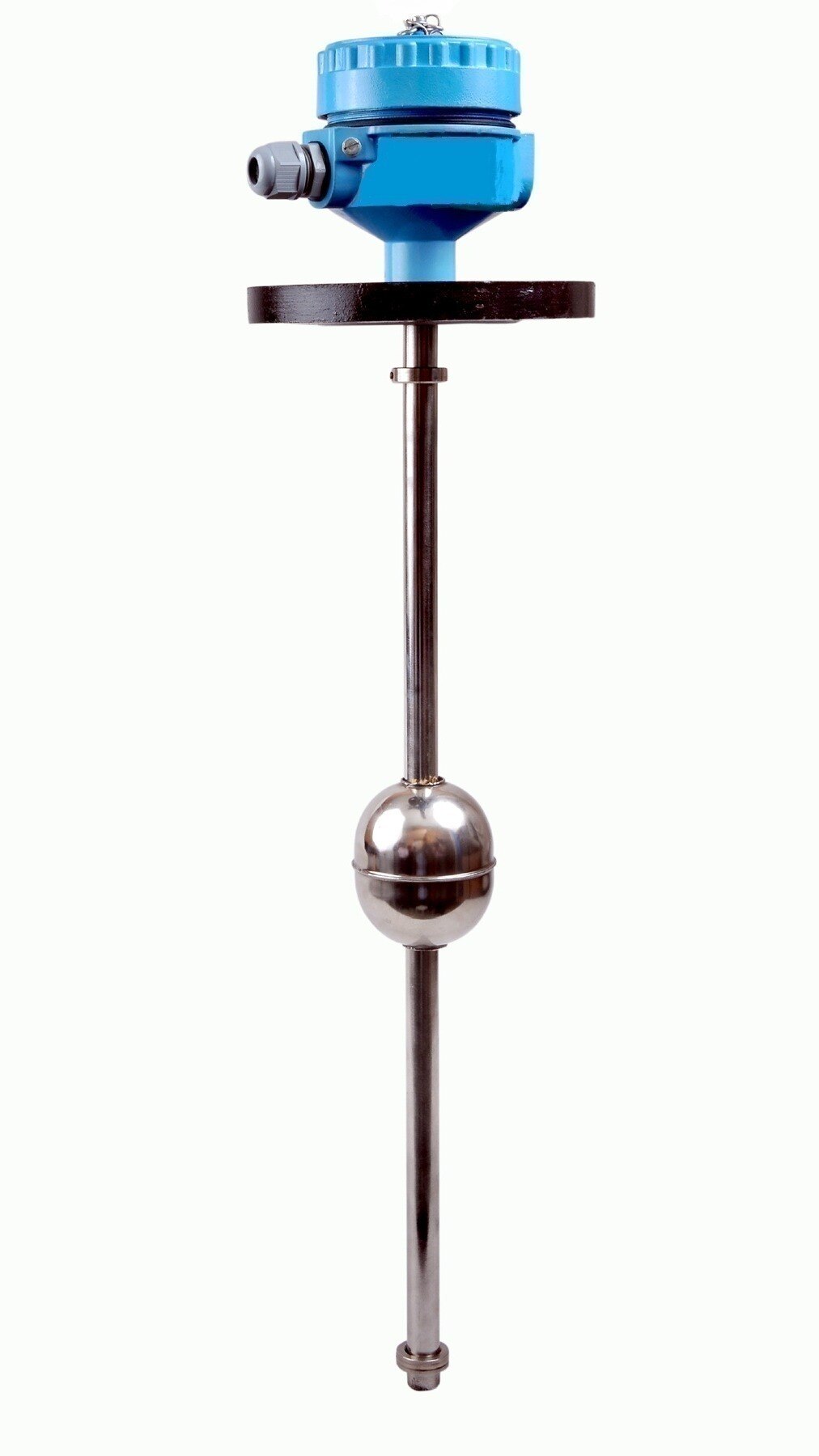
| Magnetic float switch | Ask whether the float can become trapped by foam, residue or vessel internals before its magnet reaches the switch. | Compare the specified surface-movement range with actual agitation and foam behaviour. |
| Cable float switch | The float can foul on agitators, pipes or other internals, and foam can alter its buoyancy. | A rating for lightly agitated liquid does not prove suitability for foam; check how much surface movement the design tolerates. |
| Vibrating-fork switch | Relatively dry foam may not meet the model’s density threshold; wet foam can produce a wet signal. | Test the actual foam, including its collapse and coating behaviour. |
| Conductivity probe | Works only in a conductive liquid with an electrical reference. Conductive foam, condensate or product can bridge the probe to the wall or reference electrode. | Poor choice for non-conductive oils. |
| Optical switch | Clean, low-coating liquids suit it; foam at the window or residue on the lens can create false wet or dry signals. | No moving parts does not make it universal. |
Request an application test with the real foam. Include foam density, thickness, conductivity, viscosity and coating rate in the specification.
When capacitance, ultrasonic or radar is the better route
Capacitance or RF-admittance deserves consideration when the foam and liquid have clearly different dielectric responses, and the probe sits in the intended switching medium. Radar becomes the stronger candidate when vapour and pressure vary, but only after testing the actual foam and liquid.
| Option | Main advantage | Main limitation | Choose it when |
|---|---|---|---|
| Capacitance level switch | Detects a dielectric change | Coating can imitate a wet condition | Foam and liquid have stable, distinct dielectric responses |
| RF-admittance switch | Compensates for a stable deposit | Conductive bridging or variable deposits still cause errors | The process permits a defined reference geometry |
| Ultrasonic level sensor | Simple non-contact installation | Foam scatters and absorbs the pulse | The surface is clear enough to return a reliable echo |
| Radar level instrument | Better tolerance of vapour and pressure changes | Foam can attenuate or reflect microwaves | The device specification covers the foam and dielectric conditions |
Coating is the main capacitance and RF-admittance failure mode. Build-up compensation reduces sensitivity to a stable deposit; it does not solve conductive bridging, changing deposits, or foam with variable liquid carryover.
Specify probe insulation, tank grounding and reference geometry for the actual vessel. Without that electrical reference, a good switch can behave unpredictably.
An ultrasonic level sensor is usually a poor first choice beneath persistent foam. A stilling arrangement can improve repeatability, but it cannot restore an echo attenuated by foam.
Thick, wet or highly aerated foam can make a radar level instrument report the foam top rather than the liquid. Test the actual process before approving radar.
Mounting often matters more than the sensor name
Mounting often matters more than the sensor name: keep the sensing point away from inlet streams, agitator discharge, gas injection and spray nozzles. Use a stilling chamber, external chamber, bypass or other protected mounting when these forces move the surface.
A chamber stabilises liquid movement, but poor design creates a new problem. Foam can collect or become concentrated inside it when venting is blocked, the drain path is restricted, or the chamber opening and geometry do not allow representative liquid exchange.
| Option | Strength | Main installation risk |
|---|---|---|
| Side-mounted level switch | Accessible and practical when a spare top nozzle is unavailable | A float can stick against the vessel wall or sit in accumulated foam |
| Top-entry probe | Can reach a calmer location with straightforward alignment | Requires a suitable top nozzle and a cleanability plan |
Locate the high and low control points from the actual liquid surface, not from the apparent foam height. Define the high-high trip separately at the real overfill protection elevation.
Keep that trip on an independent switch and independently wired circuit rather than sharing the control transmitter; specify whether its failure state is de-energise-to-trip or another documented safe response.
Check a side-mounted level switch for wall clearance, deposits and foam accumulation. A top-entry probe needs enough insertion clearance, nozzle access and removal space for cleaning. A chamber only improves performance when its vent, drain, connections and dimensions prevent foam from being trapped.
Write a foam-service specification and verify it with a real sample
Make the final buying decision from a written foam-service specification, not from a technology name. State:
- Whether the level switch for foam applications must detect foam or ignore it.
- Minimum and maximum foam density and foam thickness.
- Liquid conductivity, dielectric constant, viscosity and coating rate.
- Operating pressure and temperature.
- Cleaning chemicals and the complete clean-in-place cycle.
- Agitation, gas injection and the required failure state: de-energised on trip, alarm, or pump shutdown.
Ask the supplier to confirm in writing the sensor’s minimum-density or dielectric limits, coating behaviour, mounting restrictions and diagnostic response. Include the actual liquid, foam and expected temperature in an application test; a liquid-only demonstration cannot expose false trips from wet or collapsing foam.
Require the test report to record the true-liquid trip point, foam-only response, reset time and behaviour after coating. Test dry foam, wet foam, collapsing foam and the maximum foam thickness.
Filpro Sensors Pvt Ltd is most useful when it reviews these process facts and confirms the proposed instrument’s limits, rather than recommending a technology by name alone.
Decision rule: start with a tested vibrating fork when dry foam must be ignored; consider capacitance when dielectric contrast is stable; use floats only with controlled mechanics; treat ultrasonic cautiously; and use radar only after foam-specific verification.
Related products
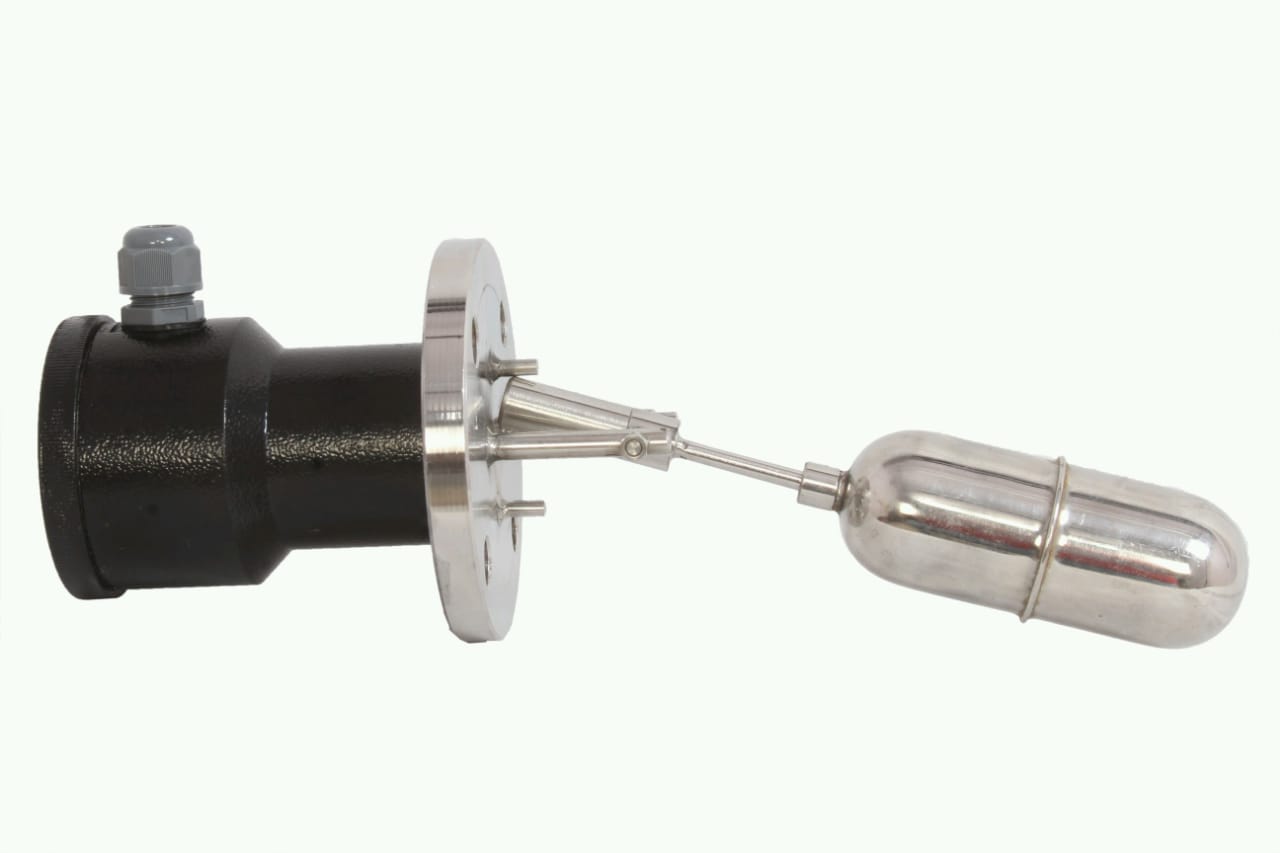 | Level Switch Filpro offers most reliable, cost effective Side Mounted Level Switch for point level sensing. View product → |
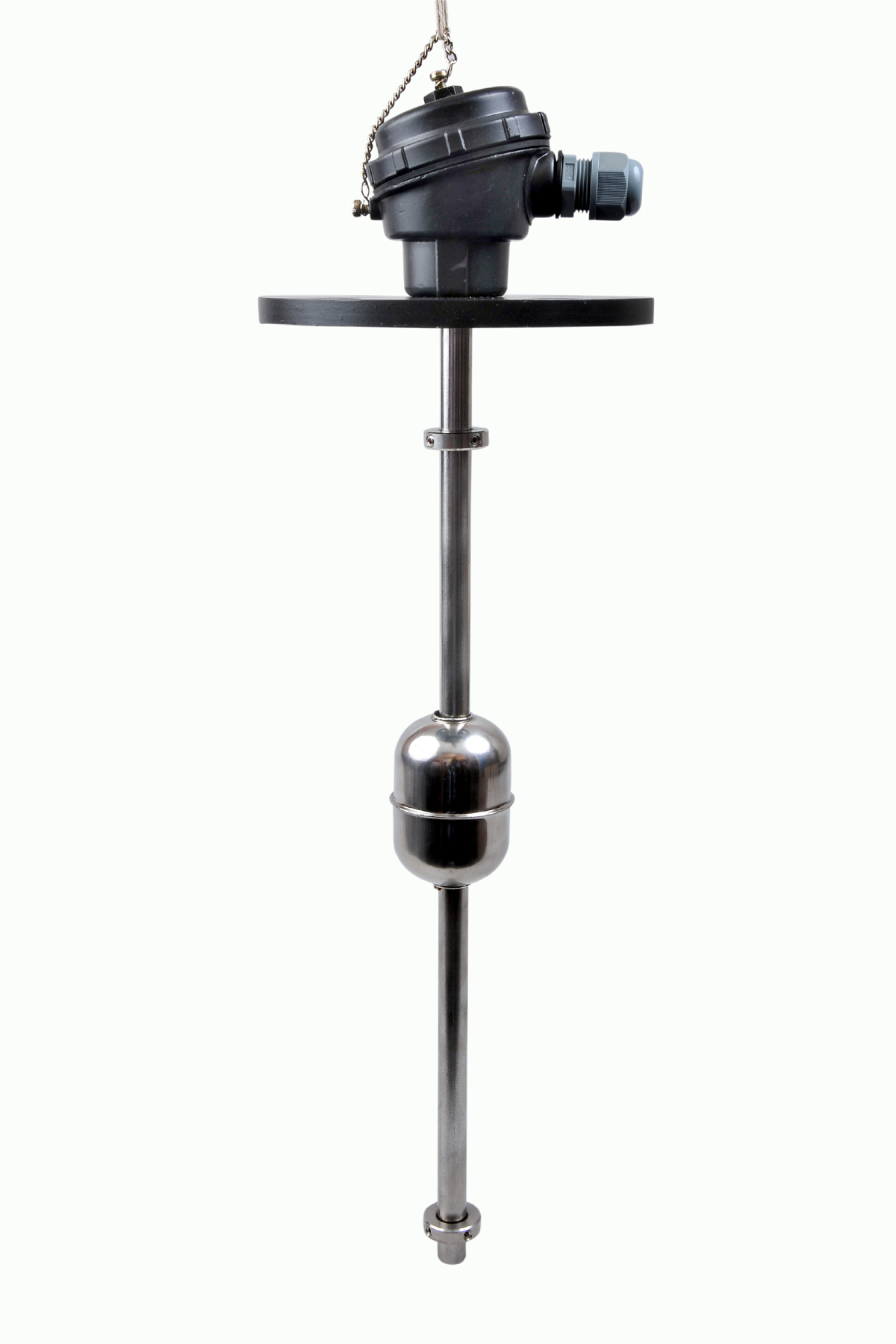 | Level Switch The Magnetic Level Switch consists of the non-abrasive float carrying permanent magnet and non-ferrous stem carrying one. View product → |
Frequently asked questions
Should a level switch detect foam or ignore it?
Choose detection of the foam layer when foam itself controls the process. Choose foam rejection when the switch must respond to the underlying liquid level.
Which sensing principle works best under a foam blanket?
The result depends on foam density, bubble size, thickness, stability, carryover, viscosity, coating tendency, conductivity and dielectric constant. Test the sensing principle with the actual liquid and foam.
When is capacitance a better choice for foaming liquids?
Capacitance suits applications where the liquid and vessel conditions provide a dependable dielectric contrast. Account for probe coating, conductivity changes and buildup before selecting it.
When should you consider ultrasonic or radar instead?
Consider ultrasonic or radar when you need non-contact measurement or when a probe would collect coating. Verify how the foam surface affects the echo and switching point.
How does mounting affect foam level-switch performance?
Mounting can reduce false switching by moving the sensor away from inlet turbulence, using a stilling tube where suitable, and placing the switch at a representative level.