The right choice depends less on the label on the instrument than on the space between the sensor and the liquid: its temperature, vapour, pressure, foam, obstructions and surface movement. By the end, you will be able to match each technology to your vessel, identify failure risks before installation and compare the specifications that affect control performance and total effort.
Key takeaways
- Choose radar for vacuum, changing gas composition or high process temperatures.
- Choose ultrasonic when the vapour space supports a clear acoustic path.
- Check tank geometry, obstructions and false echoes before selecting a transmitter.
- Specify process conditions, accuracy, materials and control outputs before requesting quotes.
The physical difference changes where each transmitter works
The physical difference is decisive: radar sends electromagnetic waves to the liquid surface, while ultrasonic measurement times sound’s journey through the gas space. Radar can measure in vacuum and is less affected by gas composition, pressure and temperature; ultrasonic measurement requires a continuous acoustic path.
| Technology | Physical behaviour | Best fit |
|---|---|---|
| Radar | Electromagnetic signal; handles vacuum, pressure and changing vapour better | Process vessels, fuel tanks and hot or pressurised service |
| Ultrasonic | Sound speed changes with the gas path; air travels about 343 m/s at 20 °C and changes roughly 0.6 m/s per °C | Atmospheric tanks with clean, stable gas near ambient temperature |
| Both | Structures, floating roofs, mixer blades and foam can create convincing false echoes | Check mounting clearance and diagnostics before commissioning |
A radar versus ultrasonic level transmitter decision must include control-loop behaviour. Agitation, splashing, intermittent filling and foam can make either device reject, average or follow transient echoes differently. Compare response time, damping range, echo-loss behaviour and configured fault output; excessive damping can hide a rising level until overfill protection reacts too late.
Neither transmitter works reliably when its signal path is blocked. A nozzle lip, support or vessel wall can dominate the return, so review an echo curve during commissioning instead of trusting the displayed level alone.
Radar installations also demand a correctly rated antenna and process seal; ultrasonic installations demand a clear geometry and credible acoustic temperature compensation.
Compare the vapour space before comparing accuracy
Compare the vapour space before comparing accuracy. In a radar level transmitter versus ultrasonic decision, gas conditions can determine whether the reading remains dependable between calibration checks. An ultrasonic pulse crosses the entire gas path, so temperature gradients, pressure, humidity and moving vapour change its travel time or weaken its return.
Radar is less affected by those conditions, but condensation or product coating on the antenna can still create false echoes.
| Condition | Ultrasonic reliability | Radar reliability | Selection consequence |
|---|---|---|---|
| Vapour and pressure | Changing vapour composition, vacuum and pressure alter sound behaviour | Usually stable through changing vapour and pressure | Prefer radar for sealed, pressurised or vacuum vessels |
| Temperature | Local compensation misses a hot or stratified gas path; sound speed is about 343 m/s at 20°C and changes roughly 0.6 m/s per °C | Far less dependent on gas temperature | Use radar when the vessel has strong temperature gradients |
| Humidity and condensation | Humid, condensing air attenuates or scatters the pulse | Antenna coating can reduce sensitivity or produce echoes | Inspect both signal path and sensor surface |
| Foam | Absorbs and disperses sound, especially when thick or wet | Low-density foam may be penetrated; dense, wet or conductive foam may reflect first | Test the actual foam, not a generic instrument claim |
| Liquid properties | Surface turbulence and poor acoustic reflection reduce return strength | Low dielectric liquids return less energy; composition changes can shift performance | Confirm dielectric constant and surface condition |
Do not judge reliability from a steady displayed value alone. Agitation, splashing and intermittent filling test response time, damping, echo-loss handling and fault output; excessive damping can delay overfill or pump-protection action. Choose ultrasonic for a clean, atmospheric tank, and radar when the vapour space is unstable.
Use vessel conditions to narrow the choice
Use ultrasonic for an atmospheric open tank when the air space is clean, calm and close to ambient temperature. Choose radar when vapour, wind, foam, pressure or temperature makes the signal path unpredictable. In a radar versus ultrasonic level transmitter decision, the vessel’s operating conditions matter more than a headline accuracy figure.
| Service | Starting choice | Reason and limitation |
|---|---|---|
| Open water or storage tank | Ultrasonic | Cost-effective where wind, foam, condensation and temperature gradients are limited; use radar for exposed or turbulent tanks. |
| Wastewater channel | Ultrasonic or radar | Ultrasonic suits a sheltered channel with little foam. Radar handles wind, splashing, floating debris and changing surface conditions better. |
| Chemical tank | Radar | Vapour composition, fumes and temperature changes favour radar. Match the antenna, process seal, materials and hazardous-area approval to the chemical. |
| Fuel tank | Radar | Radar suits enclosed tanks and changing vapour conditions. Check for roof structures, floating roofs, internal pipes and product build-up. |
| Process vessel | Radar | Pressure, vacuum, heat, agitation and intermittent filling favour radar. Confirm pressure and temperature ratings before specifying it. |
Do not treat either instrument as reliable when a nozzle lip, support, agitator, internal pipe or tank wall blocks the signal path. Review the commissioning echo curve, then compare response time, damping range, echo-loss behaviour and configured fault output; excessive damping can delay an overfill or pump-protection response.
Condensation and deposits can still weaken radar, so plan inspection access for the antenna.
Check geometry, echoes and installation effort
A trustworthy reading begins with geometry, not the displayed value. Mount the instrument above the liquid with a clear beam to the surface; a nozzle lip, ladder, heating coil, mixer blade, internal pipe or floating roof can create a stronger false echo than the liquid.
Keep the antenna or transducer away from the vessel wall and align it vertically.
An 80 GHz radar transmitter offers a narrower beam than comparable lower-frequency radar, which can simplify installation through a small nozzle. It does not remove nozzle reflections or obstruction echoes. Ultrasonic installations need an uninterrupted acoustic path, and temperature gradients in a hot gas space can defeat compensation based only on the transmitter’s local temperature.
For a radar level transmitter versus ultrasonic choice, commission the instrument against actual operating conditions rather than a calm empty tank. Use this checklist:
- Confirm the beam path at minimum and maximum level, including mixer movement, filling points and a floating roof.
- Review the echo curve or equivalent diagnostic screen and identify the liquid echo, structural echoes and any blocked-path condition.
- Check response time, damping range, echo-loss behaviour and configured fault output against pump protection or overfill actions.
- Observe readings during filling, agitation, splashing and foam; excessive damping can hide a dangerous delay.
- Record the final mounting position, false-echo map, temperature-compensation settings and empty/full calibration points.
If the signal path changes during operation, repeat the diagnostic review after commissioning under load.
Make the final choice with a specification and control checklist
Choose between a radar versus ultrasonic level transmitter by comparing the complete control task, not the headline accuracy. For radar level transmitter versus ultrasonic selection, demand evidence from your operating range and surface behaviour.
| Criterion | Radar | Ultrasonic |
|---|---|---|
| Accuracy and repeatability | Confirm performance at minimum and maximum level, including dielectric changes and false-echo conditions. | Confirm performance with the actual gas temperature profile and surface condition. |
| Response and control | Compare update rate, damping range, echo-loss delay and configured fault output. | Check whether acoustic averaging delays pump protection or overfill action. |
| Diagnostics | Require echo curves, false-echo mapping and event logs. | Require echo quality, temperature-compensation and echo-loss diagnostics. |
| Cost and effort | Include mounting, configuration, commissioning and structural-echo investigation. | Include acoustic-path clearance, temperature effects and repeated commissioning. |
| Support | Ask for application review and a written commissioning procedure. | Ask for the same, including compensation checks. |
Before approving the purchase, record these points:
- Test accuracy and repeatability at the actual minimum, normal and maximum levels.
- Specify the maximum acceptable response time and damping; verify it during filling and emptying.
- Define the fault action: hold last value, drive low, drive high or use a separate alarm.
- Require an echo trace at commissioning and after agitator operation, foam formation or internal changes.
- Compare total installed cost, spare-part availability, calibration tools and response time for technical support.
When evaluating suppliers such as Filpro Sensors Pvt Ltd, ask who reviews the vessel drawing, echo trace and control-loop settings before shipment. A low purchase price is poor value if commissioning leaves the transmitter rejecting real level changes.
Related products
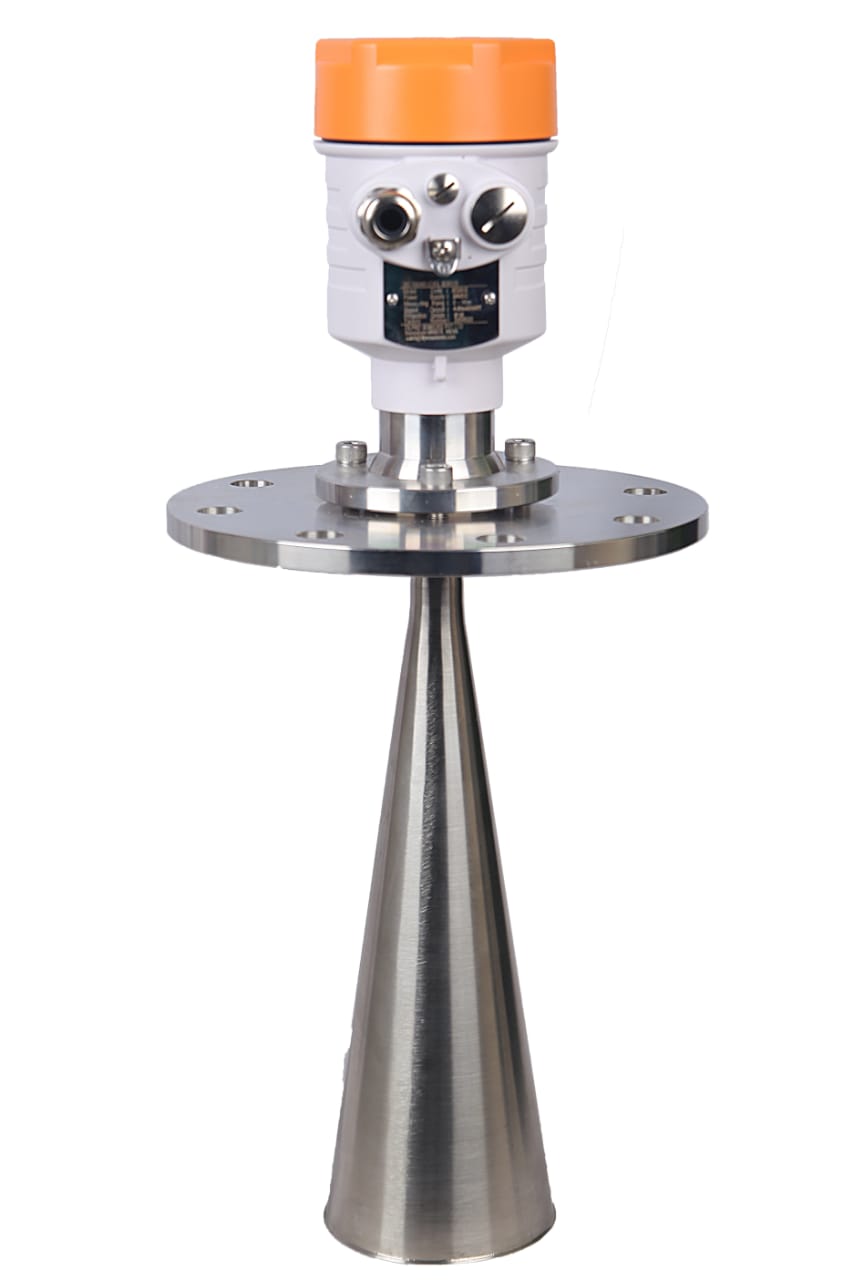 | Level Transmitter FILPRO offers professional Radar Level Transmitter. Our radar level transmitter uses radar to continuously measure non-contact liquid level, the... View product → |
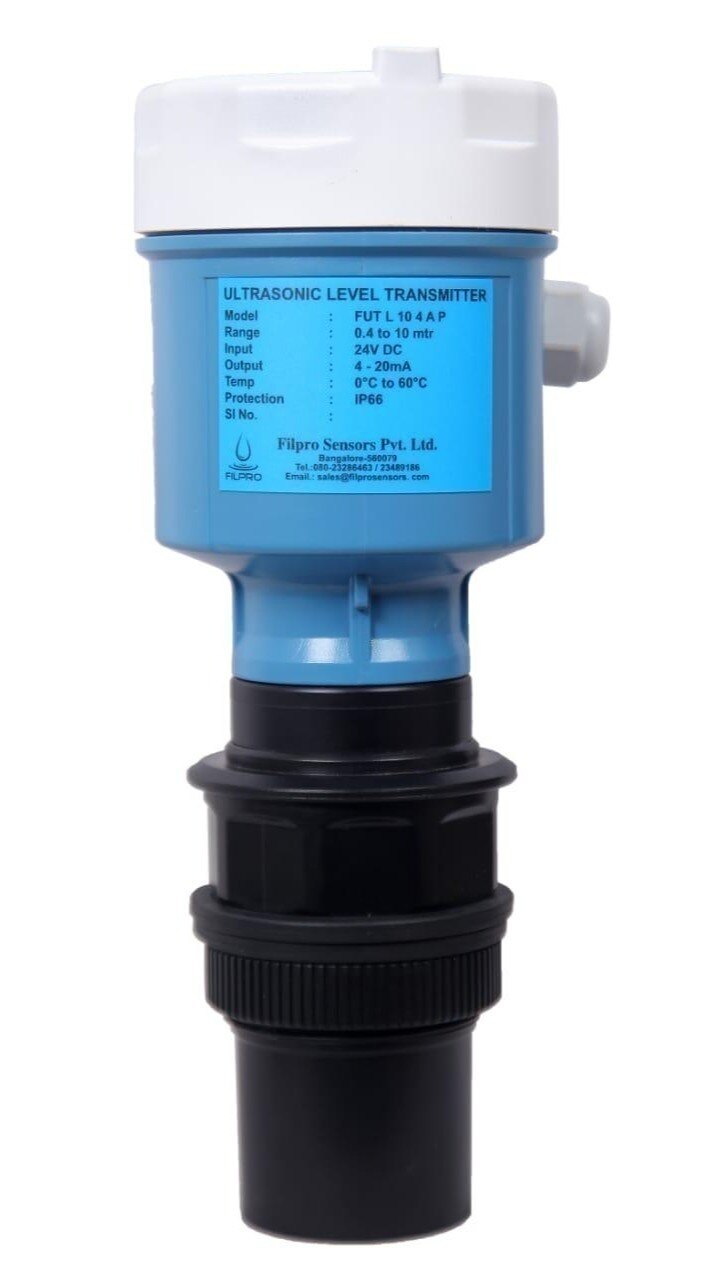
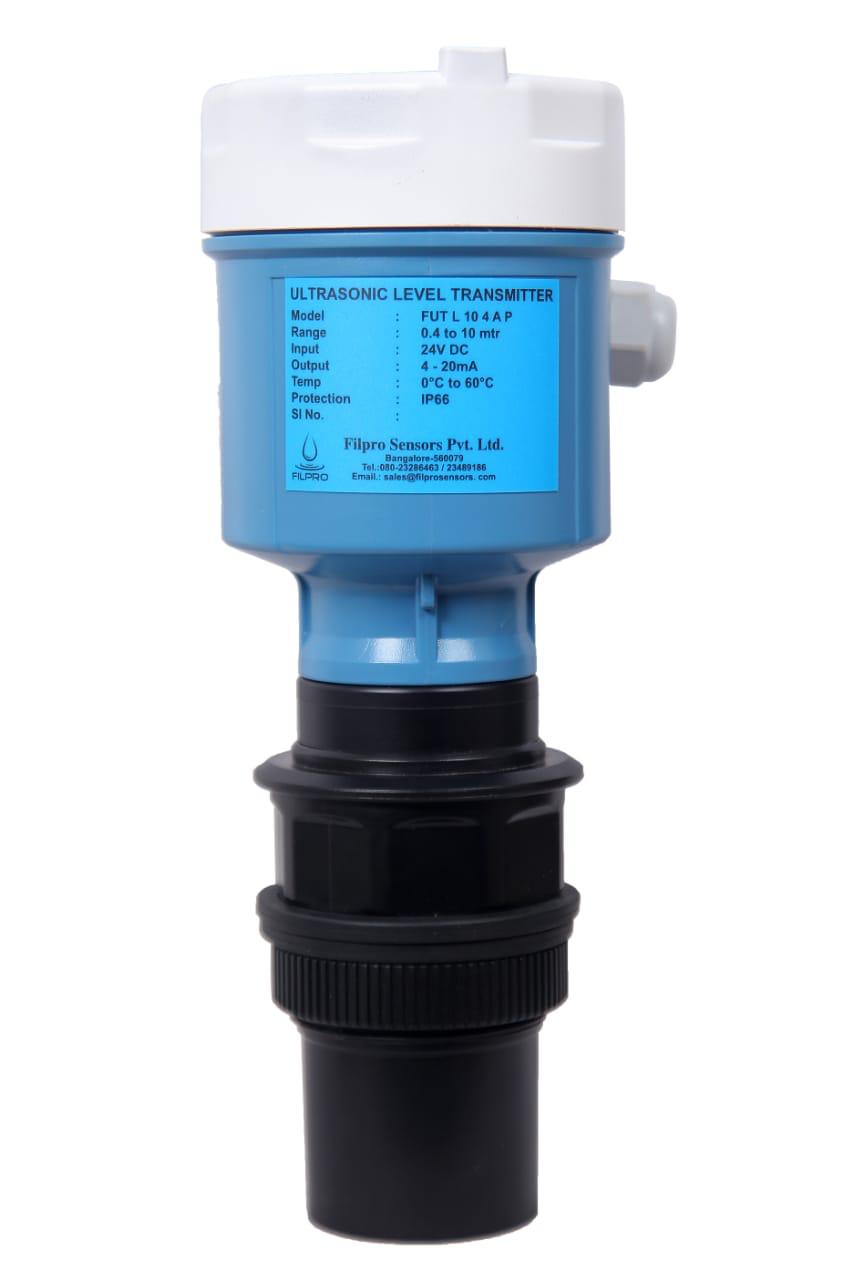 | Level Transmitter Ultrasonic Level Sensor is a non-contact ultrasonic continuous level measurement product based on sound technology. View product → |
Frequently asked questions
What is the physical difference between radar and ultrasonic level transmitters?
Radar sends electromagnetic waves to the liquid surface, while ultrasonic transmitters measure the time taken for sound to travel through the gas space.
How does vapour space affect the choice between radar and ultrasonic?
Radar works in vacuum and is less affected by gas composition, pressure and temperature. Ultrasonic measurement needs a continuous acoustic path through the vapour space.
When should you choose radar instead of ultrasonic level measurement?
Choose radar when the vessel operates in vacuum, the gas composition changes, vapours absorb sound, or process temperature and pressure challenge an acoustic path.
What installation checks matter for either transmitter?
Check tank geometry, nozzles, internal obstructions, agitators, ladders, filling streams and false echoes, then confirm the transmitter can be positioned with a clear measurement path.