The correct switch location, sensing principle and electrical logic depend on what must be protected: a pump, an outlet, a minimum batch volume or a storage tank. By the end, you can turn those operating requirements into a supplier-ready specification and reject choices that will misread the liquid or fail to stop the equipment safely.
Key takeaways
- Set the trip above minimum pump submergence and stopping-time requirements.
- Match switch length and mounting to tank shape, nozzles and internal obstructions.
- Check liquid viscosity, solids, foam, temperature and chemical compatibility before choosing sensing technology.
- Confirm electrical load, protection functions, installation details and proof-test procedure before commissioning.
Set the low-level trip above the real operating limit
Set the low-level switch for process tanks at the highest level below which continued operation becomes unsafe, not automatically at the pump inlet or nozzle centreline. For pump dry-run protection, leave enough liquid above the suction to cover minimum submergence, drawdown, vortex formation, switch deadband and the pump’s stopping time.
Choose the elevation by checking these points:
- Pump suction: keep the sensor above the minimum submergence level specified for the pump.
- Outlet or process withdrawal: prevent the outlet from uncovering before the trip acts.
- Dead volume: exclude liquid that cannot reach the pump or process outlet.
- Safe operating limit: include the level needed for cooling, agitation, heat transfer or internal equipment coverage.
- Shutdown delay: add the volume removed during signal processing, relay action and pump coast-down.
The switch’s process-connection height is not its repeatable switching level. Allow for hysteresis, mounting orientation, nozzle geometry and the difference between falling-level and rising-level actuation; then verify the actual trip level during commissioning.
Specify the healthy state as an energized, adequately filled condition when fail-safe shutdown is required. Loss of power or a detected wiring fault should then remove the permissive, but confirm that the switch supports this logic rather than assuming a normally closed contact does.
Do not apply API 2350 as a generic low-level specification. It primarily addresses overfill prevention for petroleum storage tanks; a process-tank trip needs its own hazard analysis, including any required safety integrity and proof-test interval.
Match the switch arrangement to tank geometry
Choose the arrangement by tank geometry and access, not only by the nominal level. A point-level switch for storage tanks must reach the intended location without fouling the outlet, pump suction, coils or agitator.
| Arrangement | Best fit | Main limitation |
|---|---|---|
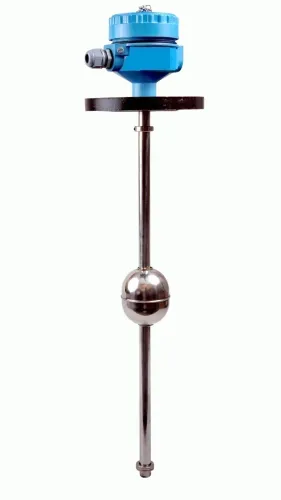
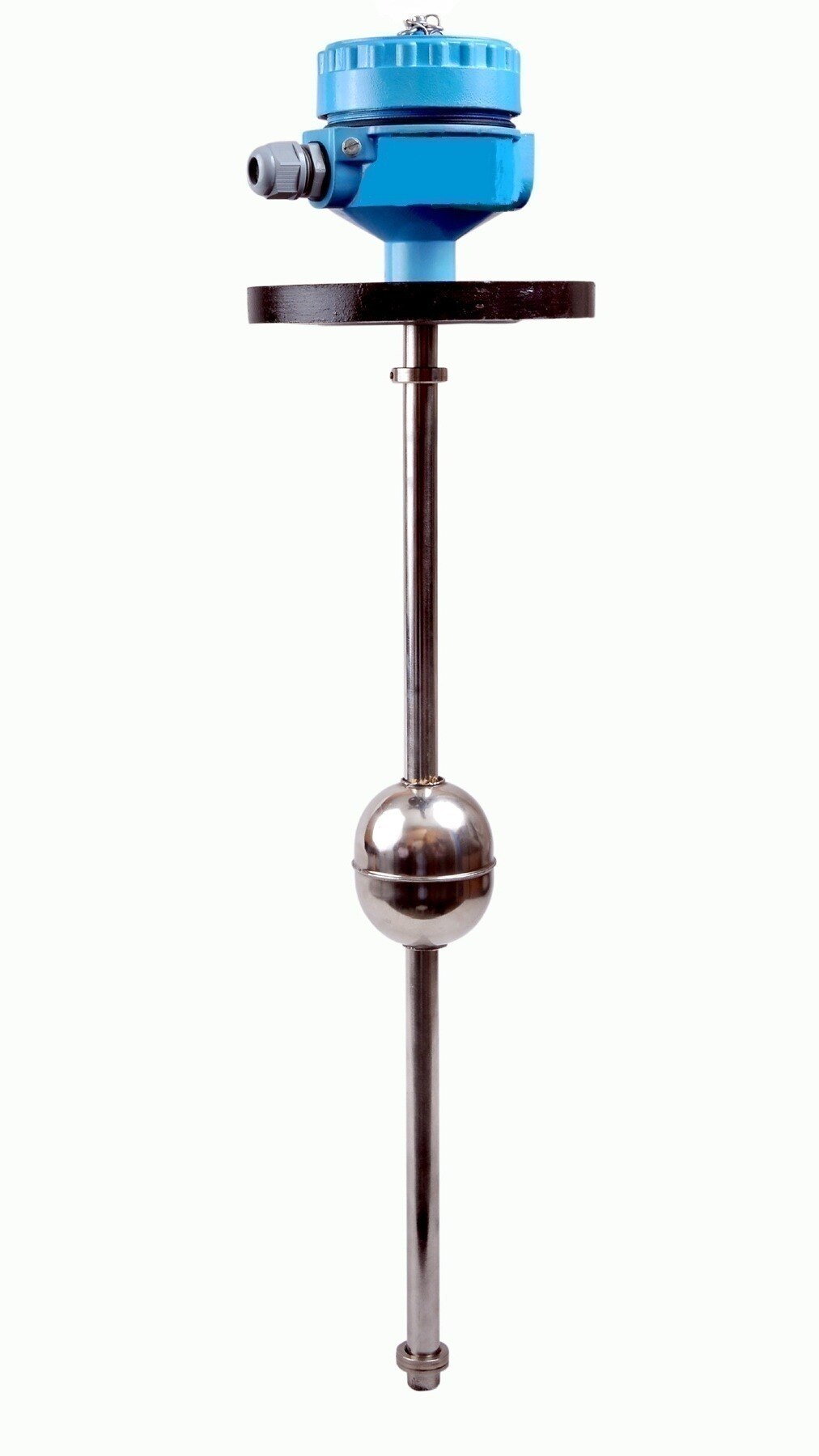
| Side-mounted | Tanks with a clear, accessible wall nozzle at the switching height | The nozzle can sit in a dead zone or be obstructed by internal equipment |
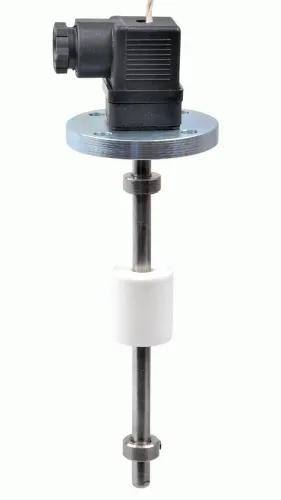
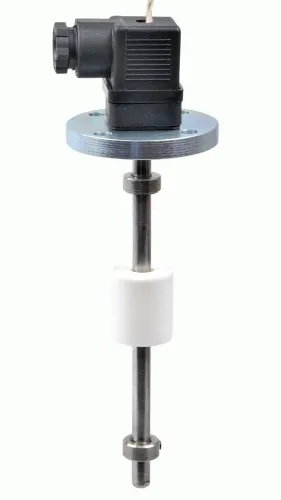
| Vertical miniature | Narrow vessels, top-entry installation, or small tanks with limited side access | It needs top clearance and a nozzle that keeps the probe vertical |
| Cable-float | Deep tanks, irregular bottoms, or locations without a precise side nozzle | Cables and floats need room to move and can snag, foul or respond to turbulence |
| Top-entry conductive or capacitance probe | Clean liquids and tanks where a fixed vertical sensing point is convenient | Conductivity, dielectric constant and coating can shift the switching point |
Check the float or displacer against liquid density, solids and vibration; buoyancy changes can prevent reliable movement. Conductive probes need a low-resistance path through the liquid, so they do not suit hydrocarbons, oils or deionized water. Capacitance probes need the liquid’s dielectric properties and expected buildup specified.
The process connection height is not the repeatable switching level. Confirm deadband, mounting orientation, nozzle geometry, and whether actuation is specified for falling or rising level. For a flammable-vapor tank, also verify hazardous-area classification, vapor group, temperature class, enclosure rating and cable-entry method; API 2350 is not a universal low-level-switch specification.
Choose the sensing principle for the liquid and its behaviour
Choose the sensing principle by asking what will change in the liquid and on the probe during operation. A low level switch for process tanks remains reliable only when its measurement method matches conductivity, dielectric behaviour, coating, foam, solids and viscosity.
| Principle | Reliable when | Main limitation |
|---|---|---|
| Conductive probe | The liquid has stable, sufficiently low electrical resistance and the reference path is dependable | It will not work in hydrocarbons, oils or deionized water; coating can interrupt the electrical path |
| Capacitance | The liquid’s dielectric constant is known and probe buildup is controlled | A water calibration can shift in oil or solvent; coating changes the apparent capacitance and switching point |
| Vibrating fork | The liquid is conductive or nonconductive, with modest viscosity and limited solids | Buildup between tines, entrained solids, excessive viscosity, turbulence or impact can prevent reliable switching |
| Optical sensor | The liquid is clean, clear and free of foam or suspended particles | Bubbles, droplets, foam or prism coating can indicate an empty vessel as full, or miss liquid entirely |
For changing products, a vibrating-fork switch is often the strongest general-purpose choice because it does not depend on conductivity or a stable dielectric constant. Confirm the viscosity range, solids size, coating tendency and fork installation before selecting it; thick or abrasive service can make another principle safer.
Use an optical switch only when you can keep the prism clean and the liquid free of foam. If the vessel contains flammable vapour, verify the hazardous-area classification, gas group, temperature class, enclosure rating and cable-entry method separately; a sound sensing principle does not make an uncertified switch suitable.
Specify switching logic, electrical loading and protection functions
Specify the switching logic as carefully as the set point. State whether the contact changes on falling level or rising level, and whether it is normally open or normally closed at the normal operating level.
For pump dry-run protection, an energized-to-run circuit using a normally closed contact usually gives fail-safe action: loss of power or a broken wire stops the pump instead of hiding the fault.
- Match the contact rating to the load. A miniature reed contact should operate a PLC digital input or interposing relay, not a motor starter; check voltage, continuous current, inrush current and inductive-load rating.
- Add a correctly rated relay, fuse or circuit breaker, and suppression for relay coils or contactors. Confirm the PLC input’s wetting current and its response to an open circuit.
- For a point level switch for storage tanks, specify hazardous-area classification, vapor group, temperature class, enclosure rating and cable-entry method. A nonhazardous switch is not automatically suitable for flammable vapour.
- If the switch enters a safety instrumented function, specify safe failure fraction, hardware fault tolerance, diagnostic coverage, proof-test interval, response time and de-energize-to-trip behaviour. The complete loop, not the sensor alone, establishes integrity.
A low level switch for process tanks is enough for a discrete stop or alarm. Choose a transmitter when you need continuous inventory, trend data or multiple control thresholds; choose a pump controller when alternating pumps, delays, restart rules or dry-run logic exceed one contact. API 2350 addresses petroleum overfill prevention, not every low-level shutdown.
Filpro Sensors Pvt Ltd should provide the contact-load and fail-state data needed to engineer that interface.
Related products
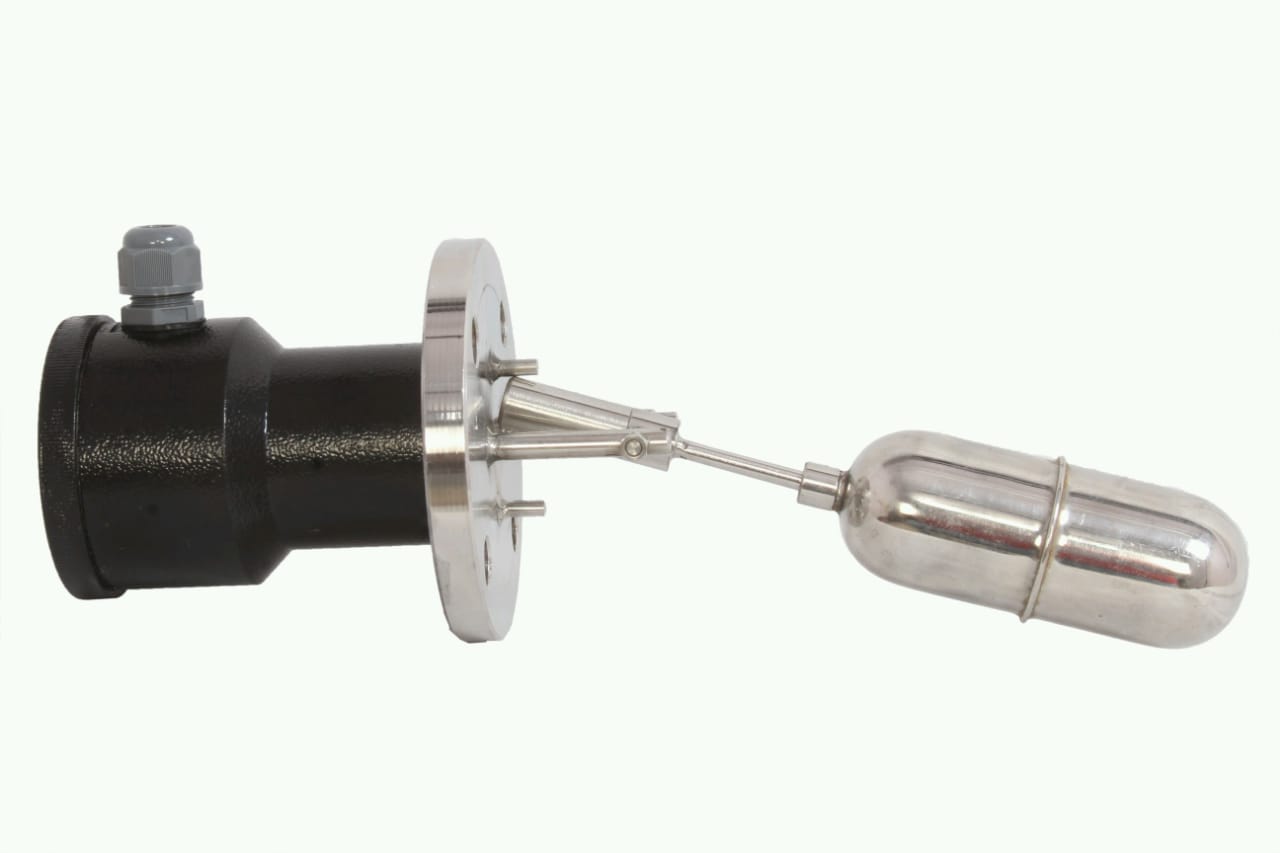 | Level Switch Filpro offers most reliable, cost effective Side Mounted Level Switch for point level sensing. View product → |
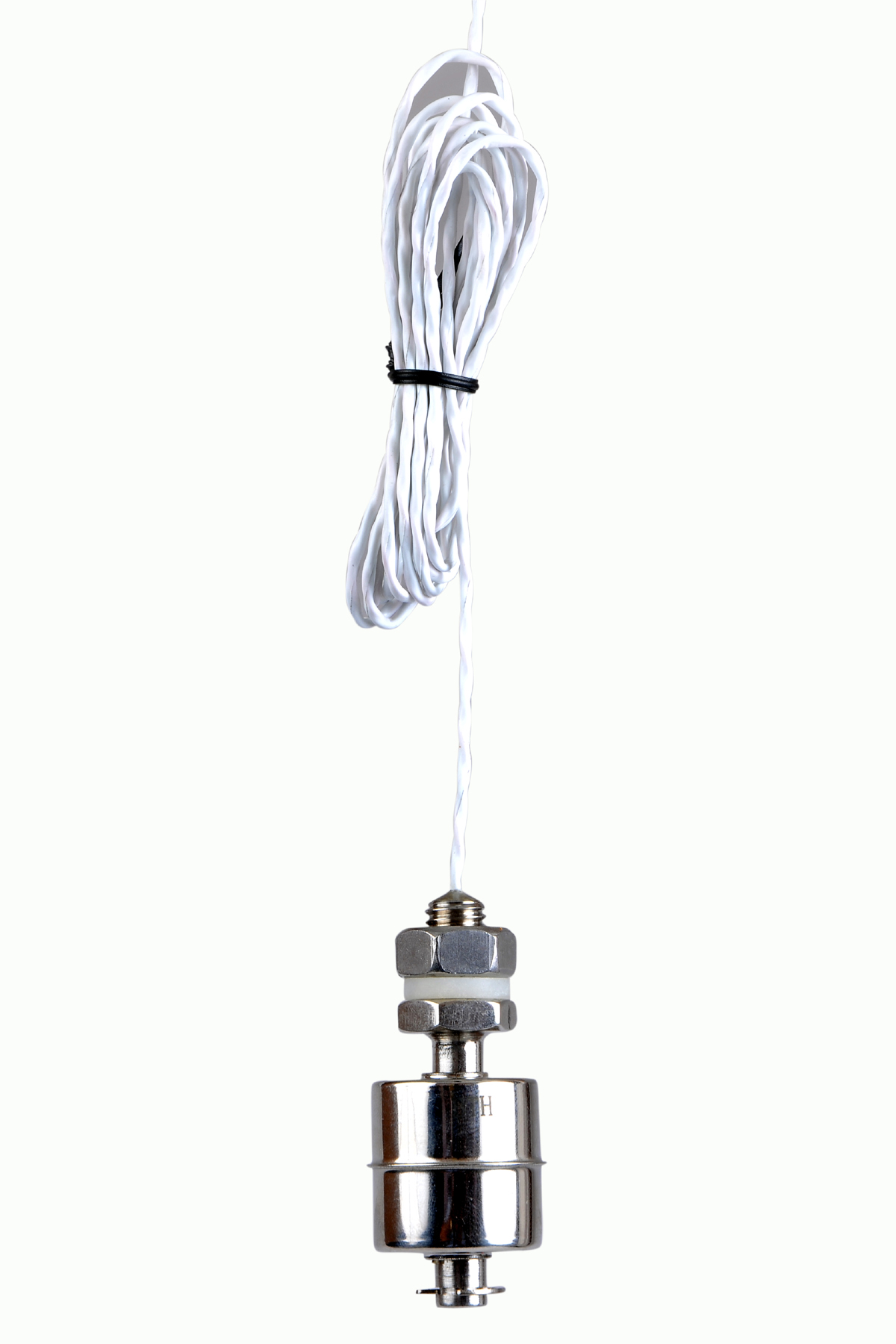 | Level Switch Stainless steel level switch - Miniature Stainless steel Miniature Level Switch is a compact construction, suitable for mounting vertically. View product → |
Verify the installation, materials and proof test before commissioning
Before commissioning, confirm that the installed switch—not just its datasheet—can survive the tank environment, actuate at the intended level and be tested without guesswork.
1. Check the mechanical installation. Verify nozzle size, insertion length, orientation, thread or flange standard, gasket material and tightening method. Compare the repeatable switching level with the nominal connection height, accounting for hysteresis, mounting angle, nozzle geometry and different rising- and falling-level actuation. Confirm that vibration, turbulence, agitator movement and impact cannot damage the sensor.
2. Check process compatibility. Match every wetted material, seal and coating to the liquid, concentration, pressure, temperature and cleaning chemicals. For a point level switch for storage tanks, inspect the fork or probe location for buildup, viscous product, entrained solids and dead zones.
A conductive probe needs a low-resistance liquid path to its reference electrode; it will not reliably sense hydrocarbons, oils or deionized water.
3. Check the hazardous-area installation. Confirm the zone or division, gas or vapor group, temperature class, enclosure rating and approved cable gland or conduit entry. A switch approved for a nonhazardous vessel is not automatically suitable for a flammable-vapor tank. Treat API 2350 as a petroleum-tank overfill framework, not a universal low-level specification.
4. Record the maintenance and proof-test plan. Simulate the low-level condition, verify the sensor, wiring, logic and final shutdown, and document response time and failure behavior. For a safety instrumented function, specify SFF, HFT, diagnostics and proof-test interval for the complete loop.
Frequently asked questions
Where should you set a low-level trip in a process tank?
Set it at the highest level below which continued operation becomes unsafe. For pump dry-run protection, include minimum suction submergence, drawdown, vortex formation, switch deadband and stopping time.
How does tank geometry affect low-level switch selection?
Choose the mounting arrangement and probe or float length to suit the tank shape, nozzle location, internal obstructions, access points and required switching height.
Which sensing principle suits a process liquid?
Match the sensing principle to the liquid’s viscosity, solids content, foam, conductivity, temperature and chemical behaviour. These properties determine whether a float, conductive, capacitance or other switch is suitable.
What must you verify before commissioning a point level switch for storage tanks?
Verify the materials, installation position, switching logic, electrical load, protective functions and proof-test procedure before placing the switch in service.
Related products
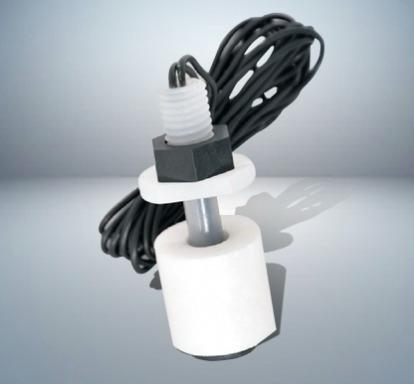 | Level Switch Plastic Miniature Level Switch is available in PP construction with PP Float Switching Voltage: 24V DC Switching current: 0.1A Mounting thread size:... View product → |
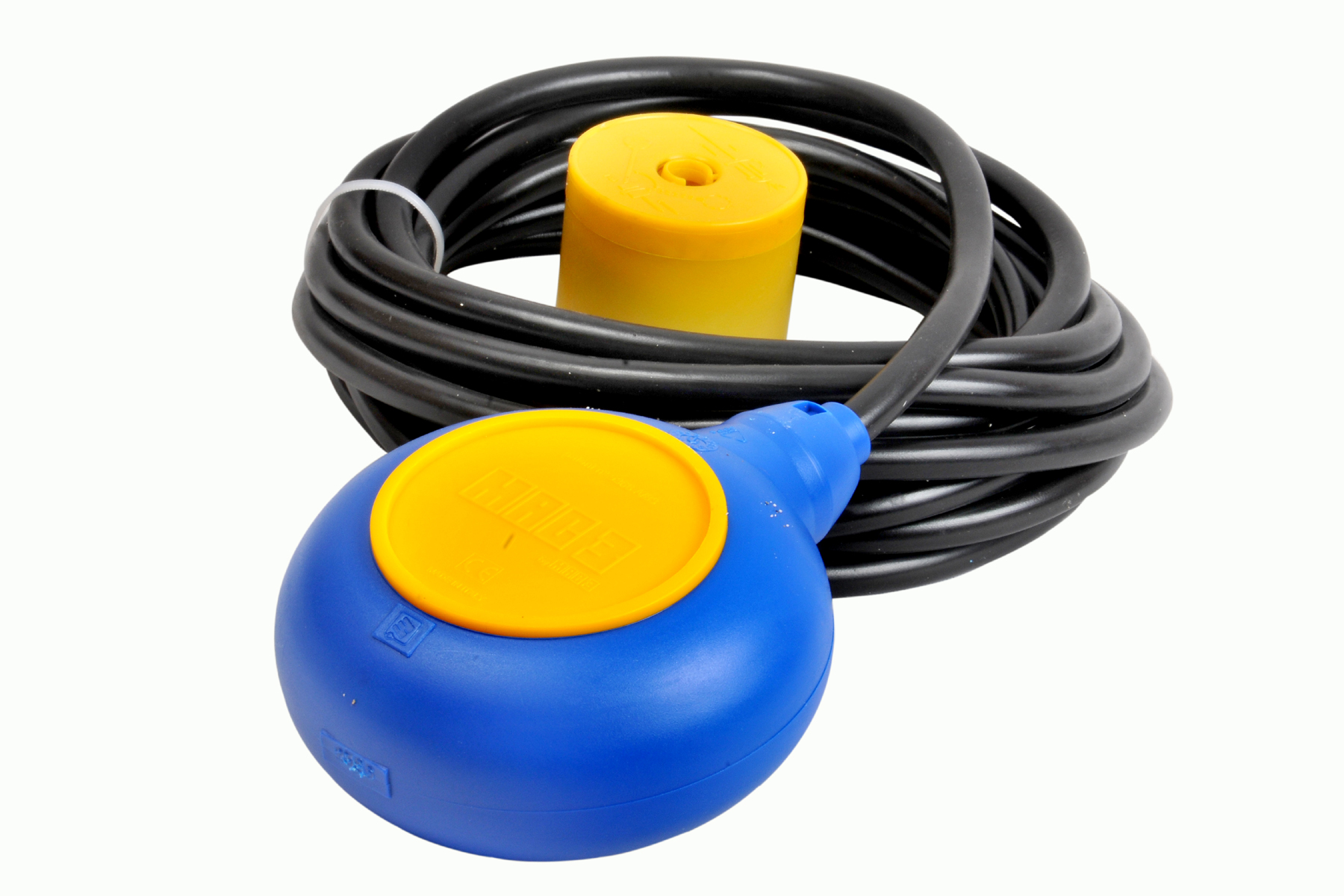 | Level Switch Cable Float Switch is mainly used for the automatic working of small pumps and cellar emptying pumps in liquids a little bit agitated. View product → |