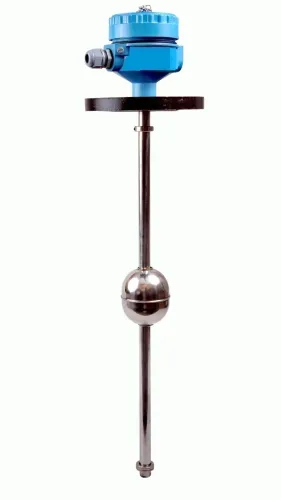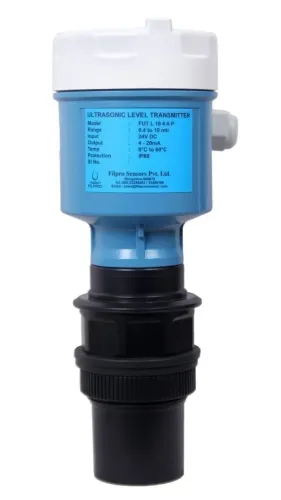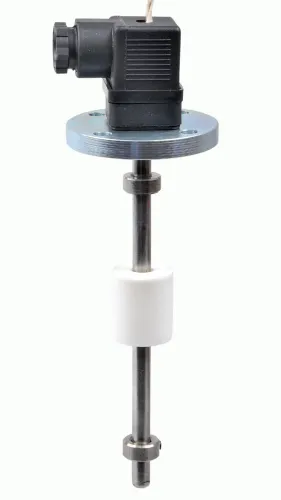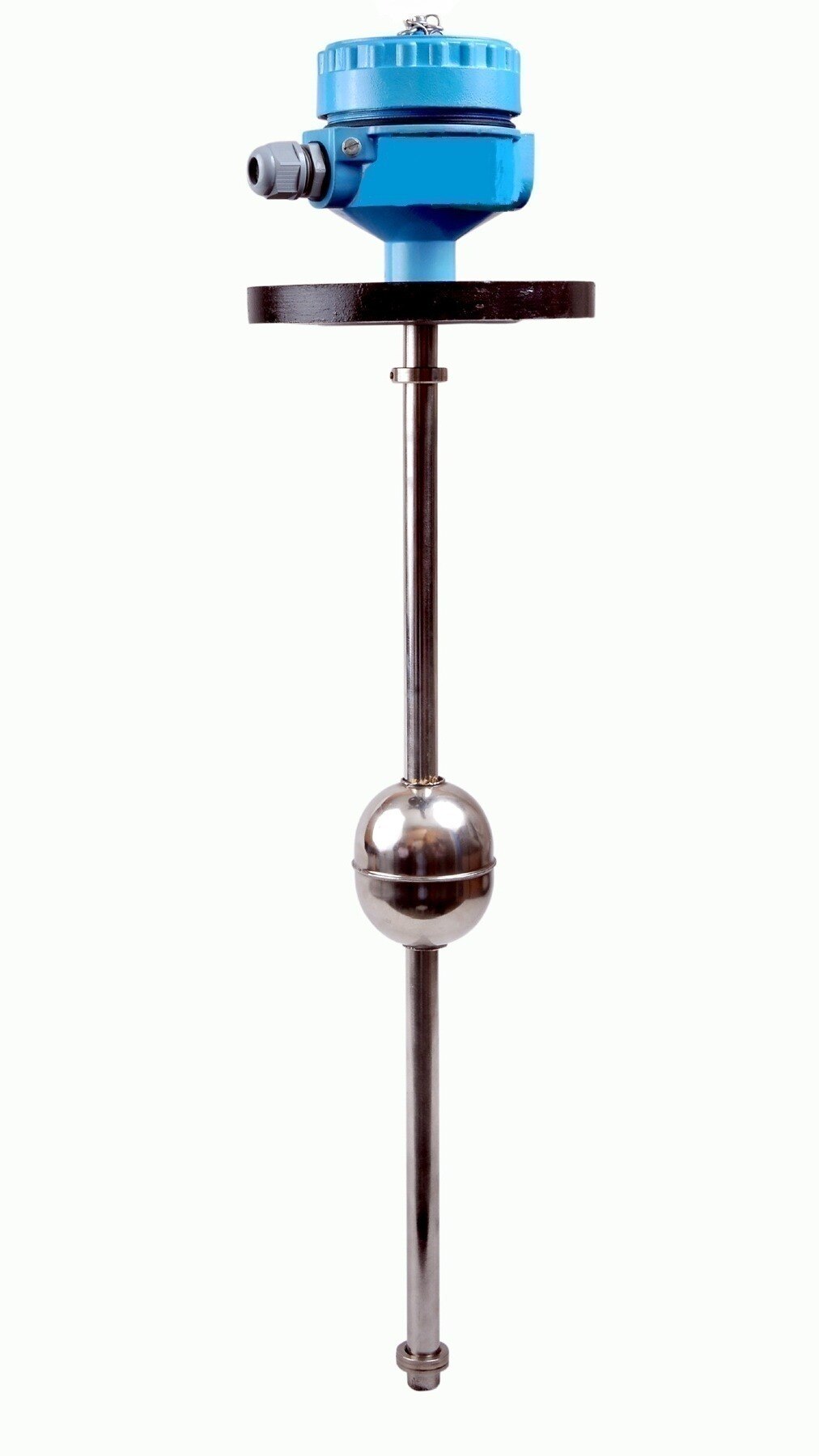
The right level technology depends on more than whether a tank contains water, oil or chemicals. By comparing conductivity, dielectric behaviour, buildup risk, vessel geometry and the required output, you can decide whether capacitance, conductive sensing or another method fits the process.
Key takeaways
- Use capacitive sensing when dielectric changes track liquid height reliably.
- Choose conductive sensing for electrically conductive liquids and point-level detection.
- Check coating compatibility, buildup, foam and temperature before selecting the probe.
- Match probe length and mounting to tank geometry and process hardware.
How capacitance turns liquid height into a measurement
A capacitive level sensor for liquids converts height into a change in capacitance. The sensing probe and the tank wall, or a second reference electrode, form an electric field.
As liquid replaces air around the probe, the field’s dielectric environment changes, altering capacitance; electronics convert that change into a continuous level value or a point-level switch.
A dependable reading depends on more than liquid height:
- Dielectric constant and its stability
- Probe shape, length and installation position
- Tank diameter, wall material and nearby metalwork
- Conductivity, temperature and formulation
- Foam, entrained gas, suspended solids and deposits
Calibrate with the tank empty and full using the actual liquid at representative process conditions. A nominal dielectric-constant value will not protect accuracy when concentration, phase composition or temperature changes. Obtain conductivity or resistance from a safety data sheet, laboratory result or instrument test instead of assuming every water-based liquid behaves alike.
A conductive level sensor for liquids detects electrical contact: the liquid must complete a circuit between an energized electrode and a reference electrode or conductive tank. That suits clean, conductive liquids when you need only high- or low-level switching, but a wet film or conductive deposit can create a false signal.
Capacitance can measure non-conductive liquids and continuous height. An external probe works through a nonconductive wall with a repeatable field path; a continuous metal wall shields the field unless an electrical window or internal electrode is provided.
Use conductivity to separate capacitive and conductive sensing
Choose a capacitive level sensor for liquids when the product is electrically insulating, when you need continuous level measurement, or when conductivity does not provide a clear contrast between phases.
A conductive level sensor for liquids needs the liquid to complete a circuit between an electrode and a reference, so it is a poor fit for oils, hydrocarbons and other non-conductive products.
| Technology | Electrical condition | Best fit | Main limitation |
|---|---|---|---|
| Capacitive level sensor for liquids | Detects a change in dielectric properties; does not require liquid to conduct | Insulating liquids, continuous measurement, or point switching where probe geometry is suitable | Readings change with dielectric constant, coating, foam, solids and formulation |
| Conductive level sensor for liquids | Liquid must exceed the instrument’s minimum conductivity | Clean water-based liquids needing high- or low-level switching | Wet films, deposits or a conductive upper phase can create a false indication |
Select between them using measured liquid data, not the product name. Obtain conductivity or resistance from the safety data sheet or laboratory report, then compare it with the sensor datasheet’s minimum operating threshold. If no reliable figure exists, test a representative sample at the expected temperature.
- Choose conductive sensing when the liquid has a clear conductivity contrast with the surrounding phase and only point detection is required.
- Choose capacitive sensing when the liquid is insulating, continuous output is required, or two phases have similar conductivity.
- Recheck the choice after changes to formulation, temperature, solids concentration or viscosity; these can shift the capacitive signal or create conductive deposits.
Check the liquid and the coating before selecting the probe
Check the liquid’s composition and the probe’s coating before selecting a capacitive level sensor for liquids: either can shift the calibration point or create a false level.
| Condition | What changes at the probe | Risk to the reading |
|---|---|---|
| Dielectric constant changes | Formulation, concentration, temperature, or phase composition alters the liquid’s electrical response | The same physical level produces a different output |
| Foam or entrained gas | Air replaces part of the liquid around the sensing field | The sensor indicates a level above the actual liquid |
| Solids, suspended material, or high viscosity | Material clings to the probe or tank wall | A coating remains after the level falls and holds the reading high |
| Conductive deposits or wet films | A residue creates an unintended electrical path | A conductive level sensor for liquids can indicate contact before the real level arrives |
Obtain the liquid’s dielectric constant across its operating temperature and formulation range. Record solids concentration, density, viscosity, foam tendency, and entrained-gas conditions; each can change how much material reaches the probe or remains on it.
Treat insulation as part of the sensor, not just corrosion protection. Coating thickness, dielectric properties, swelling, aging, and deposited product all alter the measurement geometry. A chemically compatible coating still gives unstable readings if its thickness varies or buildup is persistent.
Calibrate with air and representative liquid at process temperature. If the product changes batch to batch, specify a recalibration limit or choose a sensing arrangement that tolerates the expected coating.
Match the probe to the tank geometry and process hardware
A capacitive level sensor for liquids must match the vessel’s electrical construction and internal layout, not just the liquid. Select the mounting arrangement, probe length and reference method after inspecting the complete tank.
1. Identify the vessel material. A metal tank can act as the reference electrode, but a nonconductive tank needs a reference electrode, suitable external mounting arrangement or sensing probe inside the vessel. An external sensor needs a repeatable field path through the wall; a continuous metal wall shields the field.
2. Verify grounding and bonding. Bond the metal vessel to the instrument ground according to the installation design. An ungrounded, poorly bonded or heavily insulated tank can cause unstable readings or weak sensitivity. Ask whether the sensor requires a separate reference probe.
3. Choose probe construction for the mounting point. Compare rod, cable and externally mounted designs by active length, insertion depth, insulation and clearance from the nozzle or wall. A coated or insulated probe can prevent contact with the vessel, while its coating thickness and buildup still change the field.
4. Map internal obstructions before drilling. Keep the probe away from agitator shafts, ladders, heating coils, nearby pipes and mounting hardware by the manufacturer’s specified distance. These objects distort the field and shift calibration.
Calibrate the installed sensor in the actual vessel, with its fittings and internals in place. A bench calibration of the probe alone does not prove accuracy after installation.
Choose point detection or continuous measurement for the job
Choose a level switch when the process needs an action at one point, such as stopping a pump or starting an alarm. Choose a continuous transmitter when you need trend data, inventory calculation, proportional control, or several alarm thresholds from one instrument.
| Option | What it provides | When it applies |
|---|---|---|
| Capacitive level switch | A discrete high, low, or point-level signal | Pump protection, overfill alarm, or simple fill control |
| Capacitive level transmitter | A continuously varying level output | Process control, stock calculation, or multiple software alarms |
| Conductive level switch | A discrete signal when liquid completes the sensing circuit | Clean, conductive liquids with a clear level threshold |
Before specifying the instrument, verify these points:
- Define the required output: relay contact, 4–20 mA, digital communication, or a switching signal. Confirm whether the transmitter must be calibrated for the usable measurement range.
- Check whether the liquid changes during production. A conductive level sensor for liquids needs conductivity above the instrument’s stated minimum; do not infer that value from “water.” Oils, hydrocarbons, and deionized water can defeat the sensing method.
- Reject conductive interface sensing when both liquids have similar conductivity or the upper phase can wet the electrode first. That condition produces a false interface.
- Ask for the fail state, diagnostic coverage, proof-test method, and hazardous-area approvals. A high-level switch becomes a safety function only when the complete sensor, logic solver, final element, and test regime meet the required standard.
- When comparing a Filpro Sensors Pvt Ltd quotation, request the switching accuracy, transmitter range, response time, and test conditions in writing.
Related product
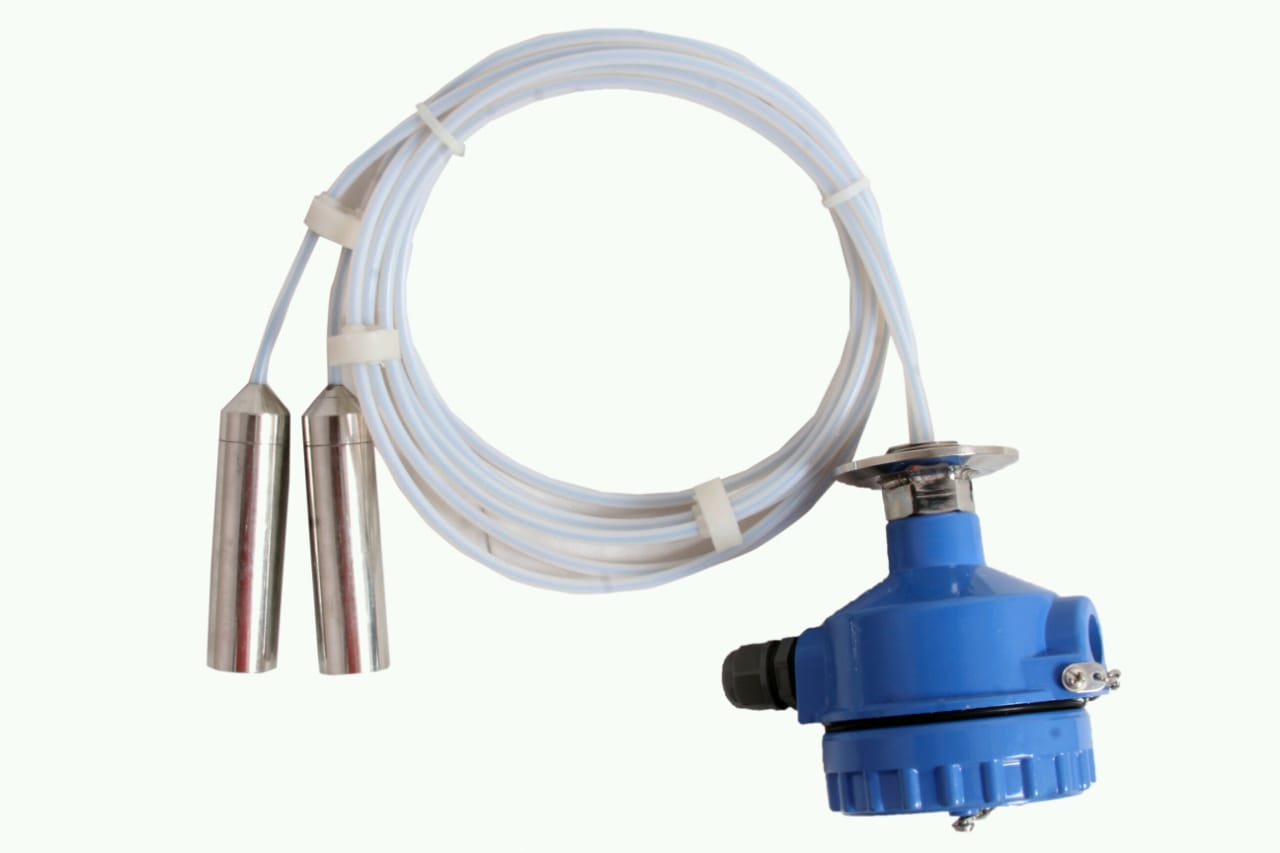 | Level Transmitter can be used for conductive as well as non conductive liquids. View product → |
Frequently asked questions
How does a capacitive level sensor for liquids measure height?
The probe and tank wall, or a second reference electrode, create an electric field. As liquid height changes, the dielectric between the electrodes changes capacitance, which the instrument converts into level.
When should you choose a conductive level sensor for liquids?
Choose a conductive level sensor for liquids when the liquid has enough electrical conductivity to complete the sensing circuit. Conductive probes suit point-level detection where contact with the liquid confirms presence.
How do conductivity and coating affect capacitive level sensing?
Check the liquid’s dielectric behaviour, conductivity, coating compatibility and tendency to create buildup. A nonconductive coating can insulate the probe and change the reading, while deposits can create false level signals.
How do you match a capacitive probe to the tank and process?
Check probe length, nozzle position, tank shape, internal agitators, baffles, temperature, pressure and connection size. Keep the sensing field clear of metalwork that can distort the measurement.
Should you use point detection or continuous level measurement?
Use point detection for high, low or overfill alarms. Use continuous measurement when you need the changing liquid height for inventory, batching or process control.