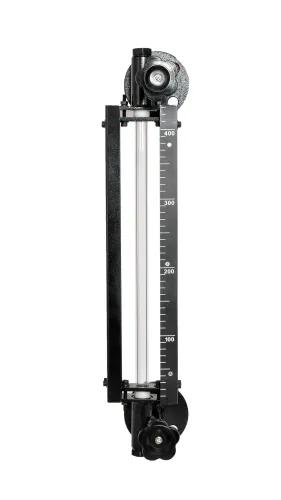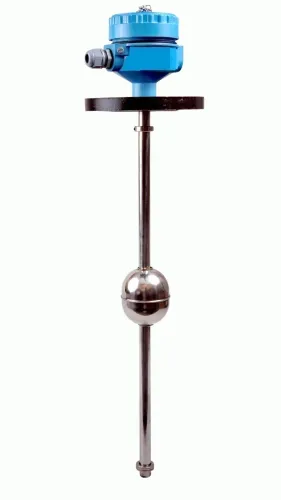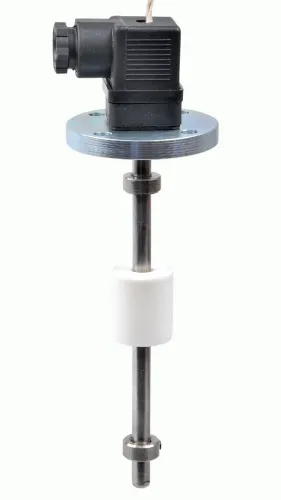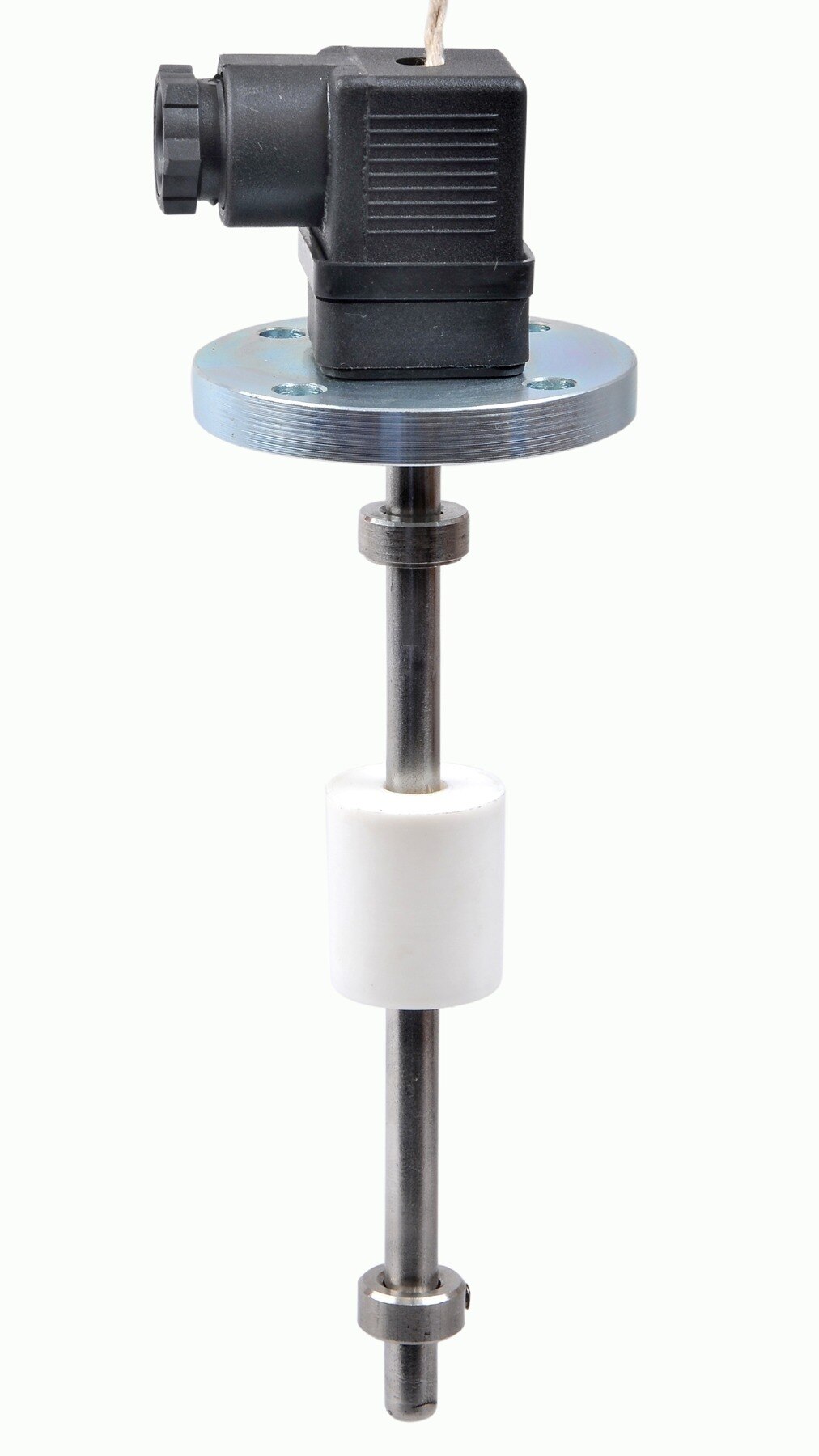
A fuel-tank water sensor is not a routine level instrument: the tank’s classified zone, the water–fuel arrangement, and the complete electrical loop determine what you can safely buy. By the end, you will know which documents to request, how to check installation compatibility, and how to compare Mumbai suppliers on more than price.
Key takeaways
- State Zone, gas group and temperature class before requesting quotations.
- Choose a sensor that detects water beneath petrol or diesel accurately.
- Price the probe, barrier, cable, display and certification as one loop.
- Request certificates, stock confirmation and a written delivery commitment.
Start with the hazardous-area classification, not the sensor catalogue
Classify the installation before requesting a quotation: state Zone 0, Zone 1 or Zone 2 for gas or vapour, the gas group, temperature class, ambient-temperature range, and whether the water level sensor hazardous area installation is inside the tank, outdoors, in a bund or near a vent.
| Zone | What to confirm |
|---|---|
| Zone 0 | Atmosphere present continuously or for long periods; equipment category 1G or EPL Ga |
| Zone 1 | Atmosphere likely during normal operation; equipment category 2G or EPL Gb |
| Zone 2 | Atmosphere unlikely in normal operation and brief if it occurs; equipment category 3G or EPL Gc |
Ask an ATEX water level sensor supplier for the complete marking, including equipment group, category or equipment protection level, protection concept, gas group and temperature class. Request the ATEX certificate number, EU Declaration of Conformity and notified-body details. “ATEX approved” alone is not a specification.
Before accepting ATEX approved level sensor availability, verify that the certificate covers:
- The exact probe length and electronics housing
- The output and remote or integral transmitter
- The intended ambient and process-temperature range
ATEX certification does not replace review against Indian petroleum-safety requirements, the site classification or the owner’s inspection procedure. Check the certificate and installation documents together before comparing price or delivery.
Choose measurement for water beneath petrol or diesel
Specify whether you need water depth, total tank level or the water–fuel interface. If the requirement is water beneath petrol, diesel or another fuel, write “detect the water layer at the tank bottom” in the purchase specification. Confirm probe placement, expected water depth, fuel density, separation between liquids, sludge and emulsified fuel.
| Option | What it measures | When it applies |
|---|---|---|
| 4–20 mA transmitter | Continuous water level or interface trend | Use for trends, alarm thresholds or an analogue control-system value |
| Float switch | A defined high-water or low-water point | Use when one switching action is enough |
| Hydrostatic transmitter | Pressure converted into level | Use only after checking density, reference pressure and whether the tank is vented or vapour-sealed |
| Conductive probe | Water contact at electrodes | Use only when conductivity is adequate and electrodes remain clean and exposed |
| Non-contact radar | Distance to a liquid surface or interface | Use when avoiding wetted electrical parts, after reviewing vapour, foam, condensation, nozzles, structures and antenna choice |
A hydrostatic device does not measure level directly; a changed water–fuel mixture or incorrect reference pressure creates level error. Conductive detection is a poor choice for deionised or treated water, or when hydrocarbon isolates the probe.
For a water level sensor hazardous area application, match the principle to the liquid arrangement before approving the model. This comparison helps you choose a water level sensor for hazardous fuel areas in mumbai rather than a general fuel-level device.
Match the sensor to the tank opening and process conditions
A sensor that fits the catalogue description can still fail if its probe cannot pass the tank opening, reaches the wrong depth or deteriorates in the fuel mixture. Give the supplier a complete mechanical and process record before requesting a quotation for a water level sensor in Mumbai.
1. State the tank height, required insertion length, nozzle or flange dimensions and mounting orientation. Attach a drawing showing ladders, heating coils, mixers, stiffeners and other internal obstructions. Ask whether the sensor passes through the existing opening without tank modification.
2. Confirm the process connection type and size, thread or flange standard, cable length, cable-gland entry and electrical connection. Request a dimensional drawing and connection schedule, not only a statement that the instrument suits fuel tanks.
3. Record operating pressure, vacuum conditions, liquid and vapour temperature, outdoor ambient temperature, and exposure to petrol, diesel, ethanol blends, additives, water and cleaning chemicals. For a water level sensor hazardous area installation, request wetted-material compatibility for the actual mixture rather than relying on “stainless steel”.
4. Specify whether the probe must reach the lowest sump point or stop above sediment. Verify its orientation and clearance from the tank wall; internal contact can damage the probe or distort the reading.
5. If the tank is pressurised or vapour-sealed, identify the reference-pressure arrangement before selecting hydrostatic measurement. Hydrostatic output depends on liquid density and reference pressure, so a water–fuel mixture can produce a material level error.
Price the complete hazardous-area loop, not only the probe
A water level sensor hazardous area installation is a loop, not a probe. Ask whether the circuit is intrinsically safe, or whether its 16–30 V DC supply and output must stay outside the hazardous zone or pass through a barrier near the tank.
| Loop arrangement | Include in the design | Main pricing risk |
|---|---|---|
| Intrinsically safe | Sensor, barrier or galvanic isolator, cable and associated apparatus | Replacing one transmitter can invalidate the entity-parameter assessment |
| Non-IS installation | Approved sensor, external power supply, output wiring and zone boundary equipment | Power and signal equipment may need to remain outside the zone |
| Control-panel loop | Barrier or isolator, terminals, PLC or indicator and labelled segregation | A probe quotation excludes panel integration |
For an intrinsically safe loop, compare maximum voltage, current, power, capacitance and inductance entity parameters before substituting another transmitter. Specify certified cable glands, cable type, earthing, screen termination, segregation and control-panel equipment.
Use IEC 60079-14 for design, selection, installation and initial inspection, then IEC 60079-17 for inspection and maintenance. IP66 only describes protection against dust and powerful water jets; it does not prove immersion, fuel-vapour suitability or an explosion-protection method.
Ask which protection concept the certificate covers and whether the gland, cover and cable entry preserve it. ATEX-approved level sensor availability means little unless the exact configuration is certified.
Include these costs:
- Commissioning and loop checks
- Hazardous-area inspection and calibration
- Certified glands, barriers and cabling
- Periodic inspection and maintenance
A low sensor price can conceal the installation work that makes the loop safe.
Compare Mumbai suppliers by documents, stock and delivery commitment
Choose the supplier that proves the exact configuration is available, not the one quoting the lowest sensor price. For a water level sensor in Mumbai, request the following from every vendor:
- Current business address, sales contact, exact model and configuration
- Stock status and a written dispatch or delivery lead time
- Datasheet, hazardous-area certificate, EU Declaration of Conformity and certificate number
- Dimensional drawing, wiring diagram and entity-parameter information
- Material certificate where required, plus calibration or test documentation
- Spare-parts policy and the stated scope for local commissioning or hazardous-area inspection
| Supplier comparison | Evidence to compare | Clarify before ordering |
|---|---|---|
| Stocked locally | Physical stock confirmation and dispatch date | “Available” without a quantity or date |
| Certified configuration | Certificate covering probe length, output, enclosure, connection and temperature range | Certificate applies only to another variant |
| Complete loop | Barrier or galvanic isolator, certified glands, cable and inspection included | Quotation covers the probe only |
| Installation support | Written commissioning, loop-check and inspection scope | Travel, labour or testing excluded |
An ATEX water level sensor supplier must provide the complete marking, not just “ATEX approved.” Send your classification, tank drawing, liquid details, water-layer requirement and loop architecture so the vendor can identify missing associated apparatus.
Filpro Sensors Pvt Ltd belongs in the comparison as a Mumbai-based manufacturer, but verify its current address, sales contact, availability and delivery date directly. For a water level sensor for hazardous fuel areas in Mumbai, those confirmations matter more than a catalogue listing.
Related product
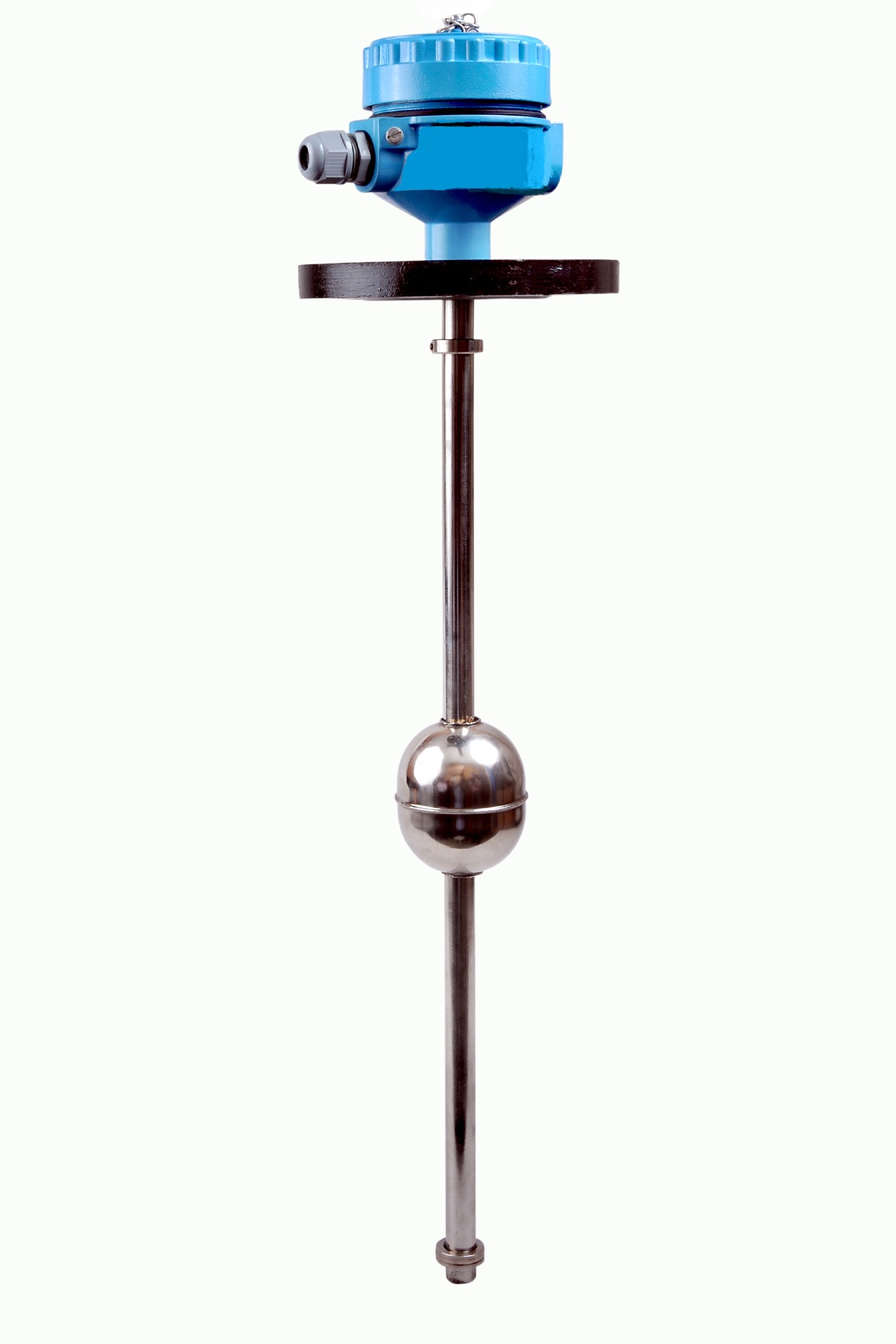 | Level Sensor Atex approved Float Level Transmitter : Over All Length: 300mm to 5000mm Input: 16V DC to 30V DC Output: 4-20mA / 0-10V DC Resolution: 5mm / 10mm... View product → |
Frequently asked questions
What hazardous-area details should you provide before buying a water level sensor?
Provide Zone 0, Zone 1 or Zone 2, gas group, temperature class, ambient-temperature range and the installation location, such as inside the tank, outdoors, in a bund or near a vent.
What should a water level sensor measure in a petrol or diesel tank?
Choose measurement suited to detecting the water layer beneath petrol or diesel, and confirm the sensor works with the fuel, tank geometry and required accuracy.
What should you check when matching a sensor to a fuel tank?
Check the tank opening, mounting thread or flange, probe length, process connection, pressure, temperature, vapour exposure, cable route and available installation space.
What should a hazardous-area sensor quotation include?
Price the complete loop: probe, transmitter, intrinsic-safety barrier or isolator, cable, display or controller, certificates, installation hardware, testing and delivery.