A quotation for a float board tank indicator can cover only the visible board and float, or it can include the complete mechanical assembly, mounting hardware, calibration and an electrical switching device. By separating the package into identifiable parts and installation requirements, you can compare quotations accurately and specify a gauge that fits your tank and liquid.
Key takeaways
- Request pulleys, supports, rope, float, board, seals and cabling in the quotation.
- The board provides the visual level reading; the sensor provides the electrical signal.
- Match float material, rope length and scale range to the liquid and tank height.
- Witness calibration, rope routing and commissioning before accepting the installation.
What belongs in a complete float board indicator package?
A package is complete only when the quotation names every part that carries, guides, displays, seals and protects the level movement. “Float board indicator with sensor included” is not a bill of materials; it can hide missing pulleys, supports, cabling or calibration.
Check these float board indicator components as separate line items:
- Float sized for the liquid density, temperature and tank geometry
- Rope, cable or tape, including length and material
- Pulley, pulley bracket and tank-top support frame
- Guide wires or guide tube, with anchors and tensioning hardware
- Counterweight, pointer and calibrated board
- Mounting brackets, fasteners and corrosion-resistant hardware
- Roof seal, stuffing box or other sealed tank-entry arrangement
- Travel stops, cable guards and weather or impact protection
- Float level switch, transmitter, cable gland, cable and enclosure, if electrical output is required
- Factory calibration, installation and commissioning, with responsibility assigned to the supplier or customer
| Package element | What it provides | What it does not provide |
|---|---|---|
| Visual float-and-board assembly | Local, continuous reading through float movement, rope and pointer | Automatic alarm, shutdown or PLC signal |
| Float level switch or transmitter | A specified electrical contact or measurement signal | A substitute for the calibrated visual board |
| Overfill protection system | Independent alarm, relay, shutdown or annunciator function | A standard float-board component |
The tank indicator package details should also state tank dimensions, nozzle or roof entry, measurement range, units, board readability, hazardous-area classification and environmental exposure. Treat a high-level switch as incomplete until its elevation, hysteresis, contact rating, reset behaviour, cable entry and approval are listed.
Which part gives a visual reading, and which part gives an electrical signal?
The graduated board and pointer give the visual reading; an added switch or transmitter gives an electrical signal. In a float level sensor board assembly, the tank float rises and falls, while a cable or tape, roof pulley and counterweight transfer that movement to the pointer beside the calibrated board.
This is a mechanical indication, not an automatic control output.
| Part | What you see in the quotation | What it provides |
|---|---|---|
| Mechanical float-and-board assembly | Float, cable or tape, pulley, counterweight, guide wires or tube, pointer and graduated board | Local visual level reading only |
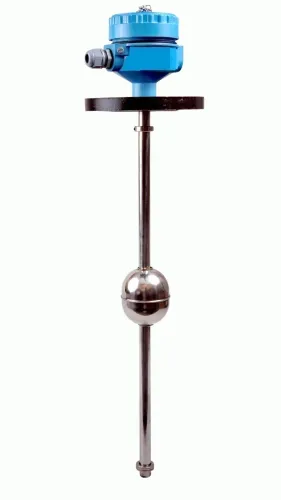
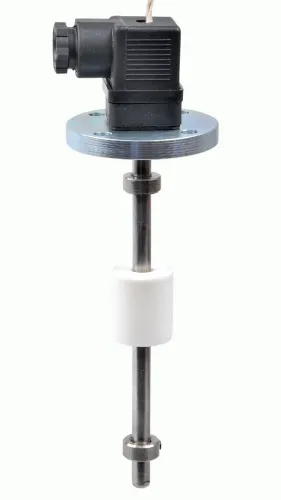
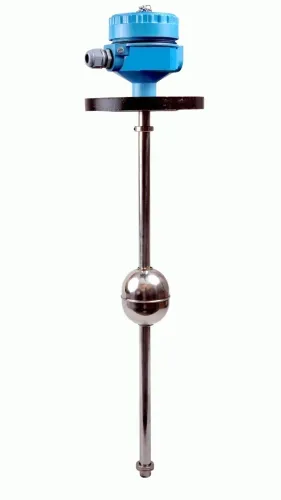
| Float level sensor or switch | Reed switch, limit switch or another contact device with a stated switching elevation | Discrete electrical signal at a set level |
| Float level transmitter | Potentiometer, magnetic sensor or 4–20 mA transmitter with wiring and output details | Continuous electrical level signal for a panel, PLC or display |
Treat “float level sensor” as an ambiguous term until the supplier names its technology and output. Ask whether it means the buoyant tank float or an added electrical device.
For a switch, specify switching elevation, hysteresis, contact rating, reset behaviour, cable entry, enclosure protection and hazardous-area approval. For a transmitter, specify the output range, supply voltage, accuracy and calibration reference. Do not assume the package includes a relay, alarm, high-level shutdown or PLC interface; those functions require separate listed items.
How should the float and board assembly be matched to the liquid and tank?
A float that is buoyant in water can sink, drag, or give a false level in another liquid. Match the float level sensor board assembly to the liquid before selecting the board or cable length.
Your tank indicator package details should state:
- Liquid density, viscosity, temperature range, foam, sludge or solids, surface turbulence, and chemical compatibility with the float, cable, seals and guide parts
- Tank diameter, straight-side height, maximum and minimum levels, required measuring range, roof shape, nozzle size and roof-entry location
- Whether the float travels in guide wires, a guide pipe or a stilling well, and whether internal coils, ladders, mixers or inlet flows obstruct that path
- Required indication units, board height, viewing distance and scale readability
- Indoor or outdoor exposure, rain, sunlight, wind, dust, corrosive atmosphere and hazardous-area classification
- Roof supports, mounting brackets, sealing arrangement, travel stops, and who supplies installation and calibration
The float must have enough displacement for the liquid’s density while remaining stable at the surface. High viscosity increases cable drag; foam can lift the float without representing liquid level, and sludge can foul its guide path. Specify a stilling arrangement when filling, pumping or agitation causes movement.
Check the cable route for a straight, low-friction run from float to roof pulley and counterweight. An offset nozzle or an unsupported pulley makes the board lag or stop. Size the board for the actual travel, not merely the tank height.
How do you check scale calibration, rope routing and commissioning?
A factory-calibrated board is not proof of correct field calibration. The tank indicator package details must state the tank datum, measurement range, empty and full levels, board units, and who performs installation and commissioning. An incorrect roof-entry height will shift every reading.
Use this commissioning checklist:
- Confirm the float matches the liquid density and remains at the surface; foam, sludge or deposits can make it read high.
- Measure the actual liquid level with a surveyed datum, dip tape or an independent level instrument. Compare that value with the pointer position.
- Record the empty and full reference marks on the tank and board. Do not accept a scale that was fitted without checking the tank’s real datum.
- Move the float through its full travel, or fill and drain the tank under controlled conditions. Check that the float board indicator components move continuously without sticking.
- Inspect the rope or tape for twists, rubbing and slack. Check that it sits correctly in every pulley groove and that the counterweight travels freely without striking the tank or guides.
- Verify guide wires or the guide pipe are vertical and clear. Misalignment adds friction and can leave the pointer behind the liquid level.
- Repeat the comparison while the liquid is calm. Baffles, a stilling arrangement or a different guide path may be needed if filling turbulence makes the float surge.
- Record the final readings, reference levels, installation date and acceptance tolerance in the commissioning sheet.
A visual reading remains suspect if the float does not track both rising and falling levels.
What should you put into a Mumbai supplier’s quotation?
Put every promised item into a line-item bill of materials, especially for a float board tank indicator with float level sensor included in Mumbai. A short phrase such as “sensor included” does not identify whether the supplier means the tank float, a reed switch, a limit switch, a potentiometer or a 4–20 mA transmitter.
Request the tank indicator package details sheet and specify:
- Float, cable or tape, pulley and bracket, guide wires or guide tube, counterweight, pointer, graduated board, mounting supports, fasteners, roof seal or stuffing box, and travel stops.
- Tank diameter and height, nozzle or roof-entry arrangement, measuring range, scale units, liquid density, temperature, viscosity, foam, sludge and chemical compatibility.
- Sensor technology, output, electrical supply, enclosure or hazardous-area rating, cable length and termination point.
- Calibration certificate, factory test, installation, commissioning and the party responsible for site calibration.
- Packing, freight to your Mumbai site, taxes, warranty, delivery period, spares and exclusions.
| Quote wording | What it means | What to verify |
|---|---|---|
| Float-board indicator only | Local mechanical reading | No automatic alarm or shutdown is included |
| Float level switch | Point-level electrical contact | Set point, contact rating and reset action |
| Float level transmitter | Continuous electrical measurement | Output range, accuracy, supply and calibration |
Ask a float board supplier in Mumbai to state these distinctions on the quotation. Filpro Sensors Pvt Ltd can be included in the same comparison only after its quotation identifies the sensor output and installation boundary rather than treating “included” as a complete specification.
Related product
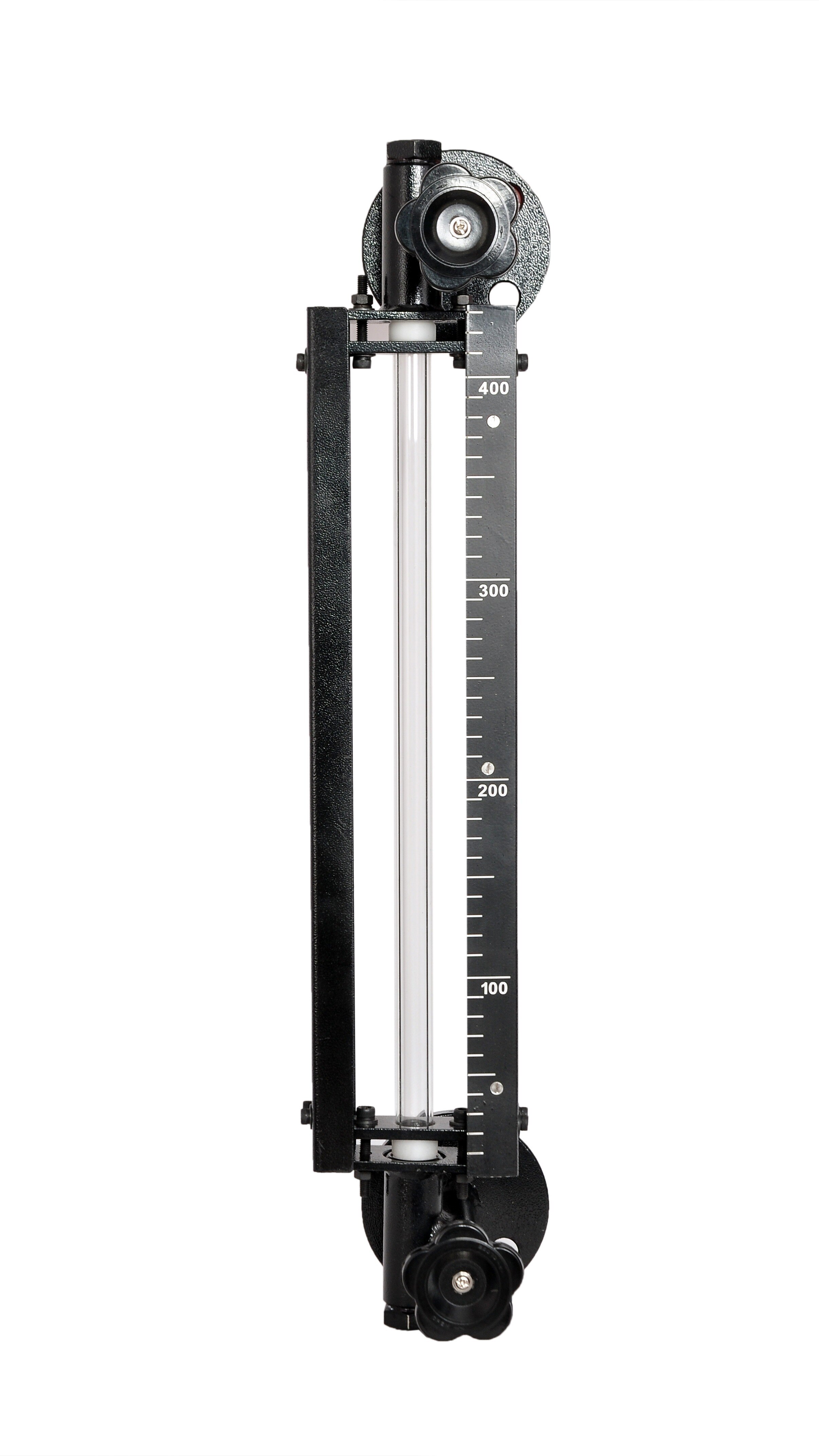
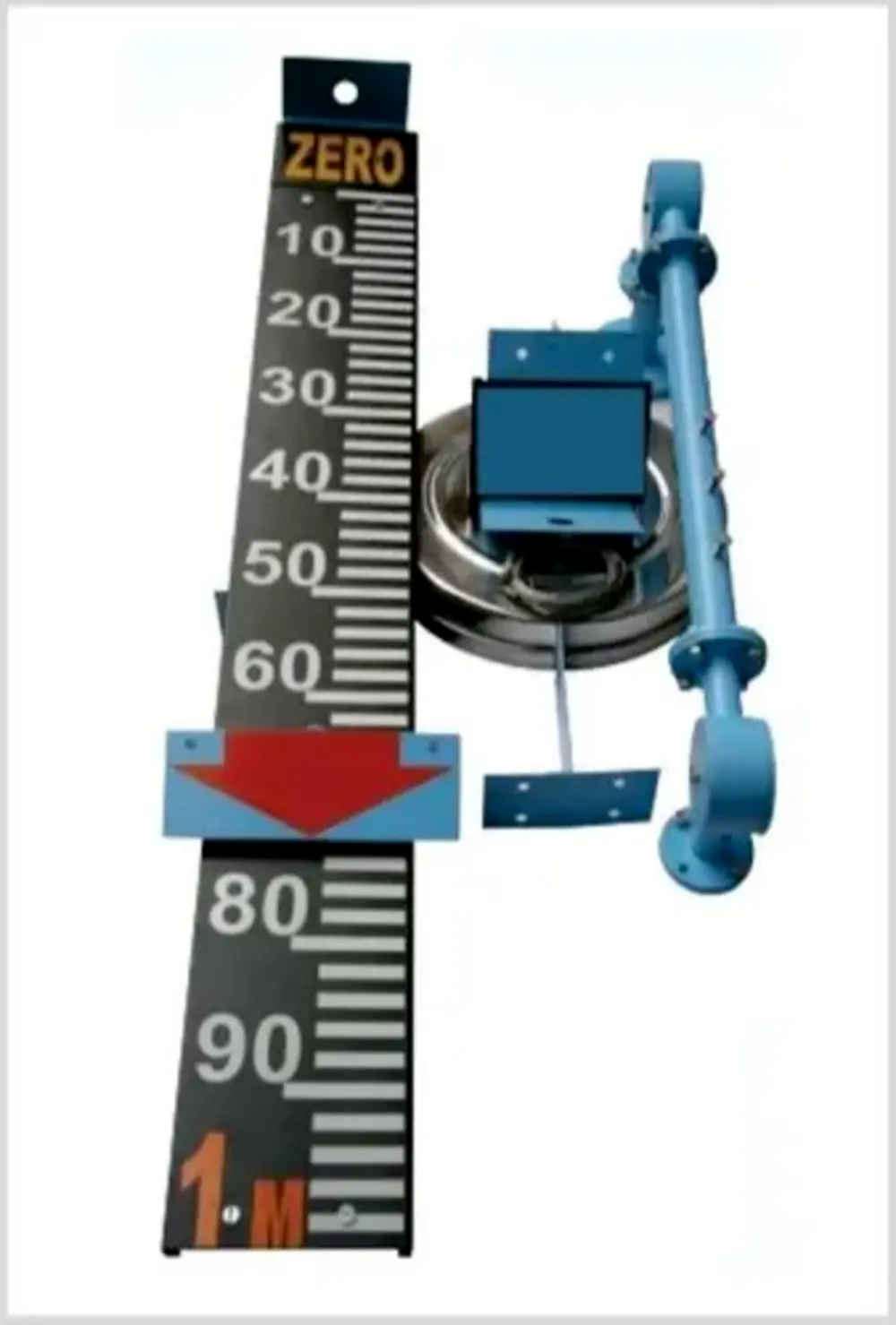 | Level Indicator The Float & Board Level Indicators consists of a float connected to a pointerthrough a rope via a set of pulleys. View product → |
Frequently asked questions
What belongs in a complete float board indicator package?
The quotation should name the float, graduated board, rope, guide pulleys, mounting supports, counterweight, seals, protective covers, sensor, cabling and installation or commissioning scope.
Which part gives a visual reading, and which part gives an electrical signal?
The graduated board and moving indicator provide the local visual reading. A float level sensor or transmitter converts float movement into an electrical signal for a display, alarm or control system.
How should the float and board assembly be matched to the liquid and tank?
Check the liquid’s density, temperature, corrosiveness and solids content, then match float material, float buoyancy, rope length, board scale, tank height and mounting arrangement.
How do you check scale calibration, rope routing and commissioning?
Compare marked tank levels with the board indication, confirm the rope runs freely over aligned pulleys without rubbing, and test the sensor signal, alarms and full operating range during commissioning.