Buying an ultrasonic transmitter for a hazardous plant involves more than finding a local catalogue listing. You need to match the complete certified installation to the area classification, then confirm that vapour, foam, tank geometry and process conditions will produce a reliable echo. By the end, you will know which Bengaluru suppliers to approach, which documents to request and when another level technology is the safer choice.
Key takeaways
- Request the exact model’s IECEx or ATEX certificate and gas or dust group.
- Confirm vapour, foam, temperature and pressure conditions before choosing ultrasonic measurement.
- Mount the sensor above a clear, unobstructed surface and suppress false echoes.
- Use radar or hydrostatic measurement when vapour, foam or turbulence defeats ultrasound.
Where Bengaluru plants can source a hazardous-area ultrasonic sensor
Contact a local industrial instrument supplier, authorised distributor, system integrator and the manufacturer directly. They serve different procurement needs, so a catalogue listing is not proof that the exact item is ready for installation.
| Supplier type | What it provides | What to verify |
|---|---|---|
| Local industrial instrument supplier | Regional stock, quotations and service coordination | Exact model, replacement-head stock and local response |
| Authorised distributor | Manufacturer-backed supply and documentation | Authorisation, certificate scope and committed delivery date |
| System integrator | Sensor, barrier, cabling and control-system integration | Complete loop design, commissioning and hazardous-area compatibility |
| Manufacturer | Product selection, certification and technical support | Build-to-order lead time, approved options and spares |
For ultrasonic level sensors for hazardous liquid plants in Bengaluru, specify the complete purchase item:
- Exact model and hazardous-area certificate number and marking
- Sensor material, output, cable or connector option and process connection
- Area classification, gas or dust group, temperature class and protection concept, such as Ex ia or Ex db
- Installation drawing, beam angle, blocking distance, temperature and pressure limits, commissioning procedure and spare-part identification
Industrial ultrasonic sensor availability can be misleading. Imported electronics, certificate-dependent lead times and unavailable replacement heads can turn a listed product into a shutdown risk. Ask the supplier to confirm stock for that configuration, not merely the product family.
Finally, the complete installed device must match the plant classification. IP65 or IP66 describes enclosure protection; it does not prove explosion protection for the sensor, cable glands, junction box, barriers or interfaces.
Which hazardous-area documents prove the sensor is suitable
Do not issue a purchase order until the ultrasonic level transmitter supplier in Bengaluru identifies the complete hazardous-area approval for the exact model, sensor head, cable or connector and output option. An IP65 or IP66 enclosure rating only describes ingress protection; it does not prove explosion protection.
Request these documents and particulars:
- Area classification: Zone 0, 1 or 2 for gas, or Zone 20, 21 or 22 for dust; gas or dust group; temperature class; equipment protection level; and protection concept, such as Ex ia or Ex db.
- The actual ATEX or IECEx certificate number, certificate marking and certificate schedules, not a webpage stating “hazardous-area suitable”.
- Approved ambient and process-temperature ranges, pressure limits, installation drawing, cable-gland requirements, mounting restrictions and any special conditions of use.
- The beam, enclosure and terminal details shown on the certified model, including permitted replacement parts and cable or connector configurations.
| Document | What to verify | Why it matters |
|---|---|---|
| ATEX or IECEx certificate | Number, marking, schedules and exact model suffix | A similar-looking model may have different approval limits |
| Installation drawing | Zone, mounting, glands, wiring and restrictions | Incorrect installation can invalidate certification |
| Temperature data | Ambient and process limits | Exceeding either limit can compromise protection |
An intrinsically safe transmitter is only one part of an IS loop. Keep the barrier or galvanic isolator, cable capacitance and inductance, entity parameters, grounding and installation method within the certificate limits. Connecting an ordinary transmitter to an IS barrier does not make it hazardous-area compliant.
Will ultrasonic measurement work in your chemical or process liquid
Stable ultrasonic measurement needs a strong, repeatable echo from the liquid surface and a predictable gas path above it. The ultrasonic level sensors chemical plants use must be selected from these facts:
- Liquid name and composition, vapour pressure, flash point, normal and maximum temperature
- Pressure or vacuum, vapour composition, tank height and measurement span
- Foam, agitation, turbulence, condensation, boiling and filling-stream location
- Dust or vapour in the beam path, nozzle size, internal obstructions and required accuracy
- Whether the signal serves indication, control or an independent high-high trip
An ultrasonic sensor for process liquids does not require electrical conductivity; it measures an acoustic echo. Gas temperature, vapour composition and molecular weight change sound speed, while pressure or vacuum changes gas density and the instrument’s operating conditions. If compensation does not cover those conditions, calculated level shifts even when the liquid surface stays still.
| Condition | Echo result | Buying decision |
|---|---|---|
| Clean, calm surface | Strong, repeatable return | Favourable |
| Foam or boiling surface | Absorption and scattering | Reject unless testing proves performance |
| Filling stream or mixer | Turbulent, moving returns | Relocate or test |
| Heavy condensation | Attenuation and false echoes | Require a condensation assessment |
| Irregular or obstructed surface | Weak or repeated echoes | Confirm with an echo test |
A clear vapour space over a relatively calm liquid is the best case. Dense vapour, persistent foam, boiling, severe condensation or an obstructed tank warrants rejection unless a site test confirms stable performance.
How to mount and commission the transmitter without creating false echoes
A false echo from the filling inlet, agitator, ladder, coil or roof beam can overpower the liquid echo, so mount the transducer with a clear beam path and away from these obstructions. Check the nozzle’s length and diameter against the sensor drawing; a narrow or long nozzle can ring, shadow the beam or collect condensate.
1. Measure from the transducer face, not the tank’s nominal height. Keep the highest level below the blocking or dead zone, and keep the lowest level within the specified maximum echo distance. Ask for the minimum measuring distance and beam angle before drilling the nozzle.
2. For an angled or irregular roof, use a mounting plate or remote sensor that points squarely at the liquid. Orient the nozzle to shed condensation rather than drain it onto the face. A remote sensor can separate hot, wet vapour from the electronics.
3. Use a stilling well only after checking its internal diameter, venting, roughness, alignment and blockage risk against the beam. A poorly sized or dirty tube creates repeated echoes and condensation instead of a stable reading.
4. Commission the configured instrument across empty, normal and high levels, recording the echo profile and rejected echoes. Request the beam-angle drawing, configuration-tool output, echo profile or commissioning record; these support industrial ultrasonic sensor availability decisions better than catalog range alone.
Treat indication, control and an independent high-high trip as separate duties. For any safety or overfill layer, specify the proof-test interval, response time, diagnostic coverage and functional-safety requirements; do not rely on one ultrasonic transmitter for an independent trip without that evidence.
How ultrasonic compares with radar, hydrostatic, float and point switches
Choose ultrasonic for a clean, relatively calm liquid with a clear vapour space and no obstruction in the beam. Reject it after testing if dense vapour, persistent foam, boiling, heavy condensation or changing gas conditions produce weak echoes.
| Option | Main limitation or strength | Choose it when |
|---|---|---|
| Ultrasonic | Sound speed changes with gas temperature, vapour composition, pressure and molecular weight; foam and turbulence distort echoes | The vapour space is stable and non-contact measurement is useful |
| Radar | Electromagnetic waves tolerate vapour, foam and changing gas conditions better, so radar can outperform ultrasonic in difficult services | Vapour is dense, the surface foams or boils, or gas conditions vary |
| Hydrostatic | A wetted pressure diaphragm measures pressure and depends on liquid density, tank pressure and vacuum conditions | Density is known and diaphragm contact is acceptable |
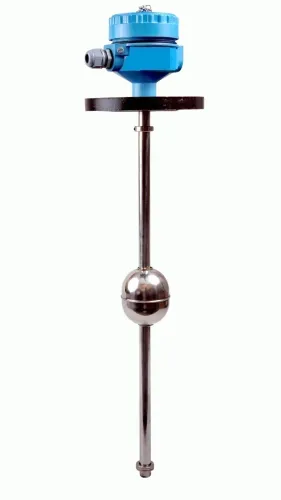
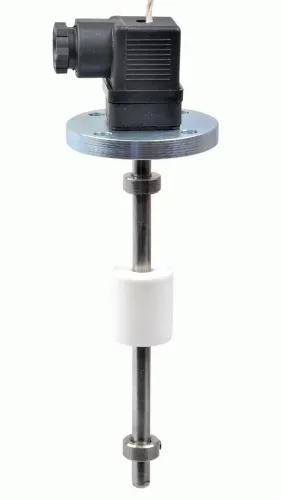
| Float transmission | Mechanical movement requires suitable float materials, guide arrangements and clearance | The tank permits internal hardware and the liquid will not foul the mechanism |
| Capacitance transmission | Probe material, coating, dielectric constant and grounding affect the measurement | The liquid and tank geometry support stable capacitance |
| Side-mounted switch | Detects one point, not continuous level | You need a high, low or high-high alarm rather than inventory measurement |
Ask an ultrasonic level transmitter supplier in Bengaluru for:
- Installation drawing, certificate number and schedules, temperature and pressure limits
- Beam angle, blocking distance, nozzle restrictions and commissioning procedure
- Spare-part identification, exact replacement head and local service capability
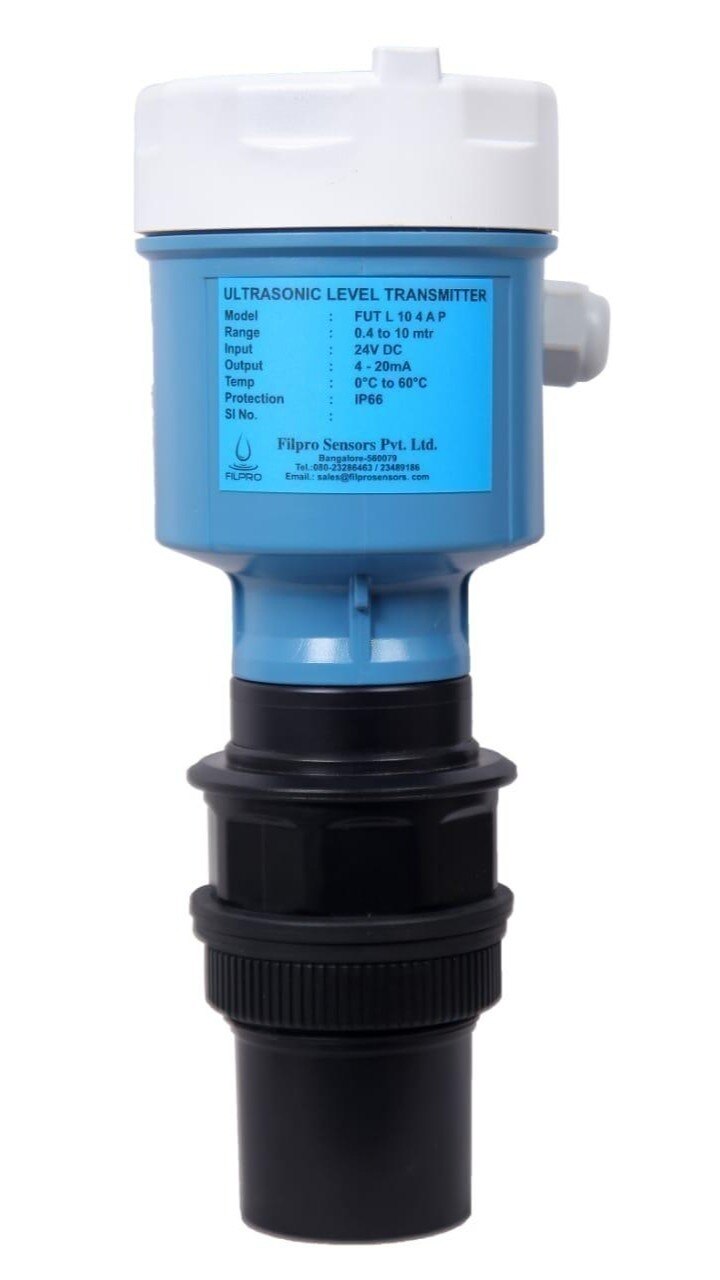
Filpro Sensors Pvt Ltd is a Bengaluru-based contact for discussing continuous measurement, switching and indication without assuming ultrasonic is suitable for every tank. For ultrasonic level sensors for hazardous liquid plants in Bengaluru, compare the complete installed device and its certificate, not just the enclosure rating.
Related product
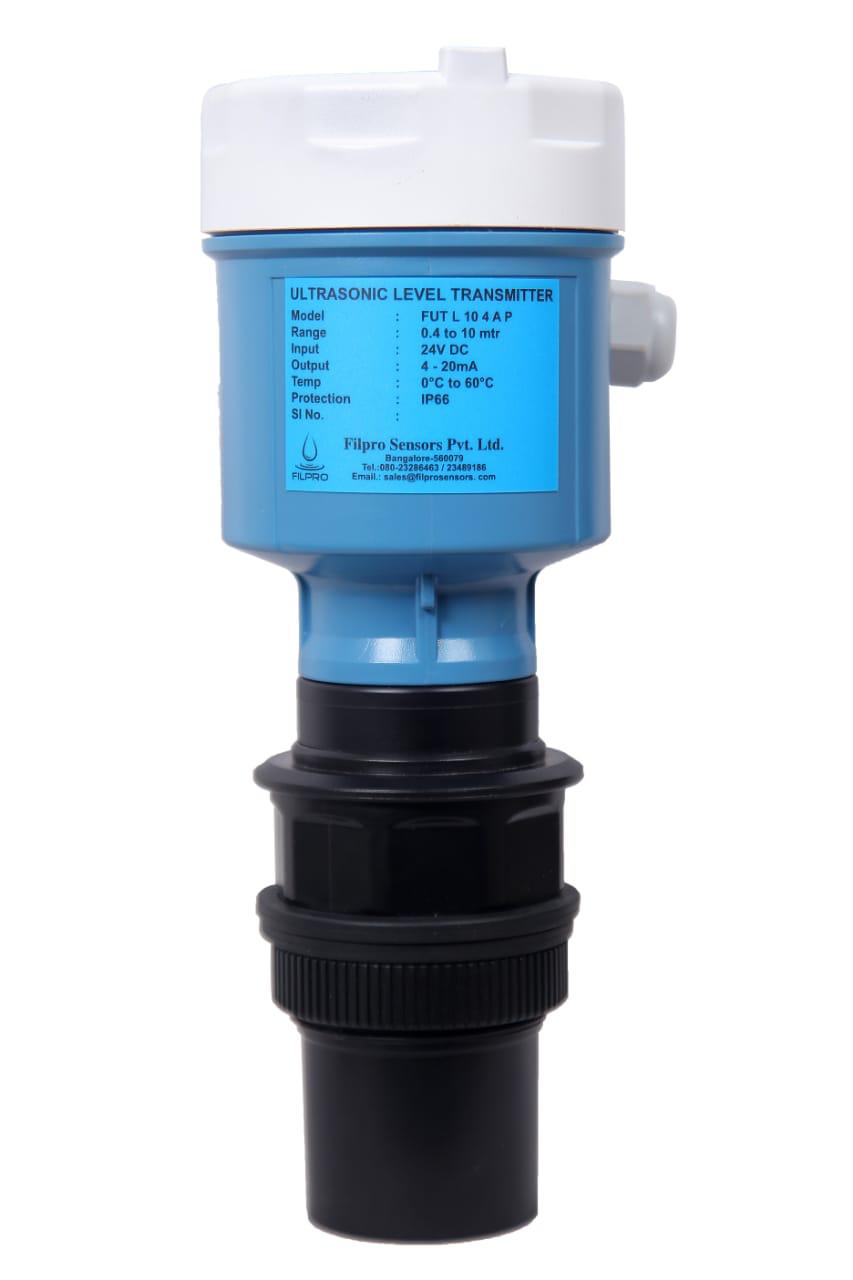 | Level Transmitter Ultrasonic Level Sensor is a non-contact ultrasonic continuous level measurement product based on sound technology. View product → |
Frequently asked questions
Where can Bengaluru plants source hazardous-area ultrasonic level sensors?
Contact a local industrial instrument supplier, authorised distributor, system integrator or the manufacturer directly. Ask each source to confirm stock, lead time, exact model, hazardous-area certification and installation support.
Which documents prove an ultrasonic sensor is suitable for a hazardous area?
Request the exact model’s IECEx or ATEX certificate, marking plate details, protection concept, gas or dust group, temperature class, ambient-temperature range, installation instructions and certificate schedule. Match these details with the plant’s hazardous-area classification.
Will ultrasonic measurement work with chemical or process liquids?
Check vapour composition, foam, agitation, condensation, temperature, pressure, tank geometry and the liquid’s surface condition. Heavy vapour, foam, turbulence or condensation can weaken the ultrasonic signal; radar is a stronger alternative in those conditions.
How should you mount and commission an ultrasonic transmitter?
Install it vertically above the liquid, away from inlet streams, ladders, heating coils, braces and tank walls. Enter the tank height and empty-distance settings, set false-echo suppression only after a stable installation, and verify readings against a known level.
How does ultrasonic compare with radar, hydrostatic, float and point switches?
Ultrasonic provides non-contact continuous measurement without a probe. Radar handles vapour, foam and changing process conditions better. Hydrostatic sensors need liquid contact and density compensation; floats need mechanical movement; point switches provide an alarm or control point rather than continuous level.