A quoted glass tube gauge may mean only the tube and end fittings, or a ready-to-install assembly with valves, guard, scale, and safety devices. By checking the construction, dimensions, ratings, materials, and accessory list against your vessel and process, you can identify what is included and what must be added before purchase.
Key takeaways
- Request a complete parts list, including valves, seals and mounting hardware.
- Select borosilicate or safety glass based on fluid, pressure and temperature.
- State visible length, centre distance and connection size as separate dimensions.
- Confirm isolation valves, drain provisions and protection before approving the quote.
Identify every part in the quoted gauge assembly
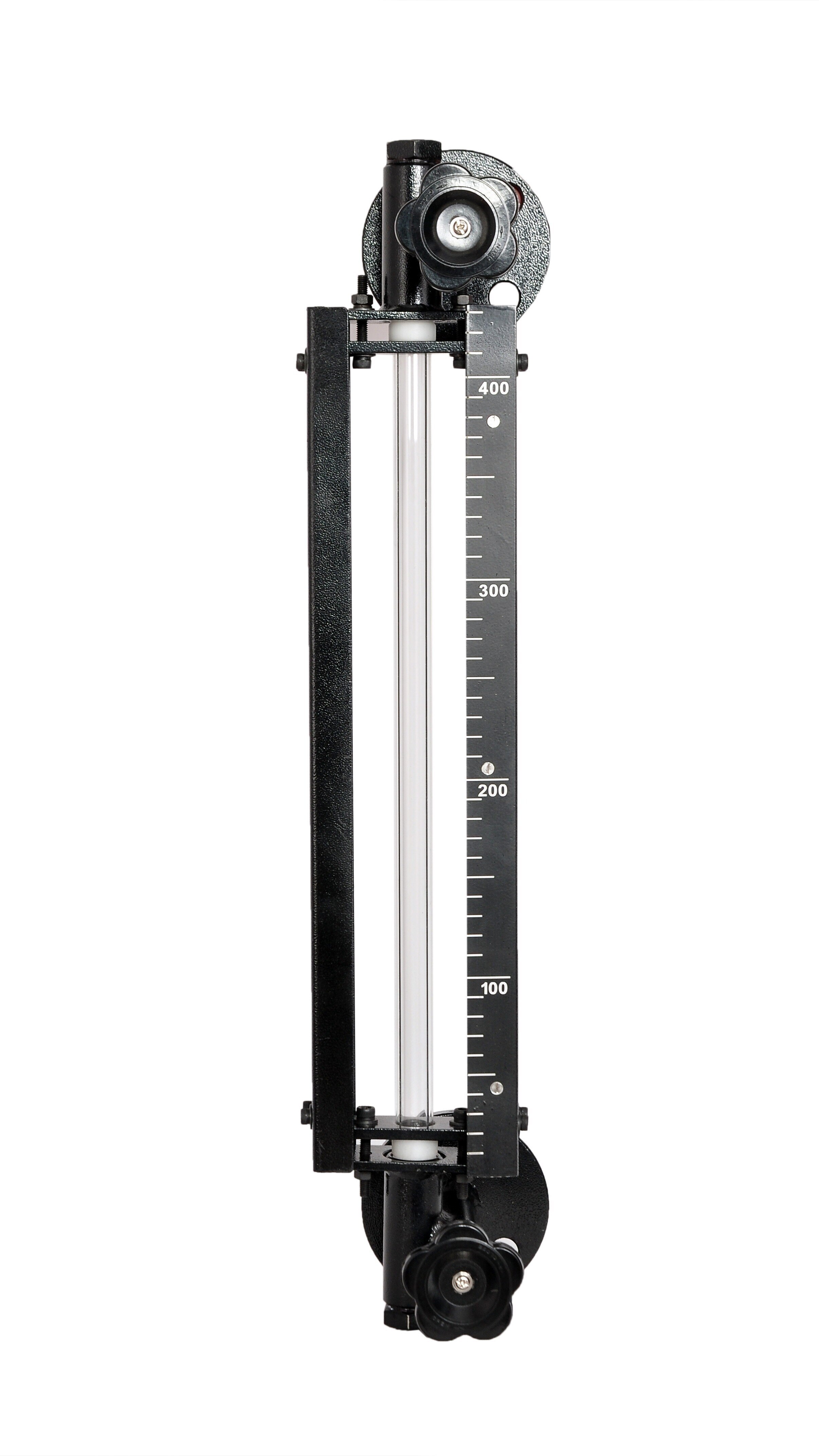
A complete glass tube level gauge includes the glass tube, upper and lower connection bodies, shutoff valves, sealing parts, and mounting hardware. A bare assembly can stop at the tube and end fittings, so treat the quoted tubular glass level indicator contents as unconfirmed until every accessory appears on the quotation.
- Glass tube, with specified bore or outside diameter, wall thickness, length, and material
- Upper and lower process connection bodies
- Upper and lower isolation valves
- Gaskets, packing, washers, and retaining pieces
- Drain and vent valves, plugs, or drain-and-vent manifold
- Fasteners, brackets, clamps, and vessel mounting hardware
- Protective guard or shield
- Scale, red-line marker, or illumination arrangement, if required
| Item | Bare gauge possibility | Confirm before ordering |
|---|---|---|
| Isolation valves | Excluded | Manual valves, automatic ball-check safety devices, or both |
| Drain and vent | Excluded | Valve locations, plugs, discharge direction, and drain connection |
| Guard and scale | Optional | Shield material; scale zero, units, range, and actual liquid levels |
| Alarm or control | Not inherent | Separate switch, transmitter, or independent shutdown instrument |
| Replacement kit | Tube and seals only | Tube length, bore, gasket material, valve type, model, and retaining parts |
Pressure and temperature ratings belong to the complete configuration, not the glass alone. Request the rating table for the exact tube length, fittings, valves, gasket, process temperature, and thermal-shock conditions.
Choose the glass and gauge construction for the fluid
Choose a plain tubular gauge when the liquid is clear, non-coating, and compatible with borosilicate glass, and when direct local reading is enough. The liquid enters the tube through upper and lower connections, forming a visible column or meniscus.
An industrial glass tube gauge becomes unreliable when the fluid is opaque, heavily coloured, dirty, crystallising, or likely to coat the bore. Fouling can hide the level or make the indication lag behind the tank. For those services, compare the following constructions:
| Option | What it provides | When it applies |
|---|---|---|
| Plain tubular glass | Direct view of the liquid column through a round borosilicate tube | Clean, clear liquids at modest service demands where a local indication is sufficient |
| Reflex flat glass | Prismatic grooves create strong light-dark contrast at the liquid boundary | Clear liquids needing sharper visibility or a more robust flat-gauge construction |
| Transparent flat glass | Viewing through flat windows shows the liquid, colour, and interface more directly | Coloured, viscous, or interface-sensitive liquids, subject to the manufacturer’s pressure and temperature limits |
A glass tube level for gauge inclusions needs more than a transparent tube: confirm the bore, wall thickness, glass compatibility, visible length, end fittings, seals, and protective guard. The guard protects against fragments; it does not increase the tube’s pressure rating.
Request the rating table for the exact assembly and length. If the fluid can attack glass, deposit solids, or exceed the gauge’s thermal-shock limit, choose another technology such as a magnetic level gauge, guided-wave radar, displacer, or differential-pressure transmitter.
Specify visible length, centre distance, and connections separately
State three items separately: visible measuring length, centre-to-centre distance, and connection geometry. A correct tube length can still fail to fit if nozzle centres, flange faces, or valve orientation do not match.
| Item | Specify | Failure if omitted |
|---|---|---|
| Visible length | The readable glass section, in millimetres | The liquid column may be shorter than the required measuring range |
| Centre distance | Exact distance between upper and lower vessel nozzle centrelines | End fittings may not align with the nozzles |
| Overall space | Total height, side clearance, and tube-removal clearance | The gauge may fit the nozzles but leave no room for maintenance |
Use the vessel nozzle centrelines for the centre distance, not the glass length. End fittings, valve bodies, gaskets, and connection orientation change the overall dimension.
For each process connection, provide the following glass tube level indicator details:
- Top-to-bottom, side-to-side, or custom nozzle arrangement
- Connection size and material
- Thread standard or flange standard
- Flange facing, such as raised face or flat face
- Pressure class, bolt pattern, and orientation
- Available clearance around the vessel
These details belong in the order independently of the glass tube level gauge parts. The borosilicate tube, upper and lower fittings, seals, retaining hardware, and protective guard do not correct a mismatched nozzle pattern. Include a dimensioned vessel sketch if the nozzles are offset, angled, or crowded by insulation.
Match pressure, temperature, isolation, and safety provisions
Do not approve an industrial glass tube gauge from a pressure rating printed for the glass alone. Request the manufacturer’s rating table for the exact tube diameter, visible length, wall thickness, end fittings, gasket material, valve body, process temperature, and thermal-shock conditions.
Match that assembly rating to the vessel’s design pressure and maximum operating temperature, not merely to normal conditions.
Confirm that the quotation includes:
- Upper and lower shutoff valves sized for the process connections
- Automatic ball-check safety devices that close flow if the tube breaks
- Drain and vent valves, plugs, and a defined depressurisation route
- Gaskets, packing, fasteners, mounting hardware, and a graduated scale
- A metal protective shield or guard around the glass
The guard limits fragment exposure; it does not increase the tube’s pressure rating or replace isolation valves. Verify that operators can close both process valves, vent trapped pressure, drain liquid to a safe point, and remove the tube without opening a pressurised chamber.
Treat the tubular glass level indicator contents as a line-by-line supply boundary. A nominal gauge price may cover only the tube, fittings, seals, and retaining hardware. Ask for the complete assembly drawing and the operating sequence for isolation, draining, venting, inspection, and tube replacement before ordering.
Use a written ordering checklist before requesting the final quotation
A quotation becomes difficult to compare when “glass tube level for gauge inclusions” is left as a product name. Send a written schedule that fixes the service and every item the supplier must price.
1. State process conditions: liquid name, concentration, specific gravity, minimum, normal and maximum temperature, design and operating pressure, corrosive exposure, and required visible length.
2. Give fit-up data: upper-to-lower centre distance, top-and-bottom or side-and-side arrangement, connection size, thread or flange standard, facing, pressure class, orientation and nozzle material. A correct tube length still fails when the connection pattern is wrong.
3. Specify wetted materials: borosilicate tube bore and outside diameter or wall requirement, connection-body metal, valve material, gasket or packing compound, and liquid compatibility. Request the rating table for the exact tube length and assembly; glass alone is not the pressure rating.
4. List accessories separately: upper and lower isolation valves, drain, vent, guard, scale, mounting brackets, fasteners, and any switch, transmitter or alarm. A local sight gauge does not provide automatic protection.
5. Record glass tube level indicator details for spares: model, tube dimensions, gasket material, valve type and whether the replacement kit includes seals, washers, retainers or a complete valve-and-tube assembly. Confirm tubular glass level indicator contents separately from replacement contents.
Filpro Sensors Pvt Ltd, like any manufacturer, should receive this schedule before preparing the final quotation so omissions appear before fabrication, not during installation.
Related product
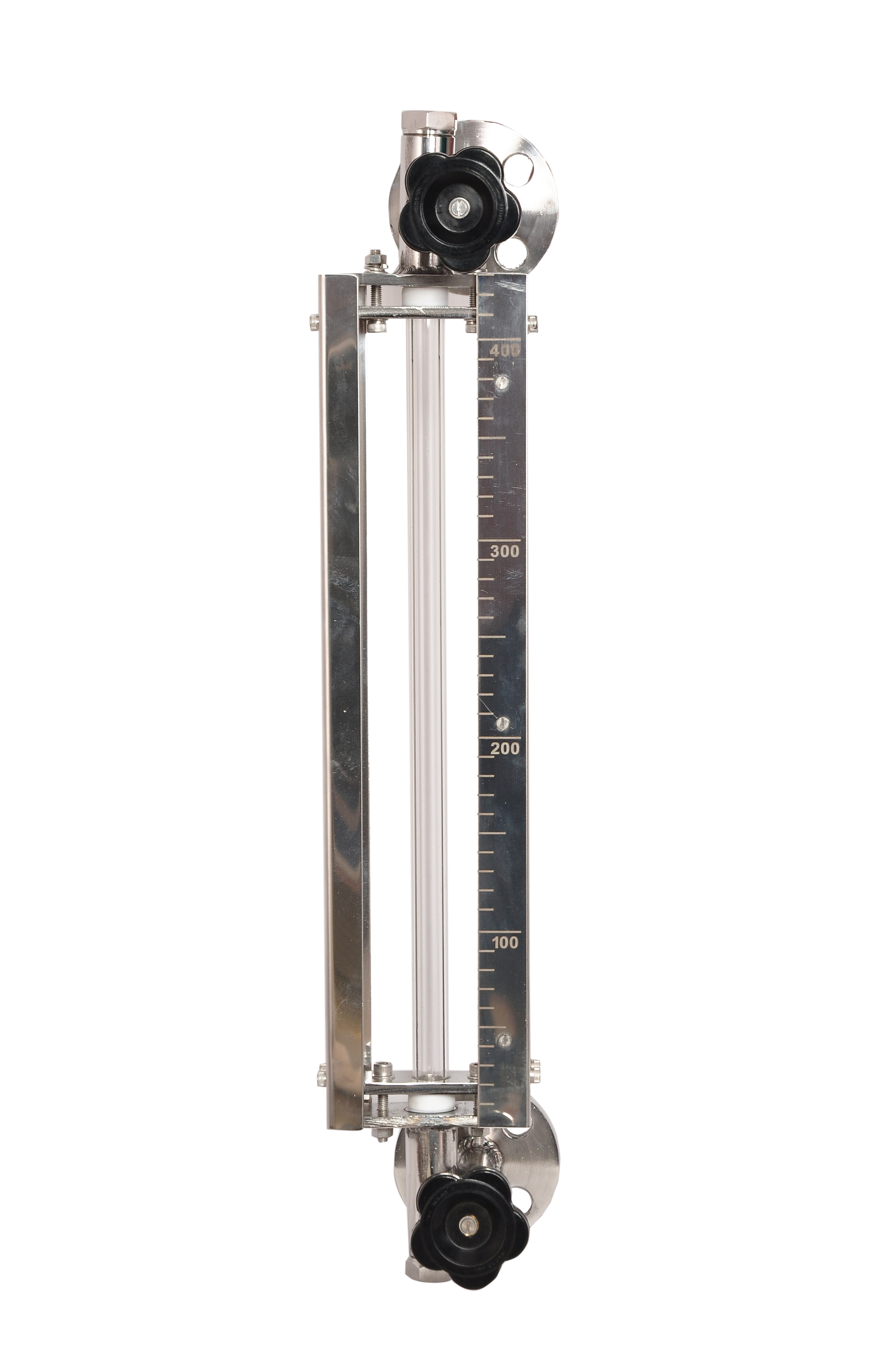 | Level Gauge Tubular Glass Level Indicator is used for visual level indication of liquid in storage and process tanks. View product → |
Frequently asked questions
What parts should a complete glass tube level gauge include?
Check for the glass tube, upper and lower connection bodies, shutoff valves, sealing parts and mounting hardware. Treat a tube with end fittings as incomplete until the quotation lists each accessory.
How do you choose glass and gauge construction for the fluid?
Match the glass and construction to the fluid’s chemical compatibility, pressure, temperature and cleaning conditions. Confirm whether the application needs protective shielding or safety glass.
Which dimensions and connections must you specify separately?
Give the visible measuring length, centre distance between connections, and each process connection size and type as separate items. Do not use one overall dimension as a substitute.
What pressure, temperature and safety details belong in the specification?
State design and operating pressure, minimum and maximum temperature, valve arrangement, isolation requirements, drain provisions and protection against tube breakage.