The right choice depends less on whether a vessel is called a storage tank or a process tank and more on pressure, temperature, liquid condition, access, and the consequence of a glass failure. By the end, you can screen an application, identify the safety controls to verify, and decide when a different level instrument is the better fit.
Key takeaways
- Choose local glass indication for clean liquids in accessible, low-pressure tanks.
- Use isolation valves, shields, and a guarded tube where glass failure creates risk.
- Check pressure, temperature, chemical compatibility, visibility, and connection dimensions.
- Reject the gauge when remote monitoring or hazardous-liquid containment is essential.
Is your tank duty a good match for local glass-tube indication?
A glass tube level gauge for industrial tanks suits an accessible, atmospheric or moderately pressurised tank holding a relatively clean, non-corrosive liquid. It gives a nearby operator a power-free visual cross-check of a transmitter, level switch, or inventory estimate.
Choose it when the operator reads the tank during routine rounds, stands close enough to see the liquid boundary, and can read the tube under the available lighting. A slowly changing level gives time to notice a missed round; a fast level change does not.
Reject it as the primary instrument when a missed reading could cause an unsafe overfill or low-level condition. It provides no remote indication, trend history, alarm voting, or closed-loop control, and it should not be the sole automatic safeguard.
Use this decision test for glass tube level gauge applications:
- Can an operator reach and read the full required level range?
- Will the tube remain visible despite condensation, colour, or minor fouling?
- Does the level change slowly enough for the inspection frequency?
- Would poor lighting or a missed round create unacceptable risk?
- Is the liquid compatible with the tube and seals, with manageable pressure, temperature, vibration, and impact?
| Arrangement | Visual principle | Suitable use |
|---|---|---|
| Direct-reading glass tube | Liquid boundary visible in a connected tube | Simple local checks on clean, accessible service |
| Reflex or transparent gauge | Level shown through a different sight-glass arrangement | Applications needing another visual contrast or viewing geometry |
| Magnetic level gauge | Float drives magnetic indication through a sealed chamber | Service needing clearer external indication and reduced exposure |
A direct-reading gauge is defensible for routine rounds, but an inaccessible or rapidly changing tank needs a transmitter, independent switch, or sealed magnetic arrangement instead.
How do process-tank and storage-tank applications change the selection?
A glass tube level gauge for process tanks is selected from actual design pressure, design temperature, nozzle size, connection orientation, and operating chemistry—not from the vessel label. The tank rating does not prove that the gauge has the same rating.
| Option | What to check | Selection consequence |
|---|---|---|
| Process tank | Pressure, temperature, nozzle size, orientation, chemistry, viscosity, foaming, solids | Reject a gauge whose documented limits or materials do not match the connection and service |
| Storage tank | Access, outdoor exposure, condensation, visibility, tube length, operator reading distance | Choose a full-height or segmented arrangement when one short tube cannot show a useful range |
| Either tank | Colour, cleanliness, level range, mounting location | Poor contrast, fouling, or an unreachable gauge defeats local indication |
Screen the liquid and installation for:
- Compatibility with the wetted glass, seals, and process fluid
- Actual operating and design pressure and temperature
- Viscosity, colour, cleanliness, foam, suspended solids, and deposits
- Required level range, mounting height, lighting, and reading distance
A glass tube gauge for storage tanks suits an accessible tank containing a clean liquid that keeps the tube readable. Outdoor units need protection from impact and condensation; a tall vessel may need multiple indicators, a transmitter, or another sight arrangement rather than one uncomfortable viewing point.
The reading is hydrostatic, not a direct mass or volume measurement. A scale based on one liquid density can misstate inventory when temperature, concentration, or stratification changes, even while the liquid boundary remains clear.
Which ratings, materials, and installation details decide whether it will work?
A glass tube level gauge for industrial tanks is suitable only within the model’s documented pressure and temperature limits. Atmospheric service and pressurised service are different selections; the vessel’s rating does not prove that the gauge can withstand it.
Borosilicate glass is common, but concentrated alkalis, hydrofluoric-acid-containing liquids, and abrupt temperature changes require a compatibility review.
Before ordering a glass tube level gauge for process tanks, record:
- Maximum and minimum operating pressure, plus vessel and gauge design pressure.
- Operating and design temperature, including steam cleaning and thermal-shock exposure.
- Wetted glass, seals, valves, gaskets, and connection materials.
- Gasket compatibility with the liquid’s complete chemical composition.
- Connection rating, orientation, nominal size, and tube length.
- Scale basis: liquid level, volume, or inventory at a stated density and temperature.
- Viscosity, solids, crystallisation, fouling, and vapour-forming behaviour.
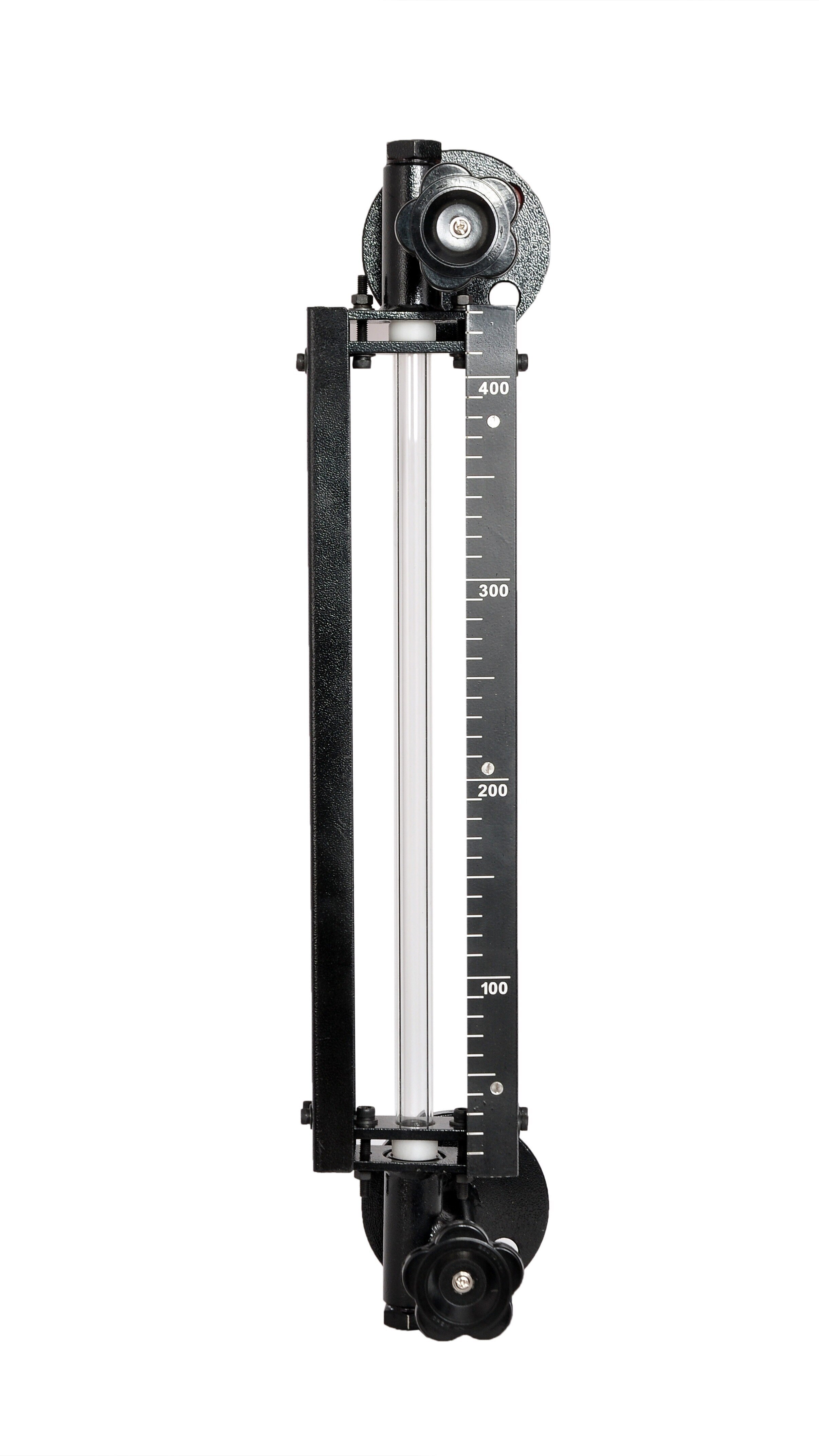
- Upper and lower isolation valves, guard or shield, drain or blowdown, and breakage protection.
| Commissioning check | What failure looks like | Acceptance action |
|---|---|---|
| Open upper and lower connections | Blocked port or closed valve traps a false level | Verify free communication with the vessel |
| Inspect the tube and piping | Vapour pockets, trapped gas, or crystallised product separates the readings | Remove the obstruction and vent safely |
| Check heat tracing | Unequal heating creates density or crystallisation differences | Correct the tracing arrangement |
| Change the vessel level by a known amount | The gauge level does not follow the vessel | Reject the installation until the cause is found |
Automatic ball-check or excess-flow devices reduce discharge after breakage, but fouling, viscous liquid, crystallisation, or incorrect installation can prevent seating. They never replace isolation, guarding, inspection, and a documented shutdown procedure.
What safety controls and service limits should rule the choice?
Reject the arrangement when exposed glass creates greater harm than a local reading justifies. Toxic or hazardous liquids, high pressure, high temperature, severe vibration, outdoor impact, difficult access, and services needing remote indication all favour a sealed or remote instrument over basic glass tube level gauge applications.
Opaque or fouling liquids can hide the liquid boundary, while condensation, scratches, chemical attack, leakage, and thermal shock can make a sound reading unreliable or trigger failure. A vessel must never rely on an unprotected glass tube as its pressure boundary.
Before approving a glass tube gauge for storage tanks or process equipment, verify the exact model rather than assuming the fittings are included:
- Confirm upper and lower isolation valves, a protective guard or shield, and a drain or blowdown connection.
- Ask whether automatic ball-check, excess-flow, or similar fittings limit liquid release after tube breakage.
- Check who inspects the tube, how valve operation is tested, and how operators isolate and depressurise the gauge.
- Require a written scale-cleaning method; remove deposits without scraping, striking, or heating the glass.
- Define replacement criteria and procedure. Replace any broken, chipped, clouded, leaking, or chemically attacked tube; never polish it or leave it in service.
Inspect after impact, cleaning, draining, or sudden temperature change. Keep the gauge out of service until the documented replacement and depressurisation procedure is complete. Use separate automatic switches or transmitters for high- and low-level trips, alarms, trending, or control; a local tube reading cannot perform those functions.
How should you make the final instrument decision?
Make the purchase only when the application passes five documented tests. A glass tube level gauge for industrial tanks is defensible when local confirmation matters more than remote data and the failure consequences are controlled.
- Confirm compatibility with every wetted part: glass, seals, gaskets, valves, and connections. Reject the gauge if the liquid attacks any material.
- Compare operating and design pressure and temperature with the exact model’s limits, including thermal shock. A vessel rating does not validate the gauge.
- Check that an operator can safely reach and read the entire required range in the actual lighting, access, and condensation conditions.
- Verify containment: upper and lower isolation valves, a guard or shield, release-limiting fittings, and a drain or blowdown route. Reject exposed glass where a break could injure people or release an unacceptable liquid.
- Ask whether the process needs remote data, trending, alarm voting, or closed-loop control. If yes, local indication is not enough.
A yes to the first four and no to the fifth supports an industrial glass tube level gauge. Any no on compatibility, pressure or temperature, containment, or access points toward a sealed or remote instrument.
| Option | Choose it when | What it adds |
|---|---|---|
| Magnetic gauge | You need sealed visual indication | External flag or scale without exposed process liquid |
| Transmitter | You need remote measurement | Trending, control, and operator-room visibility |
| Independent switch | You need automatic protection | High- or low-level trip separate from indication |
Ask Filpro Sensors Pvt Ltd to confirm the exact model’s pressure-temperature curve, glass and seal materials, connection arrangement, guard, isolation devices, drain, scale basis, and replacement procedure in writing. That record matters more than the generic product name.
Related product
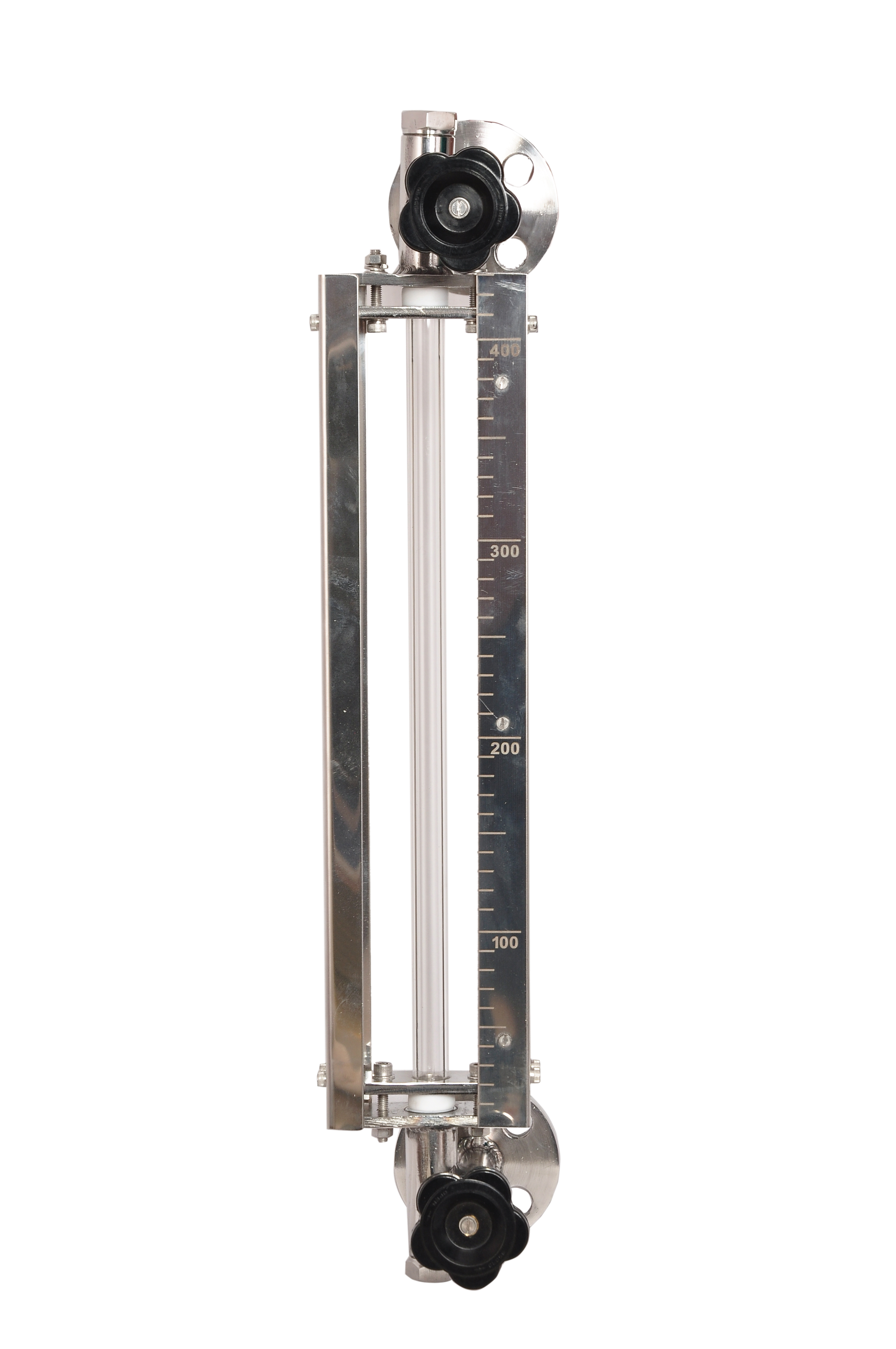 | Level Gauge Tubular Glass Level Indicator is used for visual level indication of liquid in storage and process tanks. View product → |
Frequently asked questions
Is a glass tube level gauge suitable for every industrial tank?
No. It suits accessible tanks containing relatively clean, non-corrosive liquids at atmospheric or moderately pressurised conditions. Choose another instrument when remote indication, high pressure, severe corrosion, or hazardous-liquid containment is essential.
How do process-tank and storage-tank applications change the selection?
Process tanks require closer checks of pressure, temperature, chemical compatibility, isolation, and maintenance access. Storage tanks often prioritise simple local viewing, scale readability, connection height, and protection from impact.
Which details must you check before installing an industrial glass tube level gauge?
Confirm the maximum pressure and temperature, tube and seal materials, process-fluid compatibility, connection size and spacing, visible measuring length, mounting orientation, and whether isolation and drain valves are included.
When should you reject a glass tube gauge for storage or process service?
Reject it when operators need a control-room signal, the liquid can attack the tube or seals, the vessel pressure exceeds the gauge rating, the liquid blocks visibility, or broken glass would create an unacceptable release hazard.