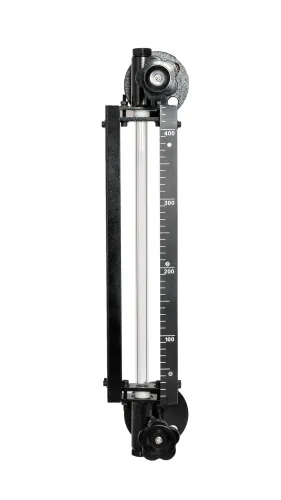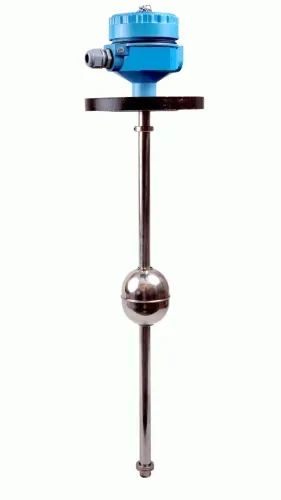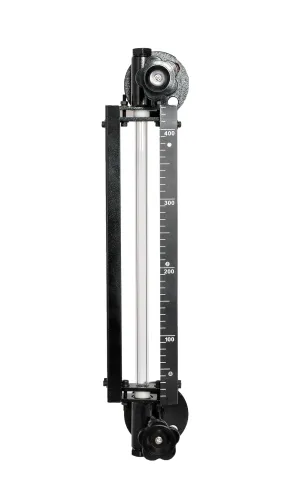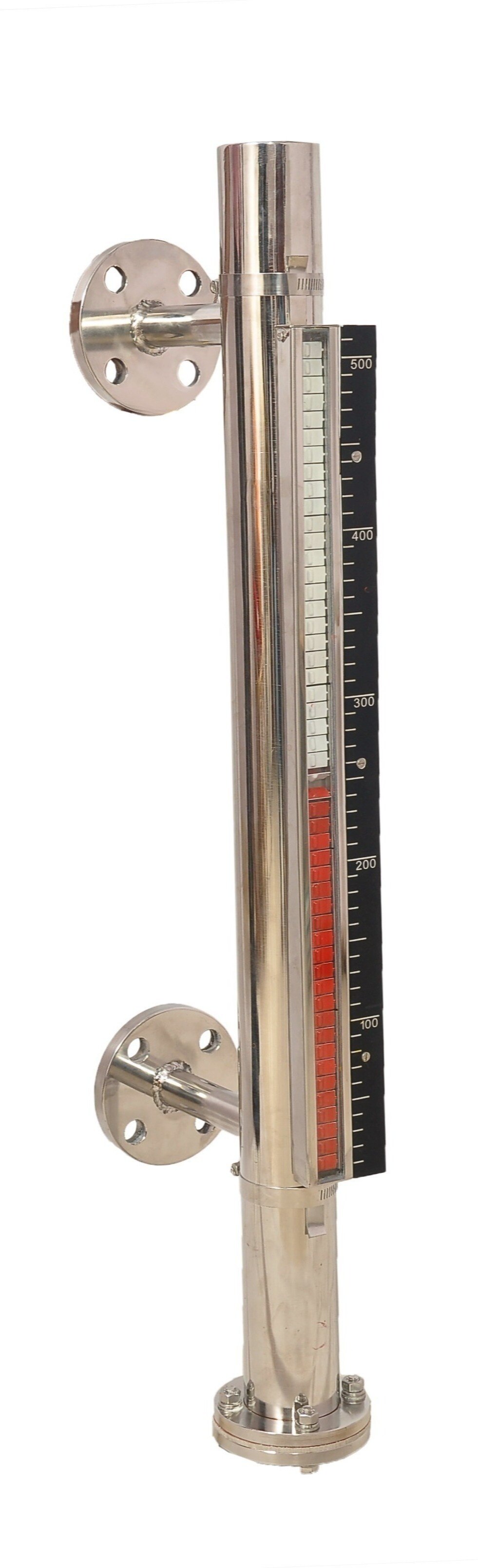
A reflex gauge shows liquid height through a side-mounted chamber, but its reading depends on both optics and correct hydraulic connection to the vessel. By the end, you will know how the bright-and-dark boundary forms, how to operate the valves safely, how to identify a false reading, and when another level technology is the better choice.
Key takeaways
- Reflex glass shows liquid as dark and vapour as bright.
- The vessel and gauge equalise through upper and lower connections.
- Clean the glass and control glare before trusting a reading.
- Check pressure, temperature, isolation valves and drain arrangements before installation.
What is a reflex level gauge and how does its optical principle work?
A reflex level gauge is a local sight chamber connected to the vessel by an upper process connection and a lower process connection. The chamber contains a liquid-filled viewing path behind specially grooved reflex glass.
The grooves act as prisms: gas or vapour behind the glass produces bright, silvery total internal reflection, while liquid entering the grooves changes the refractive path and makes that area appear dark. The sharp boundary between the bright upper zone and dark lower zone shows the liquid height in the chamber.
This is the reflex level gauge working principle.
The gauge does not calculate level from hydrostatic pressure and normally contains no sensor, power supply or electrical output. Unlike a transparent glass tube gauge, it uses the optical contrast from grooved glass; unlike a magnetic gauge, it has no float-driven indicator. It provides local indication only.
A transmitter, switch or control valve is needed for automatic control.
1. During filling, liquid enters through the lower connection, while displaced gas leaves through the upper connection. Equalisation makes the chamber level follow the vessel.
2. During emptying, liquid leaves through the lower connection and gas enters through the upper connection, so the dark zone falls.
3. Check that the upper connection reaches vapour space and the lower reaches liquid space. A blocked, throttled or poorly located connection can trap a false level; flashing liquid, bubbles or condensate can also distort the boundary.
The scale normally shows height or percentage between the installed connections, not vessel volume. Convert height separately when the vessel has dished ends, coils or changing cross-section.
What happens inside the gauge while the vessel fills, empties and equalises?
The reflex level gauge working principle depends on free hydraulic communication with the vessel. During filling, liquid rises in the vessel and enters the gauge chamber through the lower connection. Vessel pressure then pushes liquid upward until the chamber level matches the vessel’s communicating liquid level.
1. As liquid rises, vapour above it moves through the upper connection into the vessel or chamber as required. This prevents a trapped gas cushion from making the gauge level differ from the vessel level.
2. During emptying, liquid leaves the chamber through the lower connection, while vapour enters through the upper connection. The chamber level falls with the vessel.
3. During equalisation, both connections must remain open and correctly sized. A blocked, undersized, throttled or partly closed connection can make the chamber lag behind the vessel or hold a false level, even when the glass looks normal.
4. Confirm the connection locations before trusting the reading. Both connections reaching vapour, both reaching liquid, or either entering a turbulent or circulating zone can produce a height unrelated to the intended vessel datum.
Gauge cocks or dedicated block valves isolate the instrument for inspection. A drain or blowdown valve empties the chamber before maintenance, while a vent valve releases trapped gas during filling or commissioning.
Open valves in the manufacturer’s sequence, warm a cold gauge gradually and avoid sudden blowdown. Check balls or excess-flow devices restrict process escape after glass breakage; protective covers contain fragments and resist impact. Treat these valves as safety equipment, not convenience hardware.
How should you read a reflex gauge when the process is difficult?
Read the sharp optical boundary against the installed scale, then confirm that the chamber is clean and hydraulically open. That is the reflex level gauge working principle in practice: the reading depends on liquid entering the chamber through unobstructed upper and lower connections.
| What you see | What it may mean | What to check |
|---|---|---|
| Sharp, stable boundary | Reliable liquid height | Clean prism, open connections, single liquid phase |
| Dark band away from the boundary | Scale, polymerised product, corrosion, scratched prism or cloudy mica shield | Inspect and clean the glass before changing process settings |
| Split, blurred or moving boundary | Foam, suspended solids, flashing liquid, trapped condensate, gas bubbles or two-phase flow | Compare with a known operating event and process condition |
Dark, opaque or coloured liquids suit a height measurement because the gauge needs liquid-versus-vapour contrast, not a view through the product. In difficult service, the visible pattern can represent phase distribution inside the chamber rather than a steady vessel level.
Read the scale as direct height or percentage between the installed lower and upper connections. Do not convert it to volume without a separate vessel calibration that accounts for geometry, dished ends and internal coils.
If the indication remains implausible, isolate, vent and drain the chamber according to the equipment procedure. Never remove a cover or loosen glass hardware while the chamber is pressurised. A clean prism, open connections and stable single liquid phase make the boundary trustworthy.
When is a reflex gauge better than transparent glass or magnetic indication?
Choose a reflex gauge when you need a high-contrast local liquid-versus-vapour boundary and do not need to inspect the liquid’s colour, solids or an interface. Its reflex level gauge working principle reads light reflected from prism grooves, so the operator does not need to see through the liquid.
Ambient light is often enough, but illuminate the scale and boundary safely for night or enclosed-area work.
| Option | What it shows | When it applies |
|---|---|---|
| Reflex gauge | A sharp liquid-versus-vapour boundary from reflected light | Opaque process liquids when only height matters |
| Transparent glass gauge | The liquid itself through opposing clear windows, usually with backlighting | Colour, suspended material, product condition or a two-colour interface matters |
| Magnetic gauge | A local external indication without exposing the process to a viewing window | The process is hazardous, toxic, inaccessible or unsafe for routine face-to-face reading |
Select transparent glass when distinguishing two immiscible liquids matters. It offers little visual benefit when an opaque product blocks the view. For clean water or steam condensate, either design can fit if the complete assembly suits the pressure, temperature, chemistry and visibility requirements.
Review sealing materials, vapour hazards and area safety before selecting any glass gauge for solvents. Keep the reflex prism clean: scale, product film or corrosion can create false dark bands and hide the actual boundary. Check the nameplate rating for the complete assembly, including body, glass, gaskets, bolts and connections.
A magnetic gauge or remote transmitter is preferable when local glass reading is unsafe; the transmitter supports control-room monitoring.
What pressure, temperature and safety checks govern a reflex gauge installation?
Judge a reflex gauge by the rating of the complete assembly: body, reflex glass, gaskets, bolts, valves and process connections. The reflex level gauge working principle does not make the glass rating sufficient for installation selection.
Check the nameplate or manufacturer data against the following:
- Design pressure and operating temperature, including any derating at temperature
- Fluid chemistry, corrosion allowance and gasket compatibility
- Thermal cycling, pressure cycling and the vessel connection arrangement
- Gauge cocks or block valves, drain or blowdown hardware, and ball-check excess-flow protection
| Arrangement | What it provides | Choose it when |
|---|---|---|
| Reflex gauge | Local visual indication | The operator can safely access the gauge |
| Magnetic gauge | Local indication without exposed process glass | Broken-glass risk or remote viewing matters |
| Remote transmitter | Signal for monitoring and control | Automatic control or distant indication is required |
Steam and hot-water service commonly needs a mica shield between the process and glass. Mica limits chemical attack, erosion and etching, but it can darken or cloud; inspect and replace it when readability declines.
Thermal shock can fracture glass when steam or hot liquid enters a cold gauge, or cold fluid enters a hot gauge. Use controlled warm-up, correct valve sequencing and gradual blowdown.
For hazardous or toxic service, reject an arrangement if broken glass, operator access or drain discharge is unacceptable. Filpro Sensors Pvt Ltd can compare a local reflex indication with magnetic, switching or transmitting arrangements using your fluid, pressure, temperature, connection elevations, required range and hazardous-area conditions.
Frequently asked questions
What is the working principle of a reflex level gauge?
A reflex gauge uses grooved glass to refract and reflect light differently through liquid and vapour. The liquid zone appears dark, while the vapour zone appears bright, creating a visible level boundary.
What happens as the vessel fills or empties?
Liquid enters the gauge through the lower connection and vapour communicates through the upper connection. As the vessel level changes, the liquid boundary inside the gauge follows it after pressure equalises between the vessel and chamber.
How should you read a reflex gauge in difficult conditions?
Clean the glass, use the correct viewing angle, reduce glare, and compare the indication with vessel conditions. Treat a blurred or inconsistent boundary as a maintenance issue rather than guessing the level.
When is a reflex gauge better than transparent glass or magnetic indication?
Reflex gauges provide strong liquid-versus-vapour contrast and a compact local indication. Transparent gauges suit applications where the actual liquid appearance matters, while magnetic gauges offer a non-glass external display.
What safety checks apply to a reflex level gauge installation?
Confirm the gauge rating exceeds the vessel pressure and temperature, check the process connections and gaskets, fit suitable isolation and drain arrangements, and inspect the glass before commissioning.