The right choice depends on more than the liquid temperature: you must match the sensor to pressure, chemistry, vapour, coating, turbulence and the required level function. By the end, you will be able to decide between a point-level switch and a continuous transmitter, reject unsuitable technologies, and write a specification that exposes temperature, material and installation risks.
Key takeaways
- Define the alarm, interlock or dry-run action before comparing switches.
- Match the sensing method to conductivity, viscosity, foam and coating behaviour.
- Check wetted temperature, pressure and chemical compatibility at the process connection.
- Specify mounting, switching gap and thermal movement in writing.
Start with the level function, not the sensor catalogue
Use a point-level switch for a high-temperature tank when one defined level triggers an action: a high-level alarm, low-level alarm, pump interlock, or dry-run protection. It is not automatically the best replacement for a transmitter.
Choose continuous measurement for inventory measurement, batching, proportional control, changing setpoints, or trend recording. A transmitter shows how far the level has moved; a point device only confirms that liquid has reached its switching point. A level switch for liquid tanks is therefore a control decision, not simply a cheaper transmitter.
Foam can wet or obscure a poorly chosen point sensor and create a false high-level signal. An immiscible interface needs a technology that responds differently to each liquid, rather than one that only detects the total liquid height.
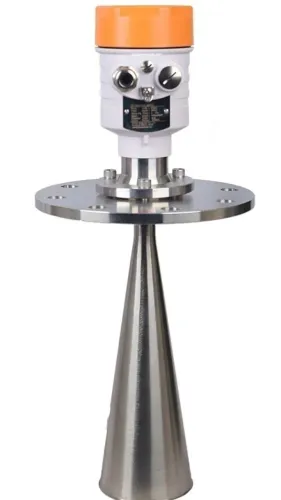
A vibrating-fork switch suits clean or moderately coating hot liquids, while radar avoids contact but needs suitable antenna, frequency and echo processing for foam, vapour, condensation and low-dielectric liquids.
Before selecting a level switch for high temperature tanks, record:
- Normal operating band, high-high and low-low protection points
- Maximum wetted temperature, upset and cleaning temperatures, heat-up and cool-down rates, and cycling frequency
- Pressure or vacuum, chemical concentration, viscosity, solids, foam and vapour-space conditions
- Required response time and whether a thermowell, standpipe, extended neck or remote electronics is needed
- Whether shutdown must be independent; specify de-energize-to-trip logic, proof-test interval and diagnostics under API 2350 or IEC 61511
- Whether the vessel contains one liquid or two layers, and how the result will be proof-tested
Compare sensing technologies against the actual liquid
For a level switch for high temperature liquids, match the sensing principle to the liquid at the fork, probe, float or antenna—not merely the tank temperature. A vibrating-fork switch is a strong general-purpose choice for clean or moderately coating service.
| Principle | Best fit | Main limitation |
|---|---|---|
| Vibrating fork | Point alarms and pump interlocks; largely unaffected by conductivity, dielectric constant, pressure or density | Fork coating can cause false readings; severe aeration disrupts resonance |
| RF admittance | Coating, viscous or corrosive liquids, using an insulated probe | Requires a suitable reference ground, chemically resistant insulation and coating compensation |
| Conductivity | Conductive water-based acids, caustics and similar liquids with a reliable return path | Poor for hydrocarbons and deionized water; polarization, corrosion and probe bridging remain risks |
| Bare capacitance | Simple dielectric-change detection in stable, clean service | It is not equivalent to RF admittance and lacks its designed coating discrimination |
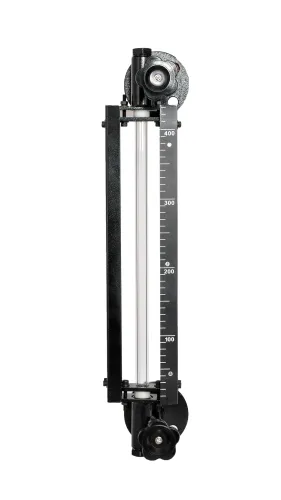
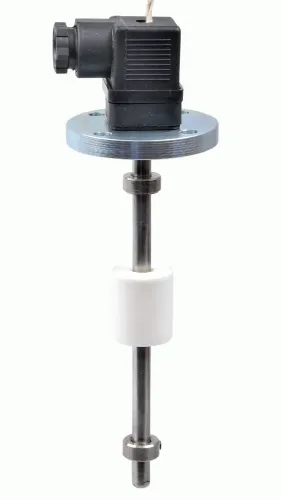
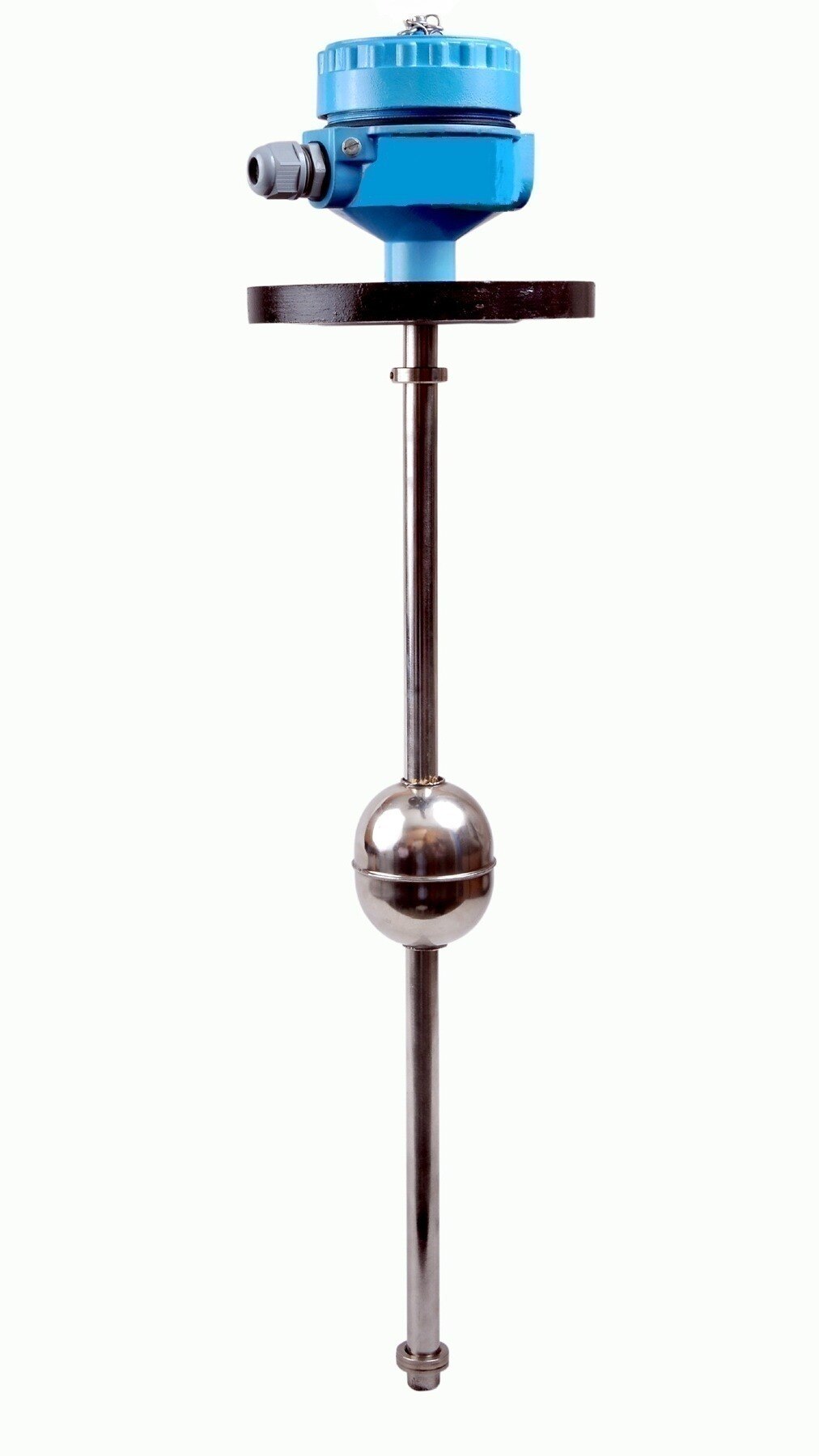
| Mechanical float or displacer | Very hot service when a chamber, magnetic coupling or extended stem keeps mechanics out of the hot zone | Density changes, viscosity, turbulence, solids and fouling shift the switching level |
| Hydrostatic | Continuous level or alarm calculations where density stays stable | A changed specific gravity, solids or blocked impulse path produces the wrong level |
| Cable float | Basic point switching in compatible, cooler liquids | Cable fouling and buoyancy errors matter; a stated 110°C rating does not make it suitable for every chemical tank |
| Radar | Non-contact high- or low-level trip for corrosive or extremely hot liquids | Vapour, foam, condensation, low dielectric liquids and tank internals create false or weak echoes; radar is primarily continuous measurement |
Specify the actual liquid temperature, vapour temperature, cleaning temperature, pressure, concentration, viscosity, solids and foam before choosing a level switch for high temperature service. Check the switching differential and proof-test method against the process.
Verify temperature, pressure and chemical compatibility at the wetted point
Verify a candidate by comparing liquid temperature at the sensing point, vapour-space temperature, startup temperature, upset temperature and cleaning temperature with the exact model’s process-wetted rating. A side-mounted, stainless-steel miniature or plastic miniature description does not establish maximum liquid or ambient temperature.
The explicit 110°C figure belongs to a cable float switch; it does not prove suitability for a hot chemical tank.
| Check | What to request | Why it matters |
|---|---|---|
| Temperature | Process limit for the exact connection, wetted material and electronics arrangement | Remote electronics, an extended neck or a heat-dissipating connection may be necessary |
| Pressure | Pressure or vacuum rating at operating temperature | Flanges, threads, seals, elastomers, glass linings and gaskets can derate as temperature rises |
| Construction | Ratings for probe, body, welds, process connection, insulation and seal | One weak wetted component can cause leakage or switch failure |
| Chemical exposure | Concentration, impurities, exposure time and cleaning agents | Temperature can accelerate chemical attack, plastic weakening and swelling |
For a level switch for chemical tanks, verify PTFE, PFA, ceramic, titanium, SS 304, SS 316 and SS 316L against the named chemical and concentration; these are service-specific options, not interchangeable promises. Heat changes plastic strength and increases swelling, permeation and attack from solvents or oxidising chemicals.
Record thermal cycling and cleaning temperatures for a level switch for high temperature tanks, including heat-up and cool-down conditions.
Design the mounting point, switching gap and thermal movement
Install a level switch for liquid tanks with a nozzle large enough for insertion, removal and inspection. Set the insertion depth and orientation so the float or sensing element remains clear of the tank wall, inlet jet, agitator blades, heating coils, internal pipes and vapour-condensation zones.
- Mount the switch in calm liquid, away from turbulence, splashing, bubbles, foam, solids and likely deposits. Use a stilling well, standpipe or protective cage when flow or agitation can move the float; use a chamber or external cage when the mechanism can remain outside the hot zone.
- Set the actuation and reset points with hysteresis: the distance between switching on and switching off. Too little differential makes the pump chatter; too much delays overfill or dry-run protection. Keep normal control, high-high alarm and low-low alarm at separate levels, with safe margins for surge, stopping time and sensor response.
- Specify heat-up rate, cool-down rate and cycle frequency. Differential expansion between probe, flange, lining, tank and insulation can loosen joints or crack ceramic, glass or polymer insulation. A remote or extended-temperature design moves electronics away from the hot nozzle through an extended stem, thermowell or heat-dissipating connection.
A mechanical float or displacer in an external chamber suits a level switch for high temperature service when its mechanism stays outside the hot zone. Recheck its switching point after density or viscosity changes; solids and fouling also restrict movement.
Turn the selection into a supplier-ready specification
Send the supplier a completed service data sheet before approving a level switch for chemical tanks. Give exact values, not descriptions such as “hot” or “corrosive.”
1. State minimum and maximum operating temperature, startup and upset temperature, cleaning temperature, pressure or vacuum, tank dimensions, nozzle size, connection type, material and gasket material.
2. Identify the liquid, concentration, contaminants, conductivity or dielectric constant, viscosity, density, suspended solids, foam, vapour and any liquid-liquid interface. State whether you need a level switch for high temperature liquids or a level switch for liquid tanks serving inventory measurement, alarms or pump control.
3. Mark normal level, high- and low-alarm levels, switching differential, response-time requirement, electrical supply, output logic, enclosure location and maintenance access.
4. Require the supplier to state the exact process-wetted temperature rating for the selected model and connection, not the product family maximum. Request material-compatibility evidence, pressure-temperature limits, response time, coating behaviour, thermal-cycle limits and the proof-test method.
5. For an independent overfill layer, specify de-energize-to-trip operation, diagnostic behaviour, proof-test interval, required safety integrity and independence from the basic control system. Check the design against API 2350 and IEC 61511; a normal alarm is not automatically a safety function.
Include Filpro Sensors Pvt Ltd in the comparison only when its proposed instrument answers this same data sheet. Choose on verified wetted limits and evidence, not a generic product label.
Related products
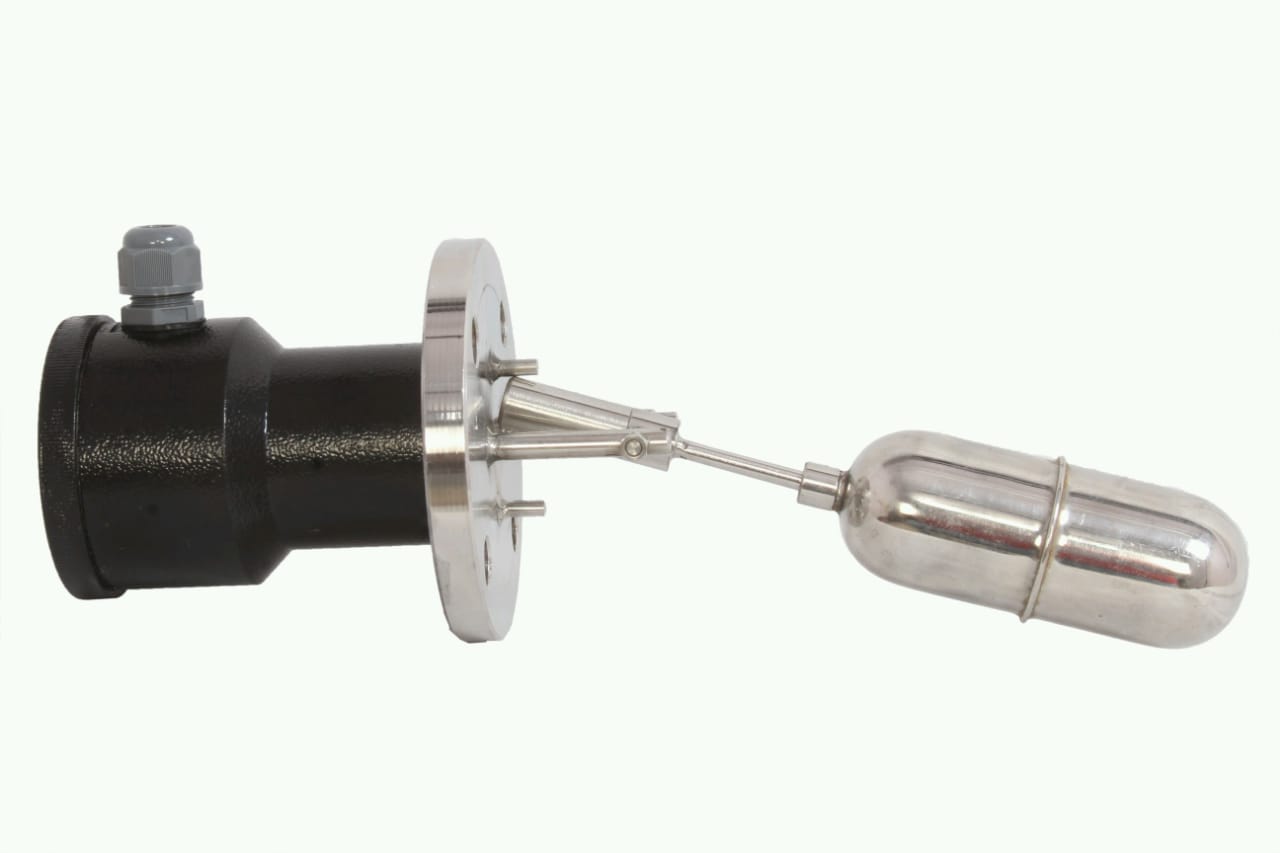 | Level Switch Filpro offers most reliable, cost effective Side Mounted Level Switch for point level sensing. View product → |
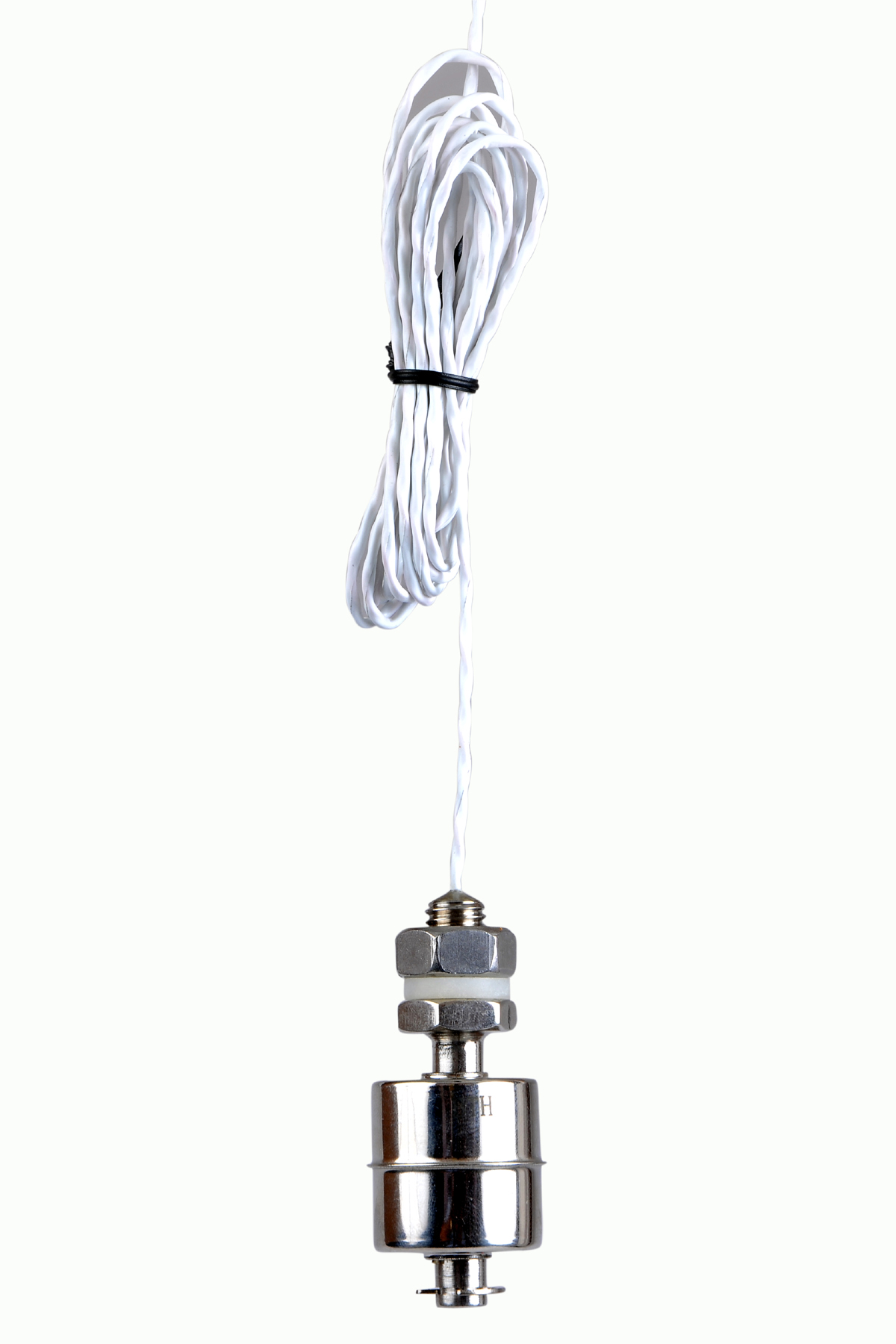 | Level Switch Stainless steel level switch - Miniature Stainless steel Miniature Level Switch is a compact construction, suitable for mounting vertically. View product → |
Frequently asked questions
What should you define before choosing a level switch for a high-temperature tank?
Define the point-level function first: high-level alarm, low-level alarm, pump interlock or dry-run protection. Use a transmitter instead when you need continuous level measurement.
How do you compare level-switch technologies for chemical tanks?
Compare each sensing method against the liquid’s conductivity, viscosity, foam, coating tendency, density and solids content rather than choosing from a catalogue alone.
Which temperature and pressure details must you verify?
Verify the maximum and minimum process temperature, pressure, thermal cycling and the temperature rating of every wetted part at the actual tank connection.
How should you specify mounting and switching position?
State the connection size and type, insertion length, switching gap, orientation, clearance and allowance for thermal expansion or movement.
Related products
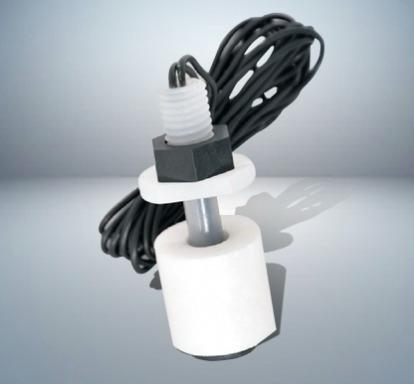 | Level Switch Plastic Miniature Level Switch is available in PP construction with PP Float Switching Voltage: 24V DC Switching current: 0.1A Mounting thread size:... View product → |
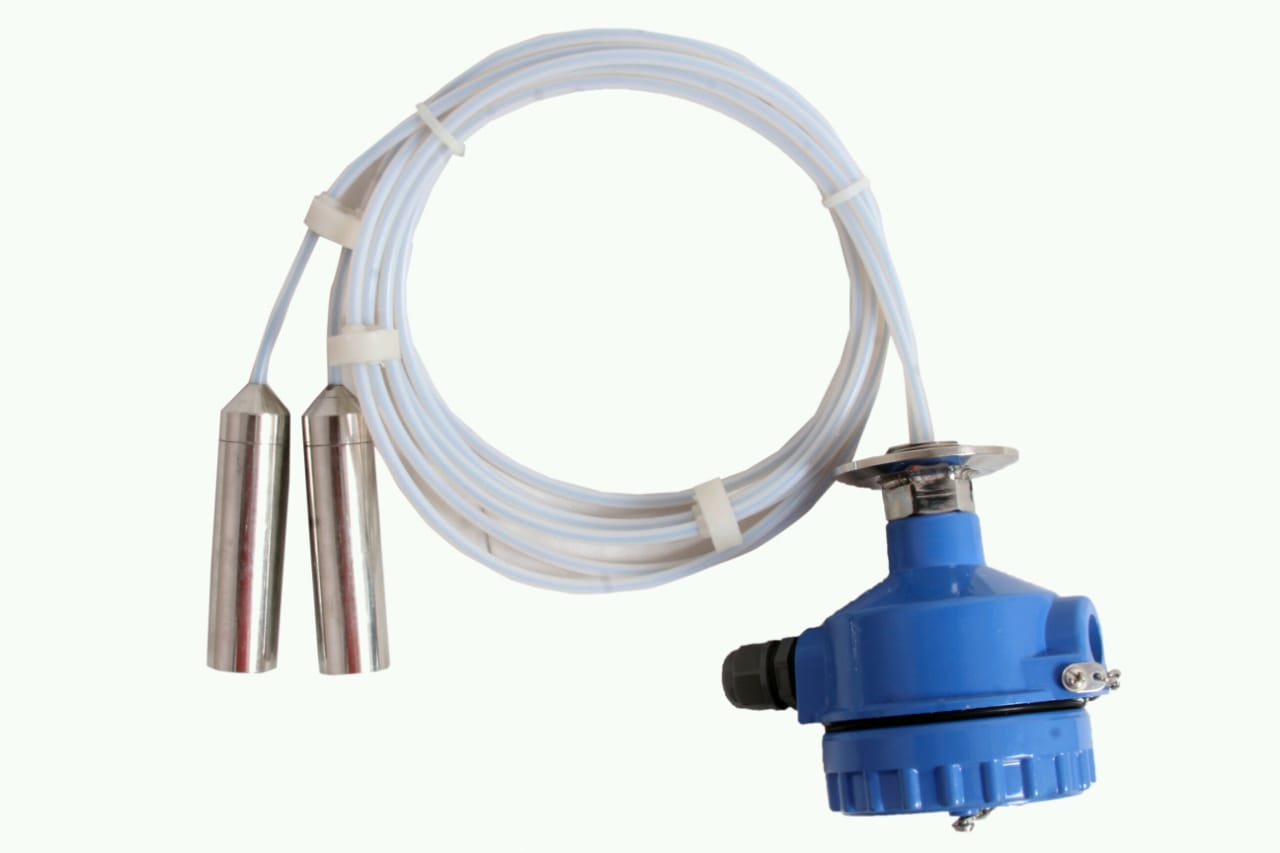 | Level Transmitter can be used for conductive as well as non conductive liquids. View product → |
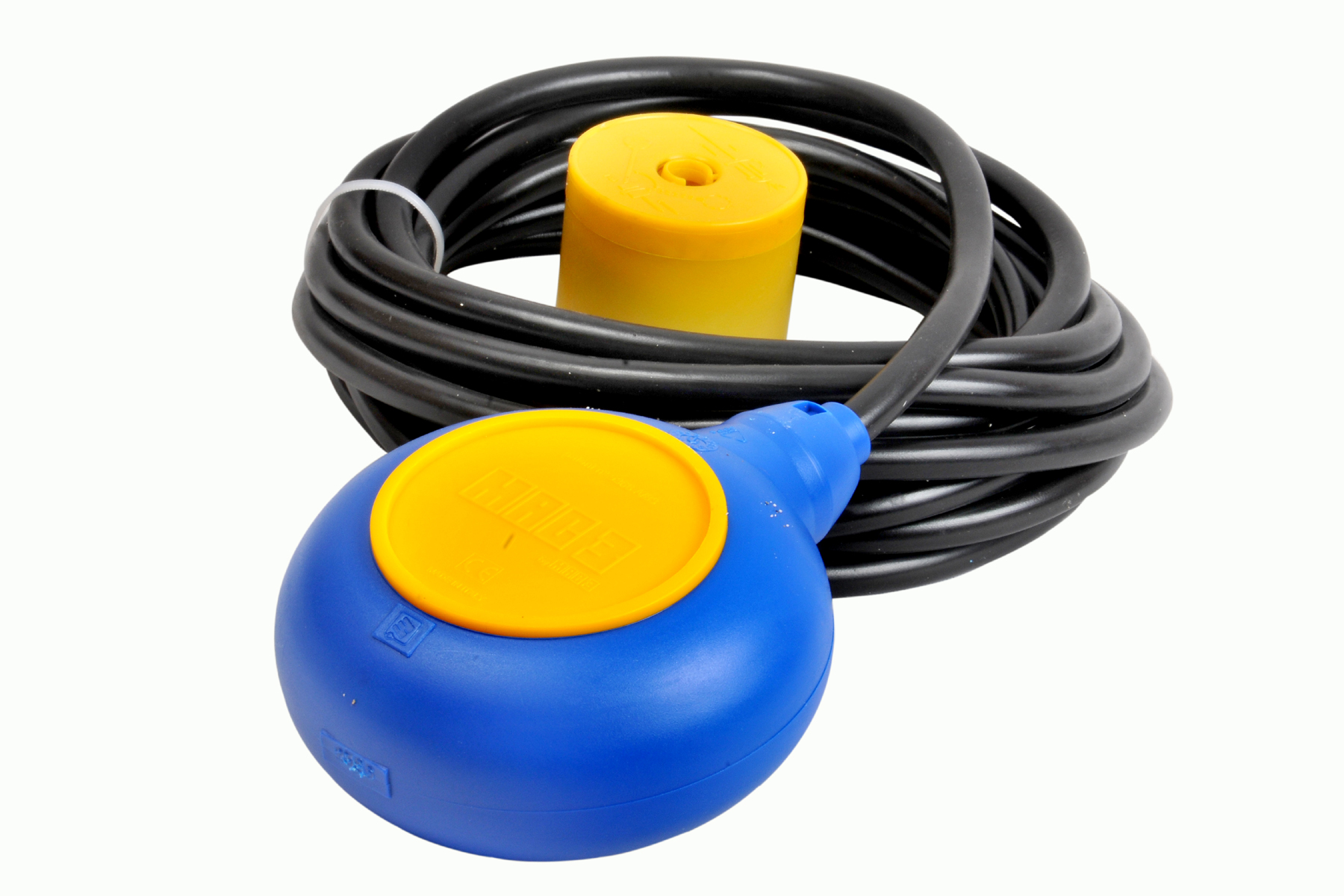 | Level Switch Cable Float Switch is mainly used for the automatic working of small pumps and cellar emptying pumps in liquids a little bit agitated. View product → |