A gauge that looks clear in a catalogue can be wrong for a pressurised, hot, corrosive, viscous or hazardous process. You will be able to match the viewing design, glass and wetted materials, pressure-temperature rating, connections, measurement span and safety accessories to the tank conditions before requesting a quotation.
Key takeaways
- Choose direct viewing when colour, interfaces or suspended solids matter.
- Match glass and seals to the liquid, pressure and operating temperature.
- Specify isolation valves, protection and a span that remains easy to read.
- Give suppliers complete process data before comparing transparent level gauges.
Start with the viewing method, not the name on the catalogue
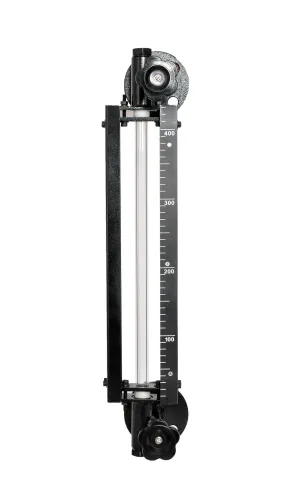
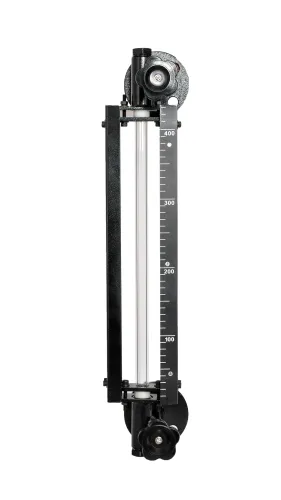
Start with the viewing method: a transparent level gauge for tanks shows the liquid directly through a glass tube or window, rather than using a magnetic flag, float board, electronic display or remote transmitter. Choose it when you need to see colour, an interface, suspended solids, crystallisation or proof that the indication is genuine.
| Option | What you see | When it applies |
|---|---|---|
| Tubular gauge | Direct view through a glass tube | Lower-pressure, non-hazardous service with a clean, compatible liquid |
| Flat-glass transparent gauge | Liquid through smooth glass windows in a framed pressure boundary | Higher pressure, hazardous service, interfaces, colour changes or suspended material |
| Reflex gauge | Prismatic glass gives a bright gas space and dark liquid space | One clean liquid level, high contrast and viewing from changing angles |
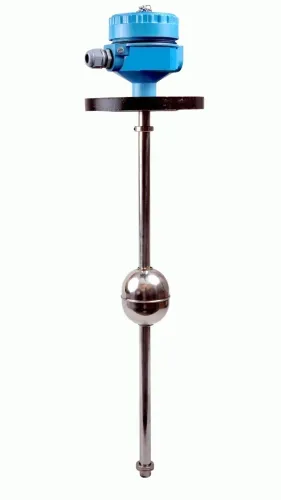
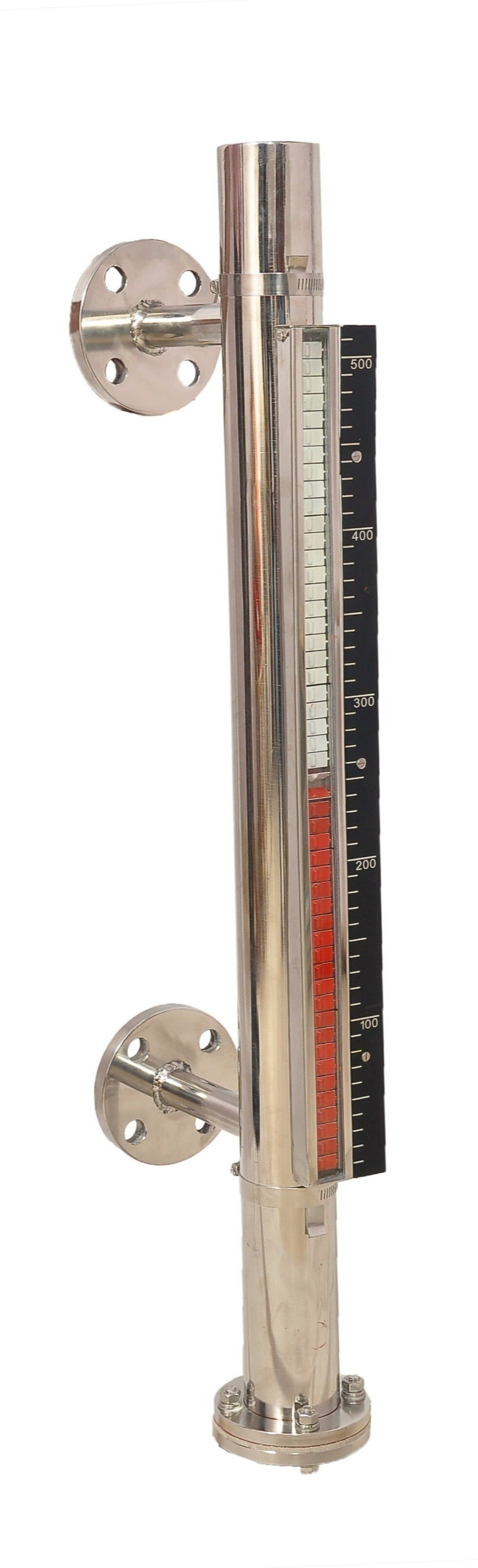
| Magnetic, float-and-board or electronic transmitter | Indication without direct liquid viewing | Opaque, corrosive or flammable service, remote reading or when glass exposure is unacceptable |
For transparent level gauge applications, check pressure, temperature, viscosity, opacity, specific gravity, flammability and chemical compatibility before choosing glass. Do not assume a positive-pressure gauge suits vacuum: demand a vacuum rating for the complete assembly, including glass, frame, gaskets and valves.
For multiple glass sections, specify overlapping readable ranges and a reference dimension; otherwise the level at a joint can become ambiguous. Your specification must name the glass material or standard, gasket, wetted alloy, connection standard, pressure class, temperature range, test requirements and certifications.
Match the glass and seals to the liquid
Match every wetted part to the liquid, not just the viewing glass. Corrosive service can attack the glass, gasket, bolting and gauge body; specify the glass material, wetted metal alloy and gasket compound against the actual chemical composition. A seal that works with one solvent can swell, crack or leak in another.
Before ordering, record:
- Viscosity and suspended solids: thick or solids-bearing liquids can block narrow connections. Choose large-bore or flush-mounted openings, cleanout access, and heat tracing or steam jacketing where deposits harden.
- Crystallisation or polymerisation: provide heating and purge arrangements if the liquid forms a plug when it cools or contacts air.
- Opacity and interfaces: direct-view transparent glass helps you see colour, suspended material and liquid–liquid separation. A reflex gauge gives stronger level contrast from a distance but hides those details.
- Temperature: check the glass, gasket, valves, bolting and body ratings at the maximum operating temperature. Allowable pressure can fall sharply as temperature rises.
- Flammability: treat the gauge as a local indicator, not the sole overfill protection. Add an independent transmitter, switch or alarm, and specify isolation and containment provisions for a glass failure.
Include minimum and maximum temperature, operating and design pressure, flashing tendency, liquid density, connection size and measurement length in the transparent level gauge selection document. State the pressure class, temperature range, pressure-test requirement and any certification needed; “transparent level gauge” alone leaves compatibility and safety unresolved.
Check pressure, temperature, connections and measuring span
Check the tank’s pressure, temperature, connection geometry and required measuring span before transparent level gauge selection. These dimensions determine both whether the gauge survives the process and whether its visible level matches the tank level.
| Dimension | Specify | Why it matters |
|---|---|---|
| Pressure | Maximum operating pressure and design pressure at the upper and lower connections | A rating stated at ambient temperature can fall sharply at operating temperature |
| Temperature | Minimum and maximum operating and design temperatures | Glass, gaskets, bolting and the gauge body can have different limits |
| Connections | Connection size, standard, pressure class and centre-to-centre distance | Incorrect spacing prevents installation or places the gauge away from the true level zone |
| Measuring span | Lower and upper tap elevations and the required visible length | A short span can hide the usable level range; an oversized span can include vapour or sediment zones |
Do not use nominal tank pressure alone. Specify the pressure and temperature at each connection, then check the manufacturer’s pressure-temperature rating for the complete assembly.
The upper and lower connections need clear flow paths. Restrictions, plugged taps, gas pockets and sediment traps create a false level even when the gauge is calibrated correctly. Route equalizing lines to avoid trapped gas and unnecessary pressure loss.
Give the supplier these additional process details:
- Fluid composition, density, viscosity, solids content and flashing tendency
- Glass or window material, gasket material and wetted metal alloy
- Hydrostatic or pressure-test requirement and any required certification
- Isolation valves at both connections, a drain or blowdown, and safe venting for maintenance
For pressurized or hazardous service, verify whether self-closing check balls or excess-flow devices are required; they limit release after damage but do not replace isolation and depressurization.
Specify protection, isolation and a reliable reading
Choose a transparent level gauge for tanks with isolation valves, a guard, drain and vent connections, a visible scale, adequate illumination and an independent remote signal when level affects safety. In transparent level gauge applications, the glass is local indication; it is not a substitute for an overfill trip or shutdown alarm.
Specify a complete vacuum rating when the vessel can operate below atmospheric pressure. External pressure can collapse a component that survives positive pressure, so the rating must cover the glass, frame, gaskets and valves together. Check the rating at operating temperature because allowable pressure can fall as temperature rises.
| Accessory | Specify | Why it matters |
|---|---|---|
| Isolation valves | Full-port valves at both gauge connections, rated for the fluid and temperature | Isolates a failed gauge without emptying the tank |
| Guard | Metal shield or certified transparent protector over exposed glass | Limits impact damage and contains fragments |
| Drain and vent | Valved lower drain and upper vent directed to a safe collection point | Removes trapped liquid, vapour and sediment during servicing |
| Scale and light | Fixed datum, graduated scale, and glare-free lighting | Prevents a reading error at night or between glass sections |
For multiple glass sections, require overlapping ranges and one reference datum; otherwise the level can become ambiguous at a section joint. Add a level transmitter, switch or alarm for toxic, flammable or environmentally hazardous liquids. A gauge-glass failure can remove the reading while releasing fluid.
Convert the process data into a purchase specification
Specify the installation, not merely a “transparent level gauge for tanks.” A transparent level gauge selection is defensible when the manufacturer can check the complete assembly against your process, viewing needs and mounting dimensions.
1. State the service: fluid composition, density or specific gravity, viscosity, opacity, colour, suspended solids, crystallisation, flashing tendency and flammability. Say whether you need interface detection, colour observation or confirmation that the reading is genuine; choose a reflex gauge instead when you only need high contrast for one clean liquid viewed from changing angles.
2. Give maximum operating pressure, design pressure, minimum and maximum operating temperature, design temperature and the pressure at the upper and lower connections. Request the allowable pressure at the actual operating temperature, not the ambient rating.
For vacuum service, demand a vacuum rating for the complete assembly, including glass, frame, gaskets, valves, bolting and gauge body.
3. Identify the glass standard or material, gasket material, wetted metal alloy, connection standard, pressure class, hydrostatic or pressure-test requirement and required certifications. Include the required measuring length and the centre-to-centre elevations.
4. For multiple glass sections, define one scale datum and require overlapping readable ranges. Without overlap, a level at a section junction can become ambiguous even when both glasses function correctly.
Filpro Sensors Pvt Ltd can use this information to check a tubular gauge against the actual service instead of matching a generic catalogue description.
Related product
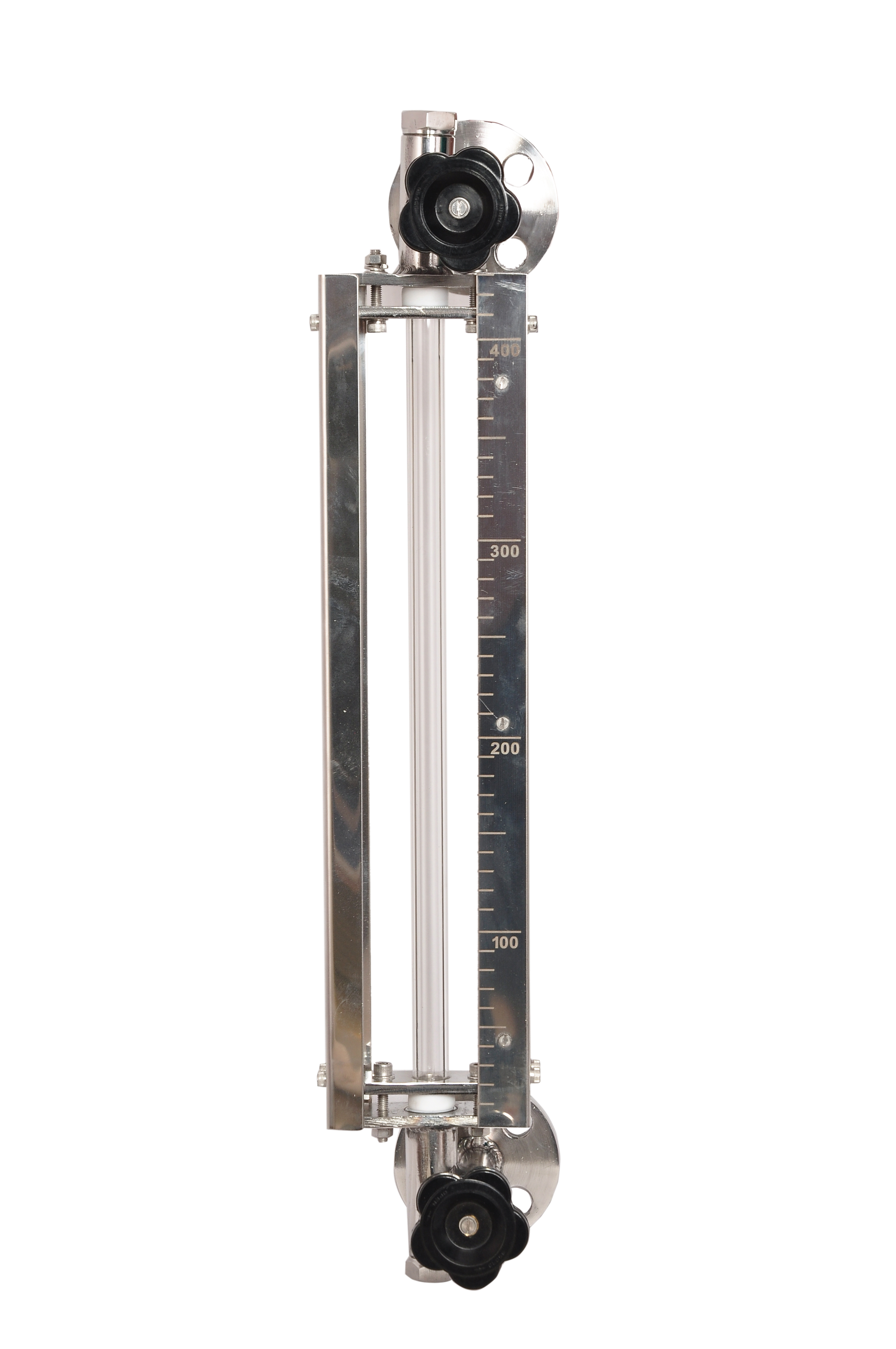 | Level Gauge Tubular Glass Level Indicator is used for visual level indication of liquid in storage and process tanks. View product → |
Frequently asked questions
When should you choose a transparent level gauge for tanks?
Choose direct viewing when you need to see liquid colour, an interface, suspended solids, crystallisation or proof that the indication is genuine.
How do you match the glass and seals to the liquid?
Check the liquid’s chemical compatibility with the glass, gaskets and seals, then confirm compatibility across the operating temperature range.
What process details must you check before ordering a liquid level gauge for tanks?
Confirm pressure, temperature, connection size and type, measuring span, liquid properties and the required protection or isolation arrangement.
How can you make a transparent level gauge reading more reliable?
Specify suitable protection, isolation valves and a readable span, then provide complete process data in the purchase specification.